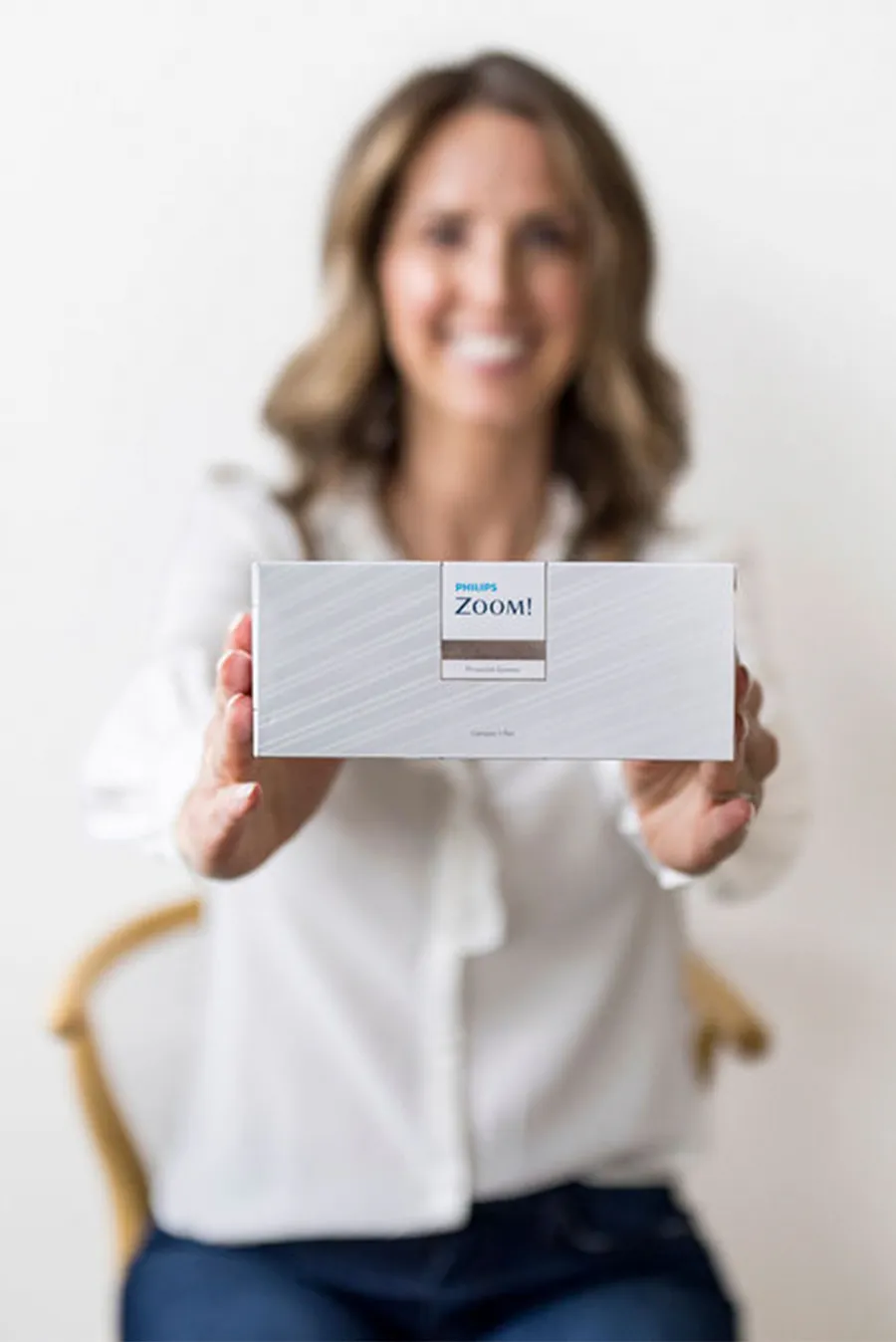
Aligning your smile is important – but Dr. Vanderstelt goes above and beyond when it comes to creating an aesthetic smile! With professional teeth whitening using Zoom Whitening treatment and whitening pens, you can make teeth look healthier and brighter with just one visit. We make teeth whitening safe, comfortable, and simple – so that creating your best smile is easier than ever.
Looking for an orthodontist in Denver, CO that specializes in teeth whitening? At aligned. Orthodontics we like to call it a Zen Zoom experience. We’ll set you up with your choice of music, dim lighting, a warm blanket, and aroma therapy aiming to make it the most relaxing hour of your day.
Zoom in-office whitening treatments eliminate tooth discoloration from stains, food, drinks, age, and smoking, restoring the natural beauty of your enamel. Using a hydrogen-peroxide gel combined with Zoom light activation, you can achieve a brighter look in less than an hour. Effective, safe, and comfortable, this whitening treatment is an easy and relaxing solution for a more confident smile.
At-home Whitening Pens
Whitening pens are our convenient at-home or travel solution for whiter, brighter teeth. Once a day, 15-minute applications using our whitening pens are fast and straightforward. And, to ensure that your enamel is always protected, we only offer approved whitening pens that use a carbamide peroxide based gel that is safe for teeth. Achieve your dream smile aesthetics with a fast, easy whitening technique that provides subtle, natural results!
patient, tooth, orthodontics, retainer, dental school, jaw, tooth decay, gums, oral hygiene, disease, malocclusion, american board of orthodontics, palatal expansion, american association of orthodontists, mouth, clear aligners, dental implant, knowledge, align technology, wire, dental degree, therapy, metal, general, orthodontist appointment, orthodontist, the orthodontist, braces dr, orthodontist do, exam, confidence, hygiene, orthodontic headgear, evaluation, dental public health, understanding, physician, board certification, calculus, attention, angle, palate, chewing, endodontics, periodontology, zip code, customer, policy, tooth enamel, biology, ceramic, mouthguard, smile braces, family braces, cost of braces for adults, allen orthodontics, behind teeth braces, pediatric dentistry and orthodontics, orthodontist open on saturday, medicaid orthodontist, bottom braces, my orthodontist, orthod, tooth whitening, dentin hypersensitivity, gel, hydrogen peroxide, toothpaste, stain, laser, dentin, hydrogen, cherry creek, teeth cleaning, medication, mouthwash, red wine, tooth discoloration, dental insurance, concentration, teeth bleaching denver, accessibility, invisalign teeth, queens, orthodontic, teeth, invisalign clear aligners, straight teeth, invisalign treatment, retainers, traditional braces, braces, board certified, invisalign aligners, treatments, beautiful smile, free consultation, treatment, adult orthodontics, invisalign experience, dental, bite invisalign, online invisalign, invisible teeth braces, align teeth, straighter teeth at home, candid braces, invisalign crystals, transparent teeth braces, invisible teeth braces price, aligned orthodontics, my invisalign, realigning teeth, aligned house of orthodontics
Frequently Asked Questions
Can anyone get their teeth whitened?
Not everyone may be a suitable candidate for teeth whitening. Factors such as age, dental health, and existing conditions should be evaluated by a professional to ensure safe and effective treatment.
Can teeth whitening damage enamel?
Teeth whitening treatments are generally safe and do not damage enamel when performed correctly. However, overuse or improper techniques can lead to enamel erosion, so it's important to follow professional guidance for safe and effective whitening.
Can teeth whitening damage veneers?
Teeth whitening treatments generally do not damage veneers. However, it's essential to consult with your dentist to determine the best whitening options, as certain products and procedures may affect the appearance and longevity of your veneers.
Can the dentist whiten your teeth?
Dentists can whiten your teeth effectively through professional treatments, including in-office procedures and tailored at-home options. These methods ensure safety and deliver noticeable results for a brighter, more confident smile.
Are teeth whitening covered by insurance?
Teeth whitening treatments are typically not covered by insurance, as they are considered cosmetic procedures. It's best to check with your insurance provider for specific coverage details regarding dental treatments.
Can you get your teeth whitened at dentist?
Teeth whitening can indeed be performed at a dentist's office. Professional treatments, such as in-office Zoom whitening, provide effective and safe results, ensuring your smile is brighter and more aesthetically pleasing.
Are teeth whitening devices safe?
Teeth whitening devices are generally safe when used as directed, especially those offered by dental professionals. At aligned. Orthodontics, we prioritize patient safety and comfort in our treatments, ensuring effective results with minimal risks.
What are the risks of teeth whitening?
The risks of teeth whitening include tooth sensitivity, gum irritation, and uneven results if not performed correctly. It's essential to consult a professional to minimize these risks and achieve the best outcomes safely.
How long do teeth whitening results last?
The duration of teeth whitening results can vary based on individual habits and maintenance. Typically, in-office whitening provides results that last from six months to two years, while at-home treatments may require more frequent touch-ups.
Can I whiten my teeth at home?
You can whiten your teeth at home using convenient options like professional-grade whitening pens or kits recommended by your orthodontist. These methods allow for safe and effective whitening while offering flexibility to suit your schedule.
What ingredients are in whitening products?
The ingredients in whitening products typically include hydrogen peroxide or carbamide peroxide as active agents, along with inactive components like desensitizing agents, flavoring, and thickening agents to enhance application and comfort.
Are there age restrictions for teeth whitening?
Age restrictions for teeth whitening apply, as it's generally recommended for individuals 16 years and older. Younger patients may need parental consent and a dentist's evaluation to ensure safety and effectiveness.
How often can teeth whitening be done?
Teeth whitening treatments can typically be done every six months to a year, depending on individual oral health and preferences. It's best to consult with your orthodontist to determine the ideal frequency for your specific needs.
What is the cost of professional whitening?
The cost of professional whitening varies based on the method chosen. In-office treatments typically range from $300 to $800, while at-home options, such as whitening pens, may cost between $100 and $300.
Are discount teeth whitening services effective?
Discount teeth whitening services can vary in effectiveness. While some may provide satisfactory results, they often lack the quality and safety assurance found in professional treatments, potentially leading to ineffective or even harmful outcomes.
Can whitening damage sensitive teeth?
Whitening treatments can potentially cause sensitivity in some individuals, but they are generally safe. Aligned. Orthodontics prioritizes patient comfort, offering solutions to minimize discomfort during and after the process.
What are the side effects of whitening?
The side effects of whitening can include temporary tooth sensitivity, gum irritation, and uneven results if not properly applied. These effects are usually mild and short-lived, particularly when professional treatments are administered by trained practitioners.
How does whitening procedure work at dentists?
The whitening procedure at dentists involves applying a professional-grade whitening gel to your teeth, often activated by a special light. This process effectively reduces stains and brightens your smile safely under supervised conditions.
What is the best method for teeth whitening?
The best method for teeth whitening is often professional in-office treatments, like Zoom whitening, which provide immediate results and are safely administered by dental professionals. At-home options, such as whitening pens, are also effective for gradual enhancement.
Do whitening strips really work?
Whitening strips are effective in providing noticeable results for many users. They contain peroxide, which helps to break down stains on teeth, leading to a brighter smile when used as directed.
Is professional whitening better than at-home kits?
Professional whitening treatments are generally more effective than at-home kits. They utilize stronger whitening agents under controlled conditions, resulting in quicker and more noticeable results while ensuring patient safety and comfort.
How to maintain teeth whitening after treatment?
Maintaining teeth whitening after treatment involves practicing good oral hygiene, avoiding staining foods and drinks like coffee and red wine, and using touch-up whitening products as recommended. Regular dental check-ups will also help prolong your bright smile.
Are there alternatives to teeth whitening?
Alternatives to teeth whitening include dental veneers, which can cover discoloration, and tooth bonding, a process using tooth-colored resin. Additionally, regular dental cleanings and maintaining good oral hygiene can enhance the brightness of your smile naturally.
Is teeth whitening safe during pregnancy?
Teeth whitening during pregnancy is generally not considered safe. The effects of whitening agents on developing babies are not fully known, so it’s advisable to postpone any whitening procedures until after pregnancy to ensure the health and safety of both mother and child.
Can whitening affect dental work?
Whitening can affect dental work, particularly if you have restorations like crowns or veneers, as they may not respond to whitening treatments. It's best to consult with your orthodontist for personalized advice regarding your specific dental work.
What type of whitening is best for stains?
The best type of whitening for stains includes in-office treatments like Zoom whitening, which effectively targets deep-set discolorations, and at-home options that use professional-grade whitening pens for convenience and gradual results.
How to choose a safe whitening product?
Choosing a safe whitening product involves looking for options that are ADA-approved, contain optimal concentrations of bleaching agents, and are recommended by dental professionals. Always consult with your orthodontist for personalized recommendations.
Can certain foods stain whitened teeth?
Certain foods can stain whitened teeth. The most common culprits include dark-colored beverages like coffee, red wine, and tea, as well as strongly pigmented foods such as berries and sauces. Careful consumption can help maintain your bright smile.
Are there long-term effects of teeth whitening?
The long-term effects of teeth whitening can include increased sensitivity and potential enamel changes. However, when performed under professional supervision, these effects are usually minimal and manageable, allowing patients to enjoy their brighter smiles safely.
What should I do after teeth whitening?
What to do after teeth whitening includes avoiding dark foods and beverages for at least 24 hours, practicing good oral hygiene, and using toothpaste designed for sensitive teeth if necessary. Regular dental check-ups will also help maintain your results.
Professional teeth whitening offers numerous advantages over over-the-counter options, primarily in terms of effectiveness and safety. Treatments like Zoom whitening are designed to deliver immediate results, often brightening teeth by several shades in just one session. This is especially beneficial for individuals looking for quick enhancements before special occasions.
Additionally, professional whitening is supervised by dental experts who can customize the treatment to suit individual needs and minimize risks such as tooth sensitivity or gum irritation. Unlike at-home products, which may yield inconsistent results, professional treatments ensure a higher standard of care and more predictable outcomes.
Understanding Teeth Whitening Options
There are various teeth whitening options available, ranging from in-office treatments to at-home solutions. In-office treatments, like Zoom whitening, utilize stronger bleaching agents and professional techniques to achieve rapid results. In contrast, at-home options, such as whitening pens, offer convenience and flexibility for gradual whitening over time.
Choosing the right option often depends on personal preferences, budget, and desired results. For example, those seeking immediate brightness may prefer in-office treatments, while individuals looking for a more gradual approach may opt for at-home products. Consulting with a dental professional can help determine the best fit for each individual's needs.
Post-Treatment Care for Whiter Teeth
After undergoing teeth whitening, it's essential to follow specific care guidelines to maintain your bright smile. Dentists typically recommend avoiding staining foods and beverages, such as coffee, red wine, and dark sauces, for at least 24 hours post-treatment. This helps prevent discoloration and prolongs the effects of the whitening procedure.
Additionally, incorporating good oral hygiene practices, such as brushing with a whitening toothpaste and regular dental check-ups, can help keep teeth looking their best. Using touch-up whitening products as directed can also be beneficial for maintaining brightness over time.
Safety Considerations in Teeth Whitening
While teeth whitening is generally safe when performed under professional supervision, there are important safety considerations to keep in mind. Individuals with certain dental conditions, such as gum disease or tooth decay, should consult their dentist before undergoing treatment to avoid complications.
Moreover, it’s crucial to use only ADA-approved whitening products and to follow the instructions provided by dental professionals. Misuse of whitening agents can lead to adverse effects, including enamel erosion and increased tooth sensitivity, making professional guidance essential for safe and effective results.