
Platt Park, Denver · Jaw surgery and sleep apnea
Jaw Surgery for Sleep Apnea in Denver
If you are researching jaw surgery for sleep apnea in Denver, you are probably feeling two things at once. Hope that something might finally fix your breathing, and dread about the surgery itself. I understand both, because I guide patients through this process regularly and I have been through adult airway treatment myself. At Aligned Orthodontics on South Pearl Street in Platt Park, I am the orthodontist who guides you through this process, not the surgeon who operates.
My first job is an honest one. Using CBCT imaging, your sleep study, and a full orthodontic evaluation, I look closely at your airway and your bite, and I tell you whether jaw surgery is the right path for you, or whether a less invasive option could get you there first.

Dr. Amanda Vanderstelt is a board-certified orthodontist who sees you at every visit, at one office on South Pearl Street in Platt Park. Standard orthodontic consultations are complimentary.
Most of the pages you will find on this topic are written by surgeons, and they tend to focus on the operation. I want to focus on the parts patients actually ask me about: why you need orthodontics before surgery, what recovery really feels like, whether it will change your face, and how to know if you even need this. Let’s walk through it.

Medically reviewed by
Dr. Amanda Vanderstelt, DMD, MSD
A board-certified orthodontist with training in airway-focused care, practicing on South Pearl Street in Denver. She has personally been through adult airway treatment, which shapes how she counsels patients weighing surgical and non-surgical options.
- Board-certified orthodontist
- Airway-focused training
- 3D CBCT airway analysis
What jaw surgery for sleep apnea actually is
Jaw surgery for obstructive sleep apnea is most often a procedure called maxillomandibular advancement, or MMA. You may also hear it called double jaw surgery or bimaxillary advancement. The surgeon moves both your upper jaw and lower jaw forward, which pulls the tongue and soft tissue away from the back of your throat and physically enlarges your airway. A wider, more stable airway is far less likely to collapse while you sleep.
It is one of the most effective surgical treatments for moderate to severe obstructive sleep apnea. A 2016 meta-analysis in JAMA Otolaryngology found that maxillomandibular advancement produced large reductions in sleep apnea severity for most patients (Zaghi et al., 2016), and a later long-term analysis reported that the benefit holds up over years (Camacho et al., 2019).
Because the change is structural rather than a nightly device, the results are built to last for the right candidate, though individual outcomes vary. You can read more about the science behind airway-driven treatment in our airway orthodontics research library.
The surgery itself, a type of orthognathic surgery, is performed by an oral and maxillofacial surgeon in a hospital or surgical setting under general anesthesia. My role sits on either side of that day, and it is a bigger role than most people expect.
Is any of this sounding familiar?
These are the patterns I look for when someone asks whether jaw surgery is worth considering.
- You have been diagnosed with obstructive sleep apnea by a sleep study
- You have tried CPAP and cannot make peace with it
- Your lower jaw sits far back, or your upper jaw is narrow
- You snore, and you wake up feeling like you never slept
- A surgeon or dentist has mentioned jaw surgery and it scared you off
- You assume you are too old for any of this to help
If two or more of these sound like you, an airway evaluation is worth your time. It does not commit you to surgery. It tells you whether you need it.
Is double jaw surgery the same as jaw surgery for sleep apnea?
Mostly yes, with one distinction worth understanding. Double jaw surgery is the procedure, where both jaws are repositioned at the same time. Jaw surgery for sleep apnea is that same procedure used for a specific reason, to open the airway. Surgeons also perform double jaw surgery in Denver to correct severe bite problems like underbites and open bites, and when breathing is the goal the jaws are advanced forward to create more room behind the tongue.
If you have been told you may need double jaw surgery for your bite and you also snore or sleep poorly, those two things are often connected, and that overlap is exactly what I look at closely during an evaluation.
Decision helper
Where do you actually stand?
Four questions. At the end you will get a plain-English sense of which conversation to have, and what to bring up when we meet.
Question 1 of 4
Have you had a sleep study?
Question 2 of 4
How has CPAP gone for you?
Question 3 of 4
Has anyone ever told you your upper jaw or palate is narrow, or that you have a crossbite?
Question 4 of 4
How do you feel about surgery right now?
Based on your answers
This is an orientation tool, not a diagnosis. Nothing here replaces a clinical evaluation, a sleep study read by a physician, or a surgical consultation. Its only job is to help you walk into that conversation knowing what to ask.
Why you need braces or aligners before, and after, jaw surgery
Almost everyone is surprised by this part. You cannot simply have the surgery and be done. In most cases, you wear braces for roughly twelve to eighteen months before surgery, and then for another six to twelve months afterward.
Here is why. Before a surgeon can move your jaws into their new position, your teeth have to be aligned so the upper and lower jaws will actually fit together once they meet in the right place. We also have to undo the small compensations your teeth made over the years as they tried to bite together around a jaw that was set too far back, or too narrow.
This phase is called decompensation, and it is the reason your bite often feels worse before it looks better. That is normal, it is planned, and I will tell you every step of the way what we are doing and why. After surgery, braces settle the bite into its final, comfortable position.
This is the heart of what I do for surgical patients. I prepare your bite for the procedure, I coordinate closely with your surgeon so we are working toward the same plan, and I carry you through the alignment on both ends. In many cases the pre-surgical phase can be done with clear aligners rather than braces in Denver, and we can talk through whether that fits your case. You can also read about how orthodontics and jaw alignment work together.
The honest part: do you actually need surgery?
This is the question I care about most, and it is the one that should be asked of the orthodontist evaluating the jaw structure.
Some people who come in dreading jaw surgery turn out to be candidates for something far less invasive. Adult palate expansion with MARPE, for example, can widen a narrow upper jaw and improve airway space without any of the recovery that comes with a major operation. It is not right for everyone, and it does not replace jaw surgery for every case, but for the right patient it can change the whole conversation.
Getting this right matters to me, and having sat on the patient side of airway treatment myself, I understand the weight of these decisions. That experience shapes how I evaluate every patient. I use 3D CBCT imaging to see your airway and jaw structure in detail, I review your sleep study, and then I give you a straight answer about which path makes sense for you. If that path is surgery, I will tell you. If it is not, I will tell you that too. You can read more about me here.
Is jaw surgery safe? Talking through the fears
When patients first sit down, the questions are almost always the same. Is it dangerous. How much will it hurt. Will I be able to talk and eat. Will it change how I look. These are fair questions and you deserve honest answers.
Jaw surgery is a major procedure, and like any surgery it carries real risks that your surgeon will review with you in detail. The ones worth knowing up front are temporary numbness in the lips, chin, or cheeks that usually fades over months to years and is occasionally permanent in a small area, swelling and bruising, infection, bleeding, changes in how your bite feels as it settles, jaw joint or TMJ symptoms, the small chance that the jaws shift and a revision is needed, and the normal risks of general anesthesia.
Every recovery is different, but most patients are surprised that the discomfort is less of a problem than the temporary swelling, congestion, and numbness. Jaw surgery is one of the most established procedures in this field, performed thousands of times a year, with modern planning software, titanium fixation that has replaced the old practice of wiring jaws shut, and recovery protocols that are far gentler than what you may have read about from a decade ago.
Recovery typically means noticeable swelling for the first couple of weeks, a soft or liquid diet for several weeks while the bone heals, and a gradual return to normal activity over roughly six weeks. You can speak soon after surgery, though it feels strange at first. As for your face, most patients see the change as a positive one, once the swelling subsides. Moving the jaws forward often balances the profile and defines the jawline, which is why some patients are pleased with how they look afterward, not worried.
A real patient of the practice
What jaw surgery actually changed
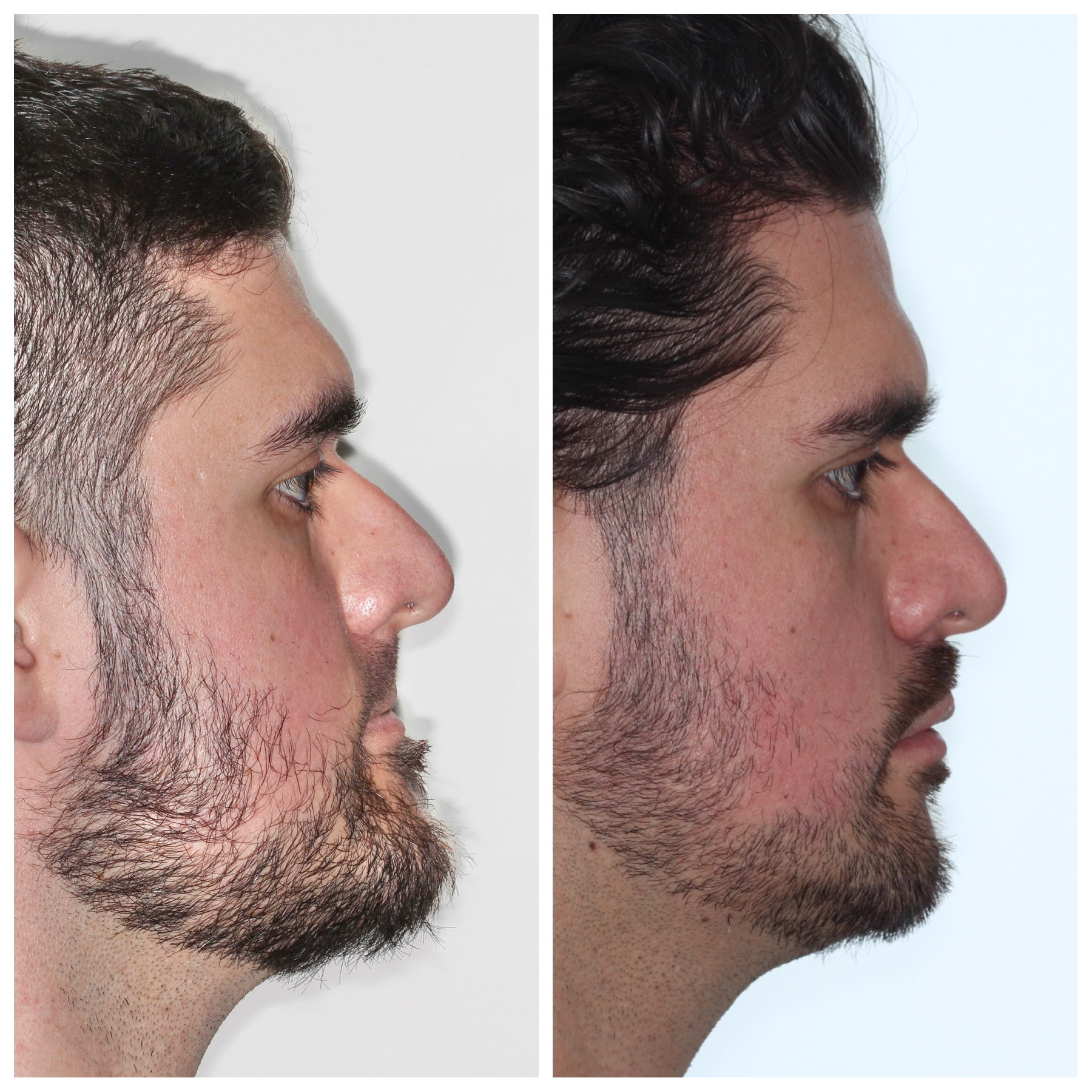
This is the question almost everyone asks before they ask anything else. Here is one patient, before treatment and after, so you can see it rather than take my word for it.
 Before
After
Before
After
The profile is where the skeletal pattern shows. This is a Class III pattern, which means the upper jaw sits back rather than the lower one. The middle of the face reads as flat, and the lower jaw looks prominent by comparison. After, the two jaws are balanced against each other and the profile follows a straighter line from brow to chin. Patients almost always describe this as looking more like themselves, not like someone else.
 Before
After
Before
After
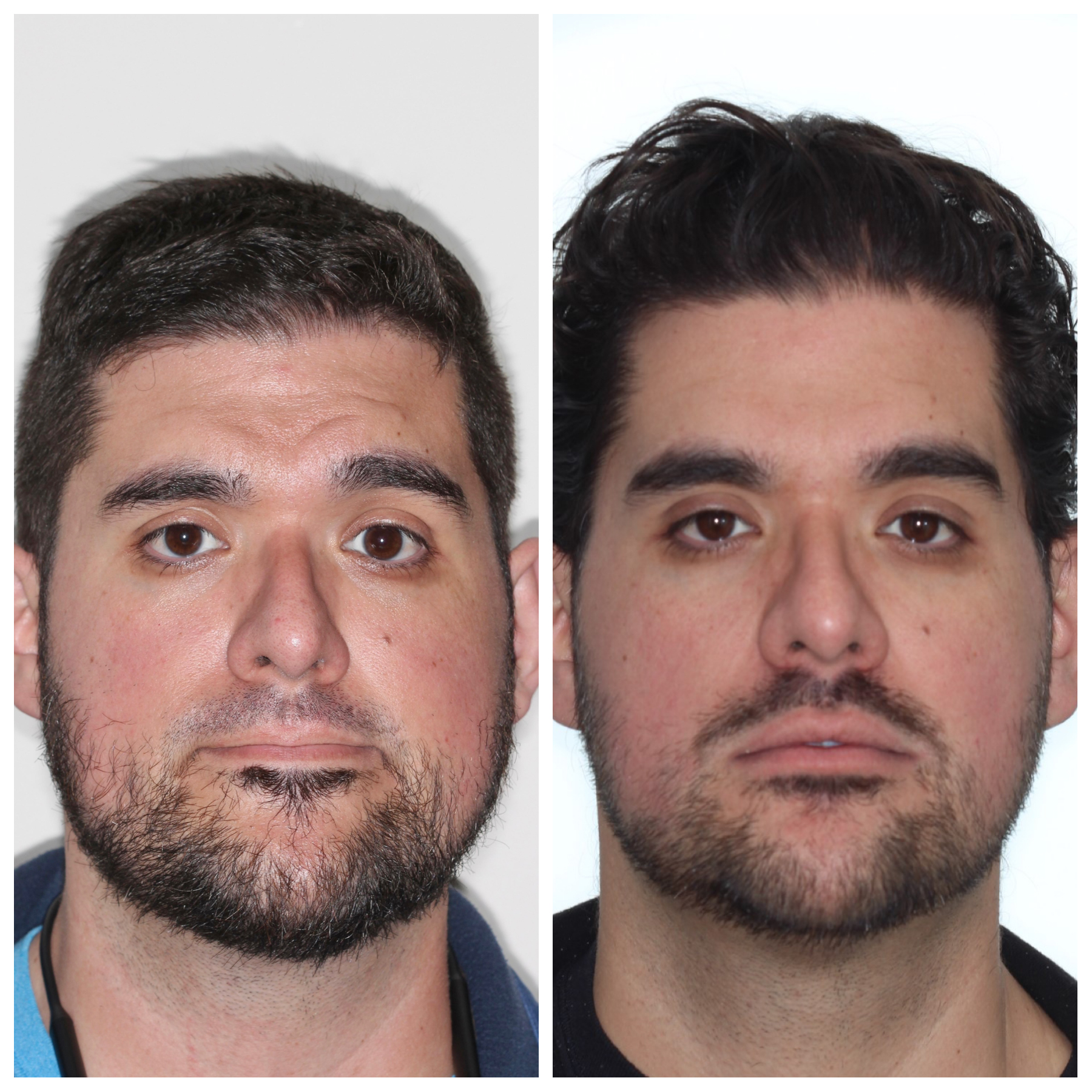
From the front, the difference is balance, not a different face. He still looks like himself. The lower third of the face is better proportioned, the lips come together without strain, and the jawline is defined rather than soft. This is what I mean when I say most patients feel they look like a rested version of themselves afterward, not like someone else.
 Before
After
Before
After
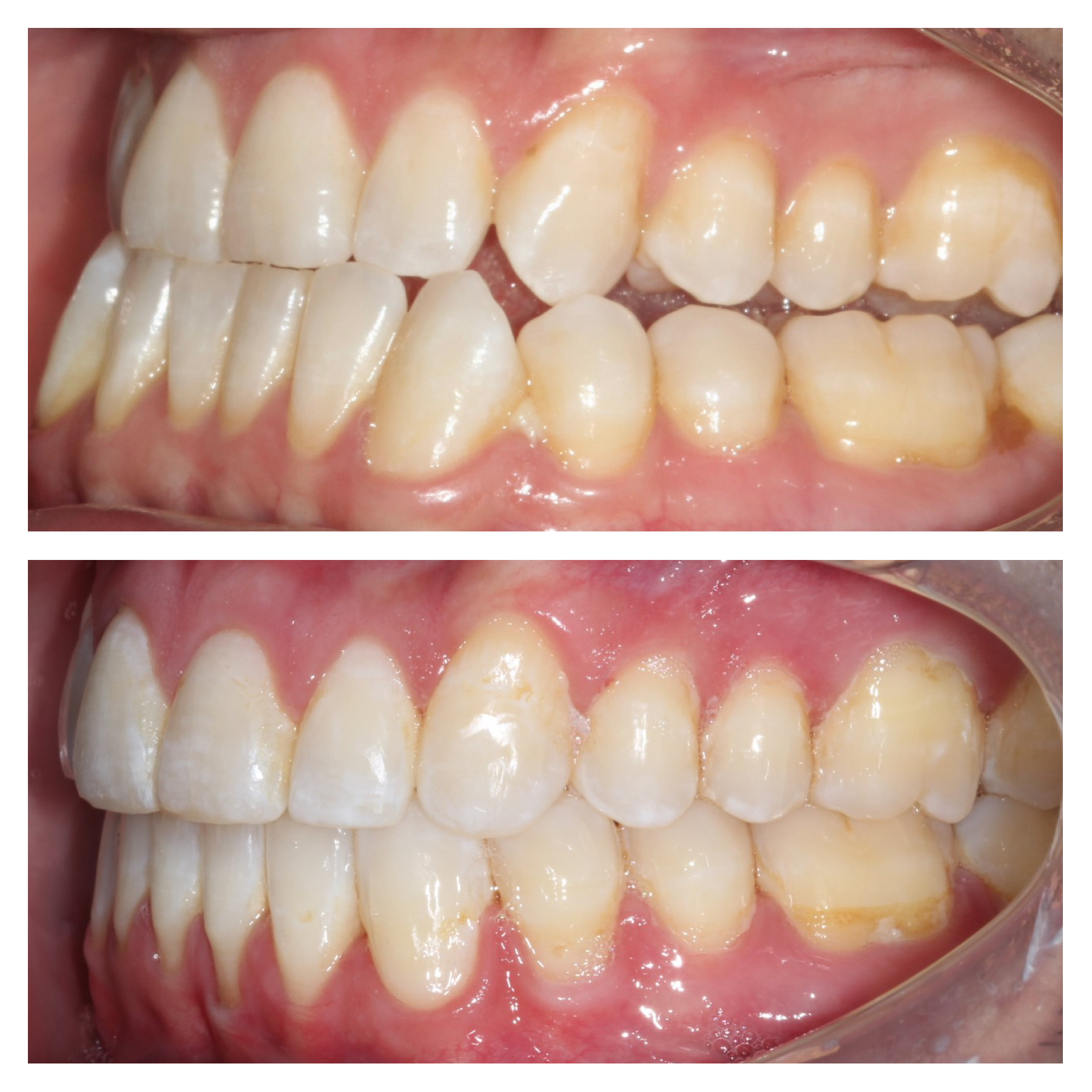
This is the part I handle. Before, the upper teeth sit behind the lower ones, because the upper jaw is recessed. Orthodontics alone cannot move a jaw, so the teeth get aligned first and the surgeon moves the jaws into place. After, the teeth meet the way they are supposed to, front and back. A bite that fits is not a cosmetic detail. It is what makes the new jaw position stable for the long run.
Photos of an actual patient of aligned. Orthodontics, shared with permission. Every case is different, and results vary from person to person. Jaw surgery is performed by an oral and maxillofacial surgeon, with the orthodontics before and after handled by Dr. Vanderstelt.
Here is the general arc, though your surgeon will give you the specifics for your case:
Week one is the most swelling, with liquids, rest, and short walks to keep your circulation moving. Weeks two to four bring the swelling down, a move to soft foods, and many people back to desk work. By six to eight weeks the bone continues to heal and activity and exercise gradually return.
Recovery, week by week
The general arc, though your surgeon will give you the specifics for your case.
Week one
The most swelling, with liquids, rest, and short walks to keep your circulation moving. Swelling peaks in the first five days and then steadily improves.
Weeks two to four
The swelling comes down, you move to soft foods, and many people are back to desk work.
Six to eight weeks
The bone continues to heal, and activity and exercise gradually return.
Every recovery is different, but most patients are surprised that the discomfort is less of a problem than the temporary swelling, congestion, and numbness.
Who is a candidate for jaw surgery for sleep apnea?
Jaw surgery tends to make the most sense for people who have moderate to severe obstructive sleep apnea confirmed by a sleep study, where severity is measured by the apnea-hypopnea index, or AHI, who have struggled to tolerate CPAP, and whose jaws are positioned too far back or are too small to leave enough room for the airway.
If you have a recessed lower jaw, a recessed or narrow upper jaw, jaw asymmetries, a long face, or a history of snoring and unrefreshing sleep, you are worth evaluating.
One worry I hear constantly is about age. People in their thirties, forties, and fifties often assume they have missed their window. They have not. Although recovery from surgery is often more predictable with older teens and young adults 16 to 25, even older adults do well with this treatment and can benefit meaningfully in their quality of life, especially when sleep apnea is present. It is also important that your surgeon evaluates whether you are a candidate for surgery.
If you are wondering whether adult orthodontic treatment still makes sense for you, the short answer is usually yes.
When jaw surgery is not the answer
Jaw surgery is not the right call for everyone, and I will say so when it is not. Some people have mild sleep apnea that does well on CPAP or an oral appliance. For others, the breathing problem is driven more by weight, nasal obstruction, enlarged tonsils, or tongue position than by the position of the jaws, so moving the jaws would not fix it. And some adults with a narrow upper jaw do better with adult palate expansion than with double jaw surgery. That is the whole reason an airway evaluation comes before any talk of surgery, so we can find the least invasive option that will actually improve your sleep.
How the main options compare
CPAP
Oral appliance
MARPE (adult palate expansion)
Jaw surgery (MMA)
Which one fits you depends on what is actually driving your sleep apnea. That is what an airway evaluation is for.
What if CPAP is not working?
CPAP is the first-line treatment for obstructive sleep apnea, and for many people it works well. But plenty of patients never make peace with it. The mask feels claustrophobic, they pull it off in their sleep without meaning to, the pressure is hard to tolerate, or it is one more thing they dread packing when they travel. Surgery is not the first thing to reach for.
When CPAP has genuinely not worked and your sleep apnea is moderate to severe, though, a structural option like jaw surgery becomes worth a serious look, and that is often the point at which a sleep physician sends a patient my way. In younger patients whose jaws are too small and whose sleep apnea is starting to develop, it can be worth considering surgery before the apnea worsens in later years. In some cases we start with MARPE to widen the upper jaw, take an updated sleep study, and only move the jaws forward with surgery if apnea is still present. That works well for teens and adults with a structurally narrow upper jaw and jaws that sit too far back, because widening the upper jaw with MARPE is a more organic movement and can start improving breathing sooner than waiting for surgery. Surgery is added only if it is still needed.
More results from the practice
No two cases look the same
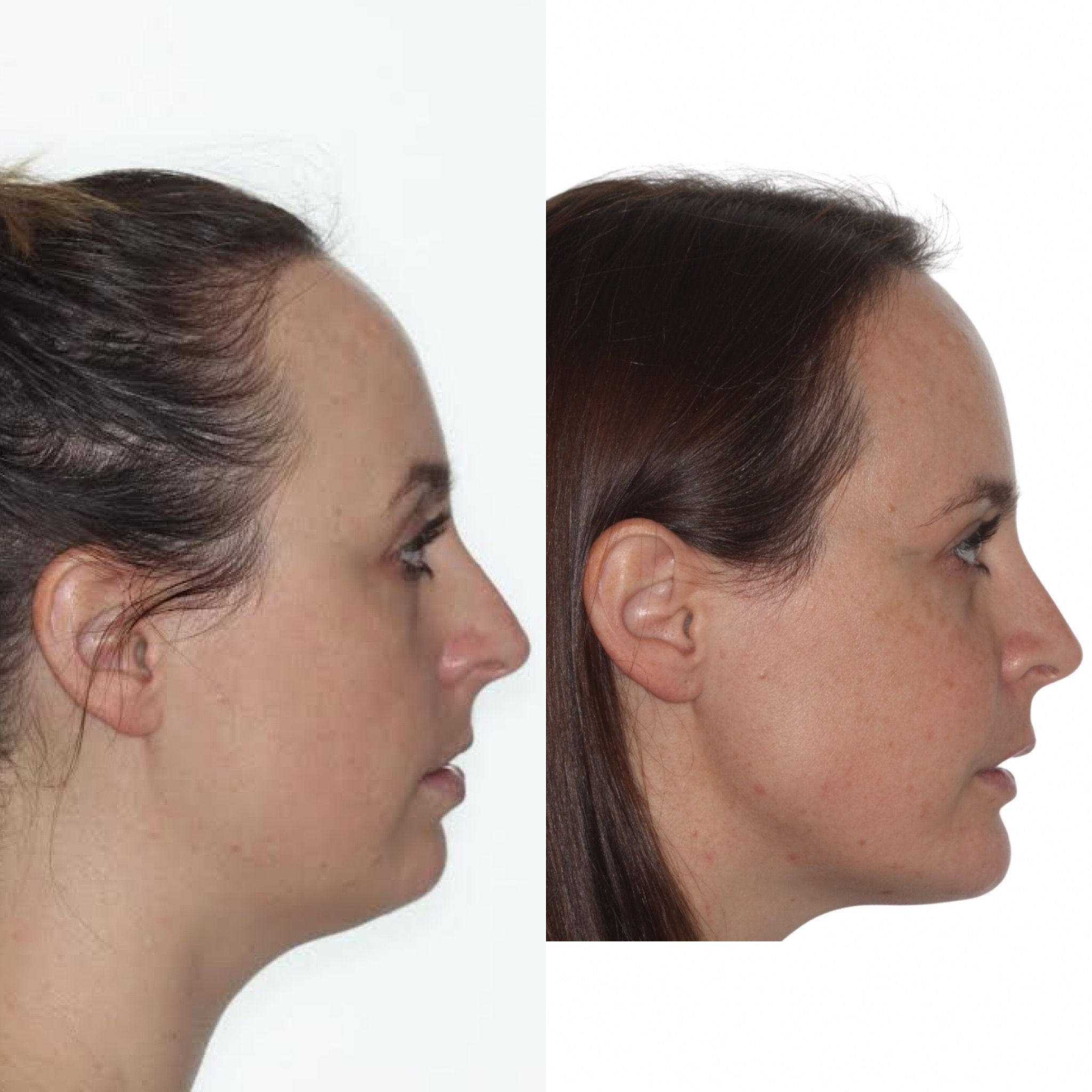
Every jaw is different, and so is every result. These are real patients treated at our South Pearl Street office, each one starting from a different problem. Tap the small images to see more views of each case.
 Before
After
Before
After
Profile
Bimax retrusive with asymmetryBoth jaws sit too far back here, a pattern called bimaxillary retrusion, and from the front you can see the bite is canted to one side. Two recessed jaws leave very little room behind the tongue, so this combination carries a very high risk of sleep apnea. Over time the asymmetry had also thrown off the balance of her face, her muscles, and her bite.
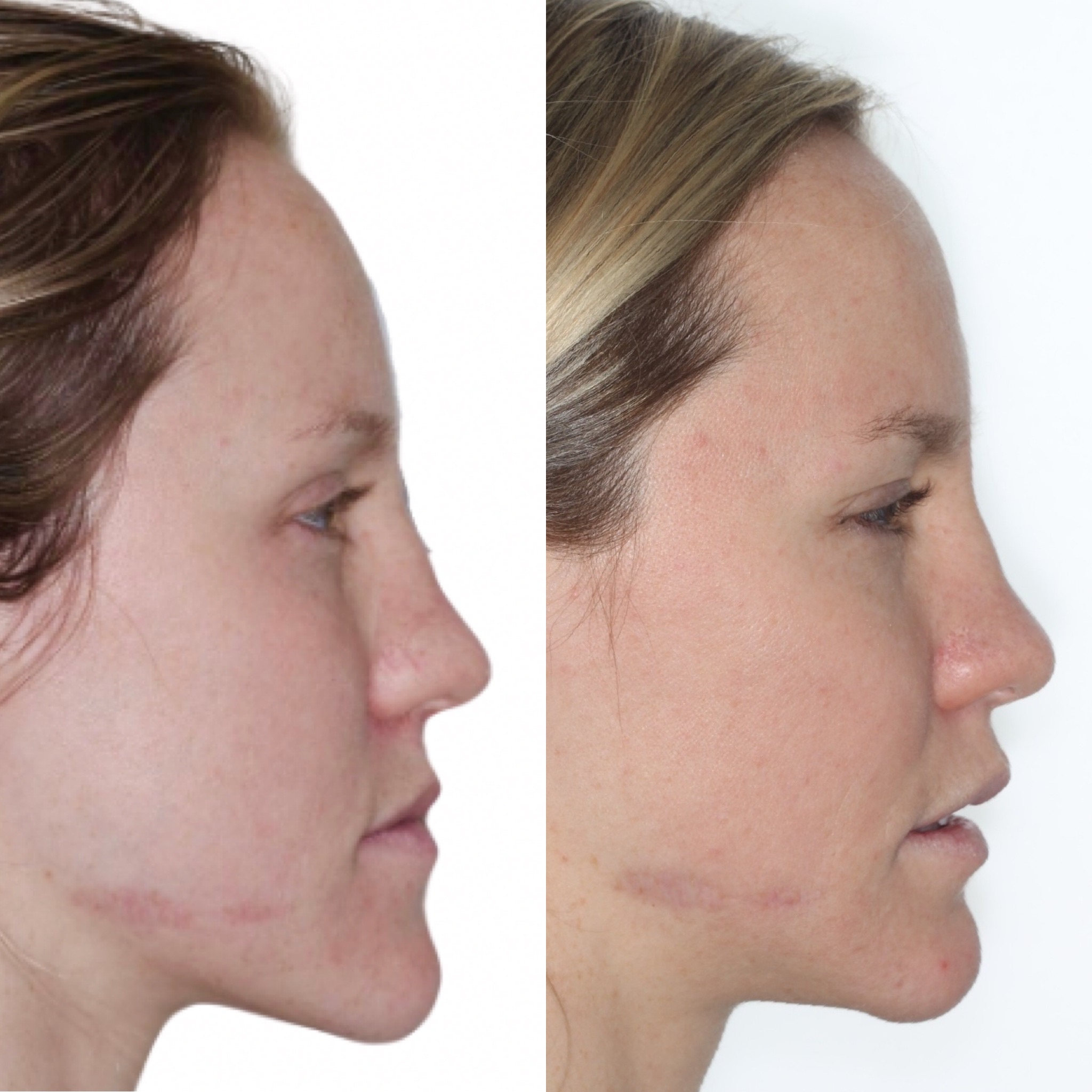 Before
After
Before
After
Profile
Class III – UnderbiteAn open bite means the front teeth do not meet at all when the back teeth are together, which turns something as ordinary as biting into a sandwich into a daily problem. Underneath it is a Class III skeletal pattern: the upper jaw sits back, the lower face is long, and the jaw angle is steep. Tap through to the bite views and you can watch that gap close. An open bite like this is one of the clearest reasons a surgeon gets involved, because the jaws themselves are what need moving.
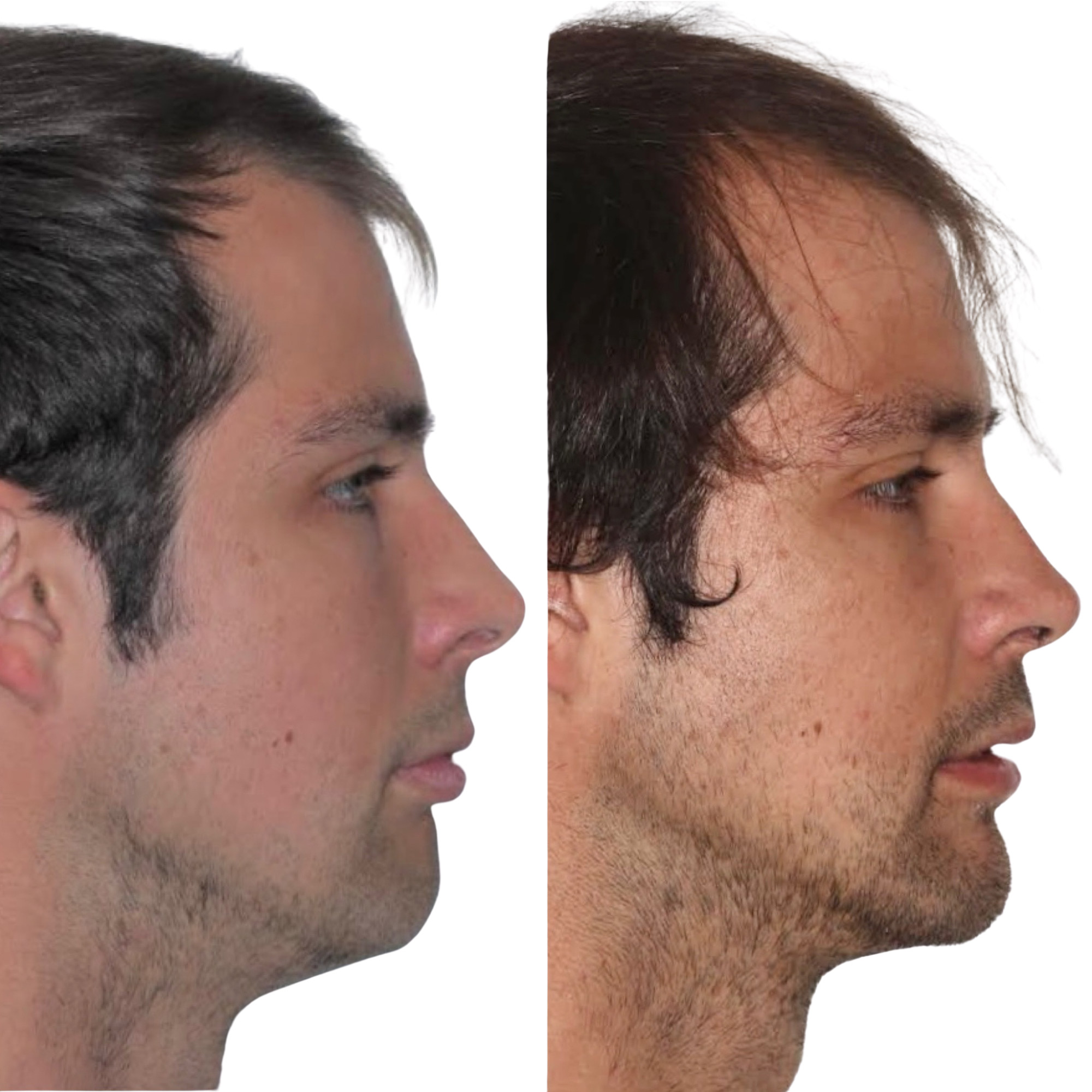 Before
After
Before
After
Profile
Class II – Excess OverbiteThis is the pattern people mean when they say their chin disappears. It is a Class II skeleton, where the lower jaw sits well behind the upper one, so the top teeth end up far ahead of the bottom teeth and the whole lower face reads as set back. A lower jaw in this position also tends to pull the tongue back toward the airway, which is why this pattern carries a higher risk of obstructive sleep apnea. Bringing the jaw forward changes the profile, the bite, and the airway at the same time, because they were never separate problems.
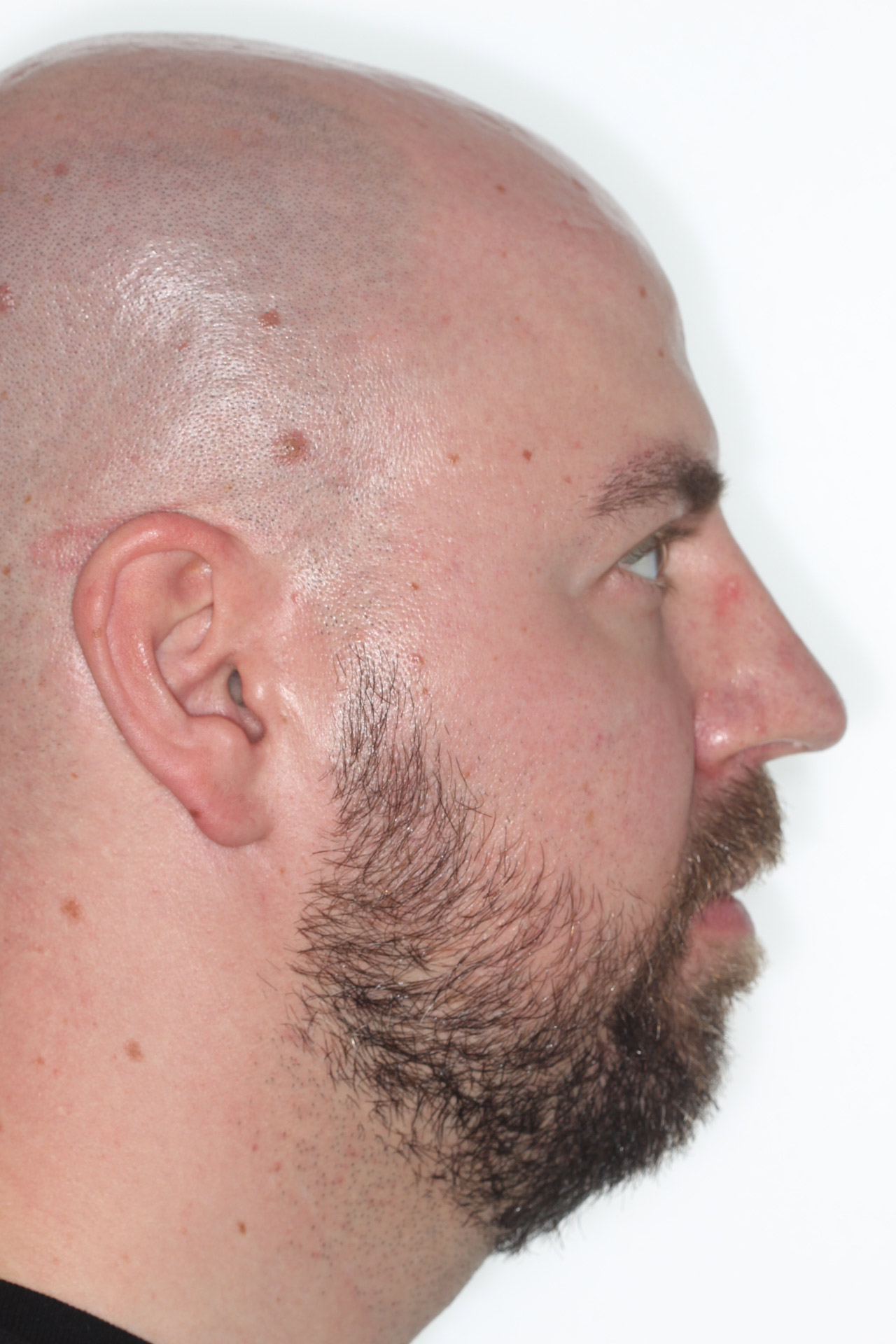 Before
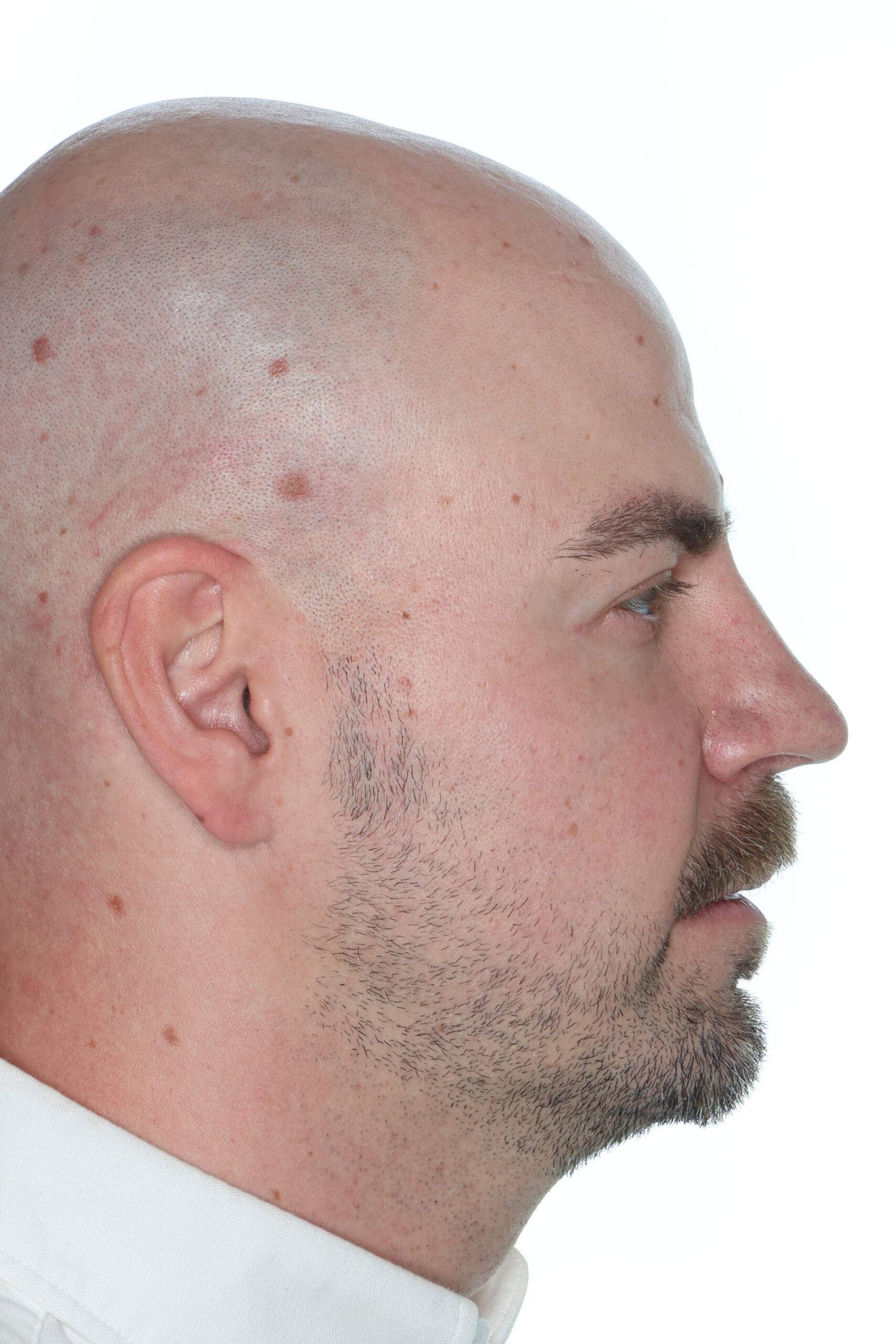 After
After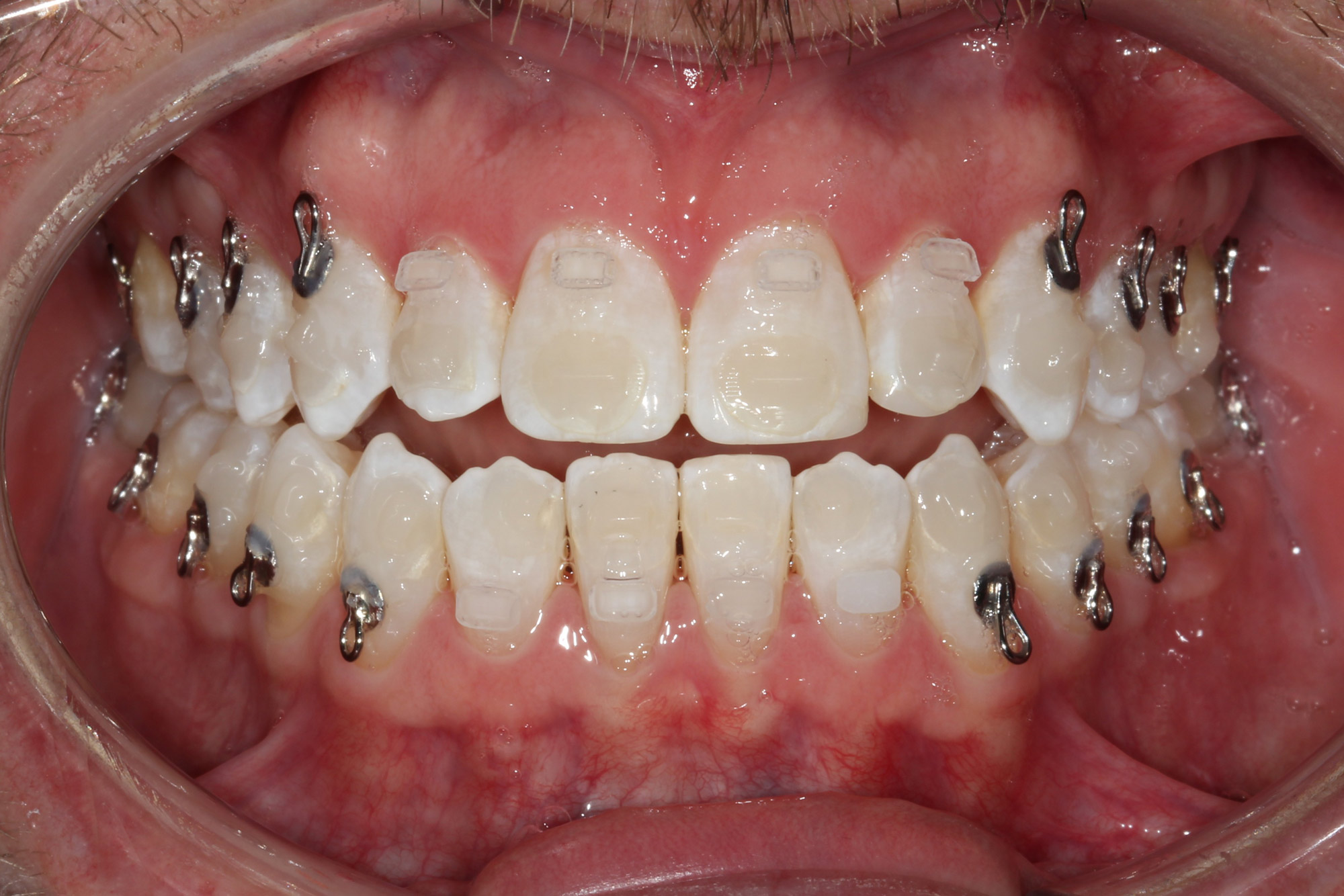 Before
 After
AfterA narrow upper jaw with an open bite and sleep apnea. The upper jaw was widened and both jaws brought forward, which opened the airway and closed the bite so the front teeth finally meet. See this case in full.
Photos of actual patients of aligned. Orthodontics, shared with permission. Every case is different, and results vary from person to person. Jaw surgery is performed by an oral and maxillofacial surgeon, with the orthodontics before and after handled by Dr. Vanderstelt.
How treatment works at Aligned Orthodontics
Your path with us is straightforward, even if the treatment itself is involved.
Many patients come to me after a Denver-area sleep physician has diagnosed their obstructive sleep apnea. It starts with an evaluation, where I review your airway, your bite, and your sleep history, and we talk honestly about your options including the non-surgical ones. If surgery is the right direction, I coordinate with trusted oral and maxillofacial surgeons in the Denver area, and I work alongside your sleep physician and primary care doctor, so everyone is moving toward the same plan.
I handle your pre-surgical orthodontics to prepare the bite, your oral and maxillofacial surgeon performs the jaw surgery, and then I bring you through the post-surgical alignment of your teeth and bite and into retention so the result lasts. Throughout, you have one orthodontist who knows your case from start to finish, right here on South Pearl Street.
Our practice sits at 1215 S Pearl St in the Platt Park neighborhood, a short drive from Wash Park, Cherry Creek, University Park, and the wider South Denver area, and patients travel to us from across the Denver metro for airway-focused care.
What the whole path looks like
One orthodontist who knows your case from start to finish, right here on South Pearl Street.
Airway evaluationWith Dr. V
I review your airway, your bite, and your sleep history using CBCT imaging and your sleep study, and we talk honestly about your options including the non-surgical ones.
Coordination with your surgical teamTogether
If surgery is the right direction, I coordinate with trusted oral and maxillofacial surgeons in the Denver area, and work alongside your sleep physician and primary care doctor so everyone is moving toward the same plan.
Pre-surgical orthodonticsWith Dr. V
Braces or aligners align your teeth so the jaws will fit together once the surgeon moves them. Usually about twelve to eighteen months. This is the phase where your bite feels worse before it looks better, and that is planned.
The surgeryYour surgeon
Your oral and maxillofacial surgeon performs the jaw surgery in a hospital or surgical setting under general anesthesia.
Post-surgical alignment and retentionWith Dr. V
I bring you through the alignment of your teeth and bite afterward, then into retention so the result lasts.
Visit us
aligned. Orthodontics
1215 S Pearl St, Denver, CO 80210
In the Platt Park neighborhood, a short drive from Wash Park, Cherry Creek, University Park, and the wider South Denver area. Patients travel to us from across the Denver metro for airway-focused care.
Book an appointmentWatch: Dr. V with a Denver jaw surgeon
Dr. Vanderstelt talks with Denver jaw surgeon Dr. Liddell about how jaw size ties to airway problems, headaches and neck tension.
Jaw surgery works best when the surgeon and the orthodontist plan it together. In this conversation, Dr. Vanderstelt and Dr. Liddell talk about why jaws that are out of line can strain the muscles of the head and neck, not just narrow the airway.
How much does jaw surgery for sleep apnea cost?
Cost comes from a few separate places, which catches people off guard. The surgery itself is billed through your oral and maxillofacial surgeon and the hospital or surgical center. The orthodontic treatment, meaning the braces or aligners before and after surgery, is a separate part of your care that we handle here. Because jaw surgery treats a diagnosed medical condition rather than a cosmetic one, medical insurance often covers part of the surgical cost when specific criteria are met, though that always depends on your plan and your documentation.
Every case is different, so we go over the orthodontic fees with you directly, offer payment plans for that portion, and help coordinate with your surgical team through the insurance process.
A real patient of the practice
An open bite, closed with jaw surgery
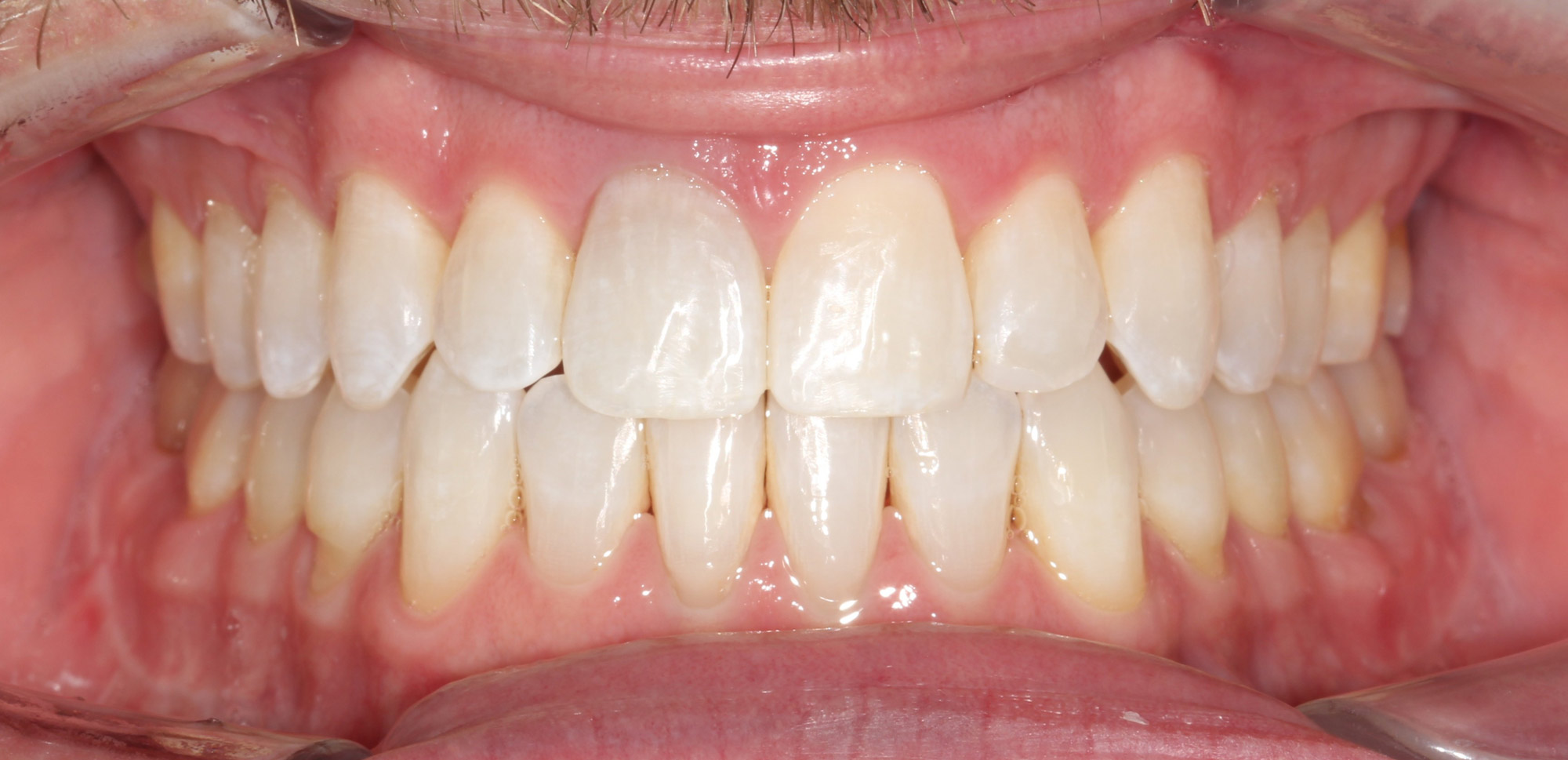
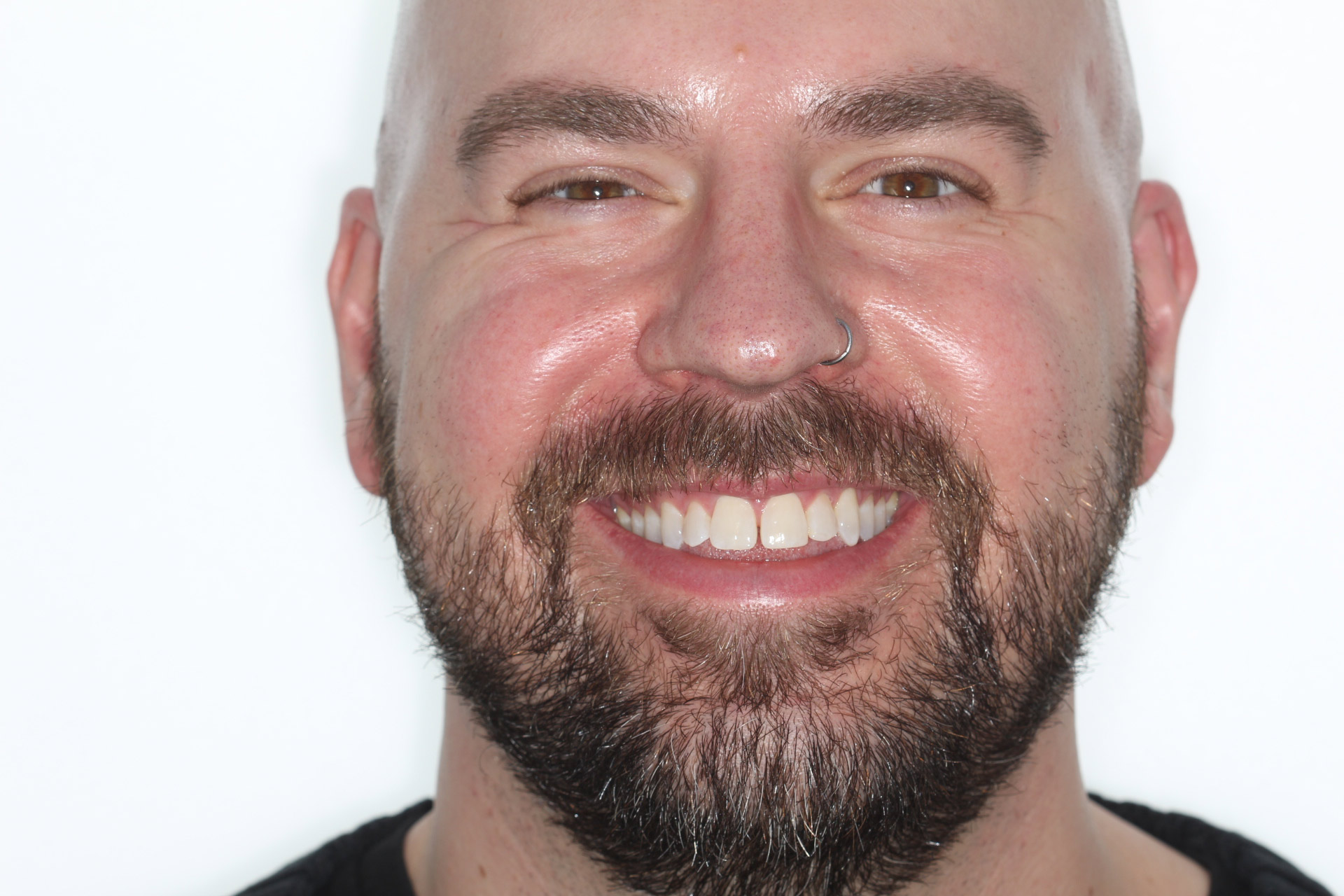
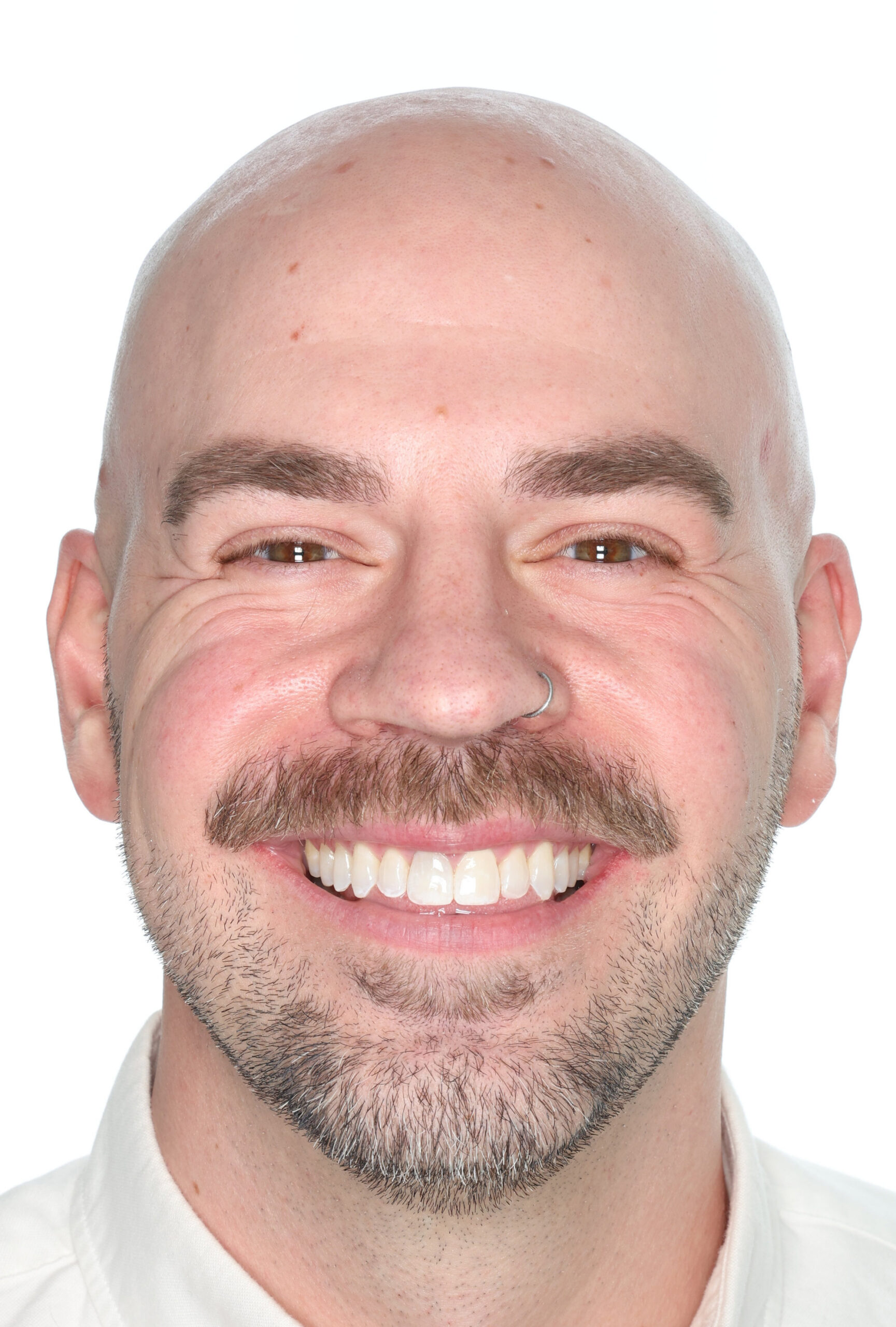
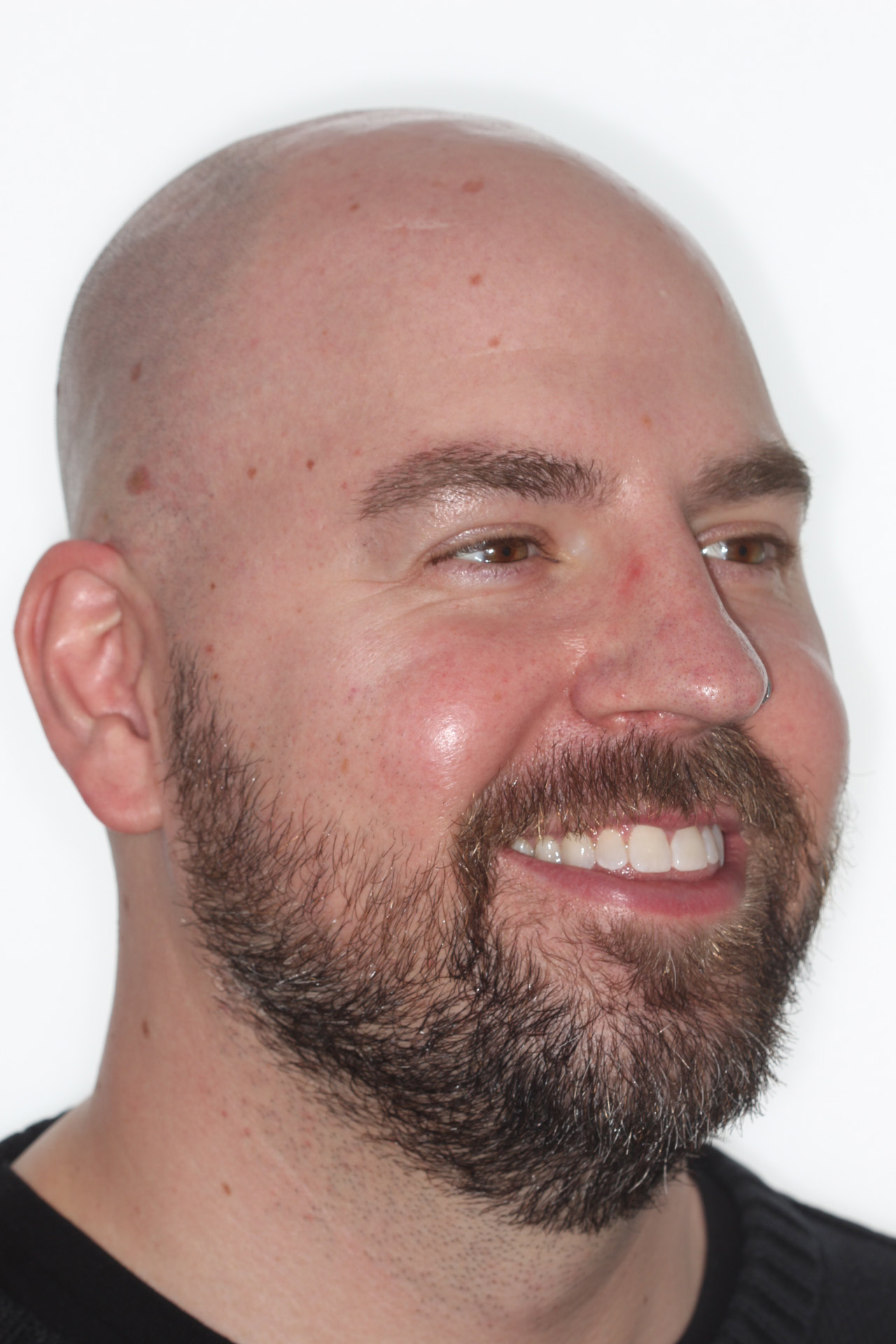
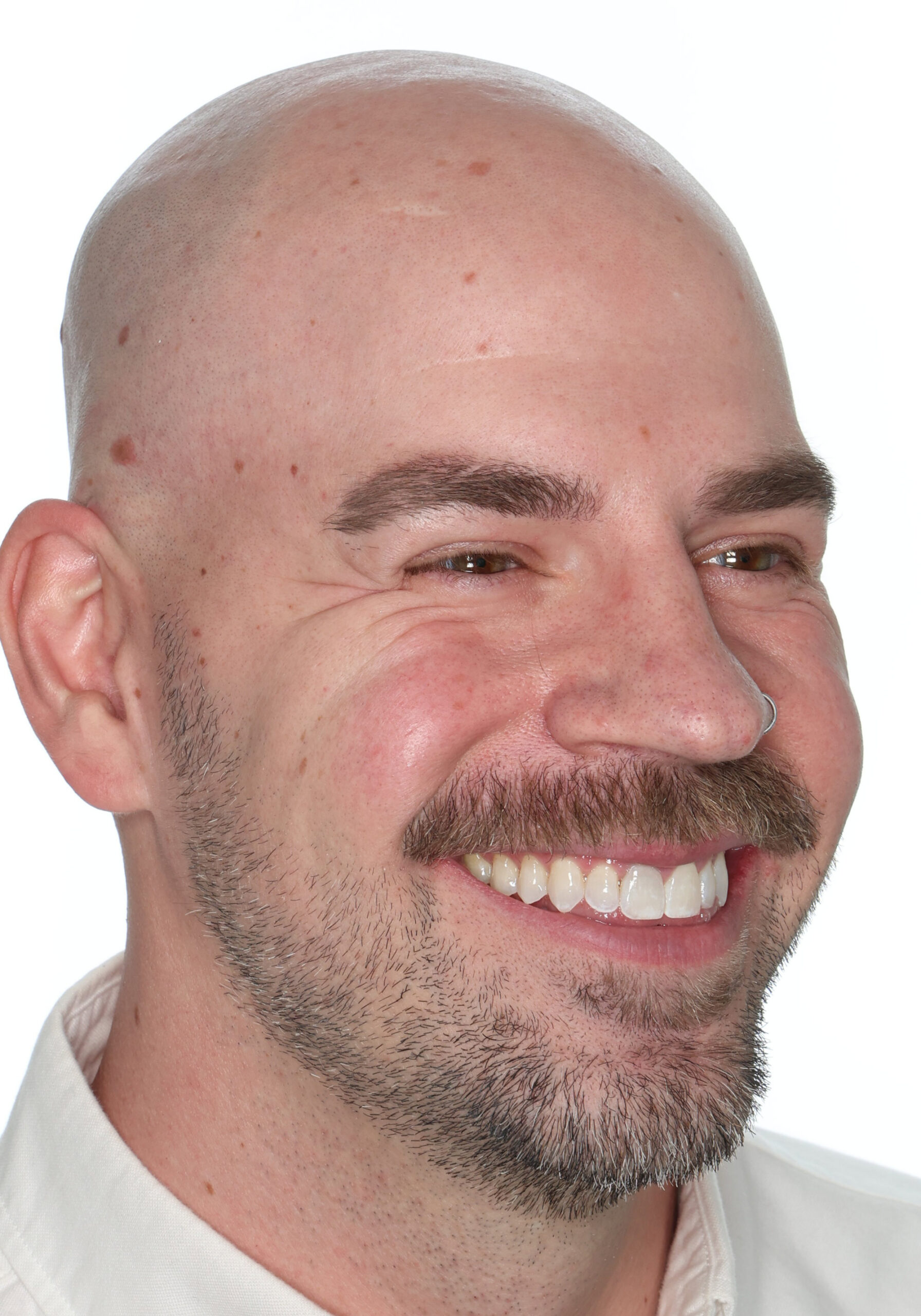
This patient had a narrow upper jaw, an open bite, and sleep apnea. The upper jaw was widened surgically and both jaws were brought forward, which opened the airway through the nose and throat and, at the same time, balanced the face and closed the bite. Tap through the views to see it.
BeforeAfterThe profile carries the airway story. Bringing both jaws forward makes more room behind the tongue, which is what opens the airway, and it gives the chin and jawline definition at the same time. The change you see here and the change that helps the breathing are the same movement.
 Before
 After
AfterFrom the front, the face reads as more balanced. Widening the upper jaw gives the smile more width to fill, and he still looks like himself, just without the strain. Most patients tell me this is the part friends and family notice first.
 Before
 After
AfterThe three-quarter view is how people actually see you. It shows the lower face carrying better against the cheekbones, with the jaw sitting where it should. Nothing looks rearranged, it looks settled.
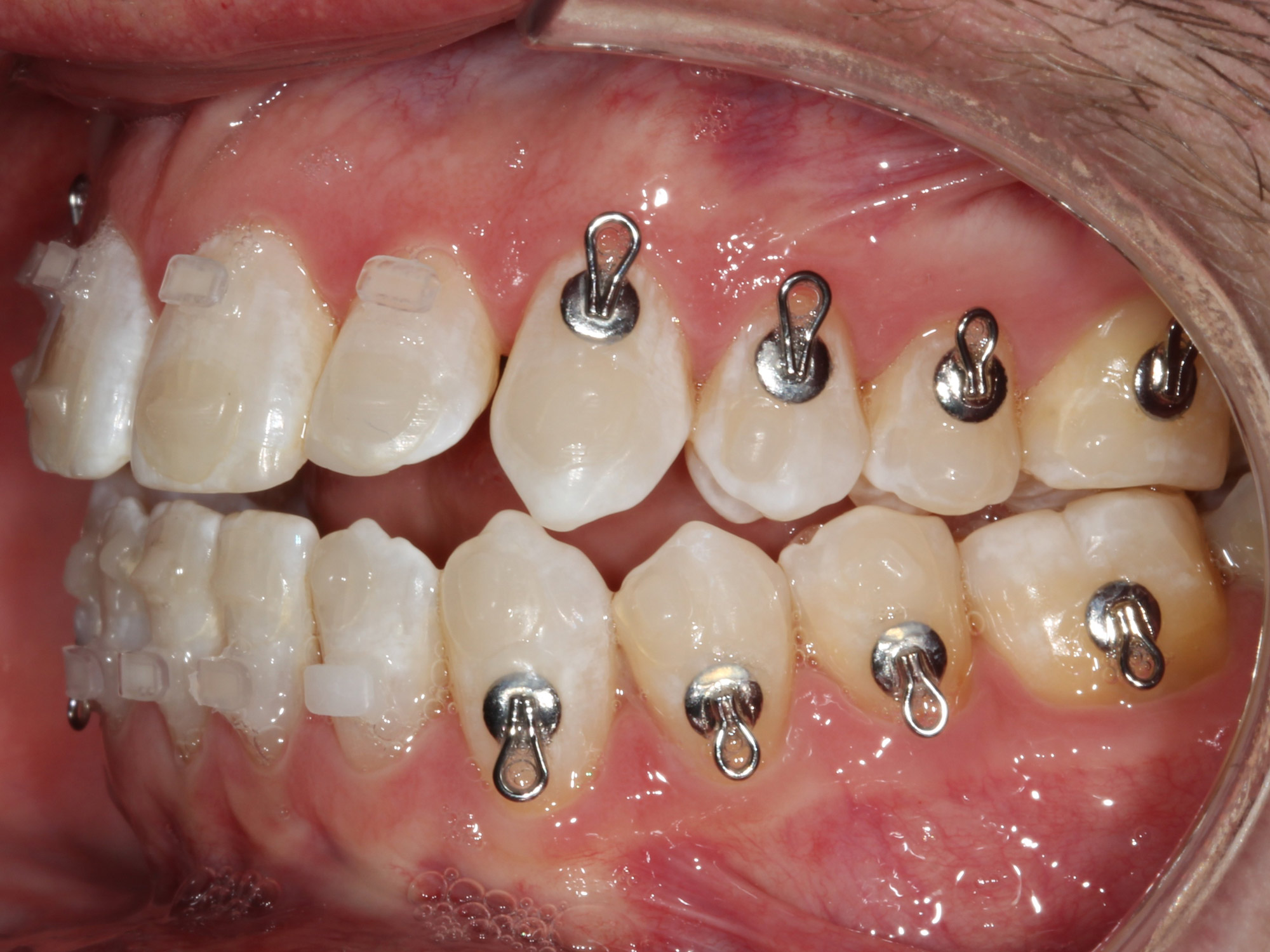
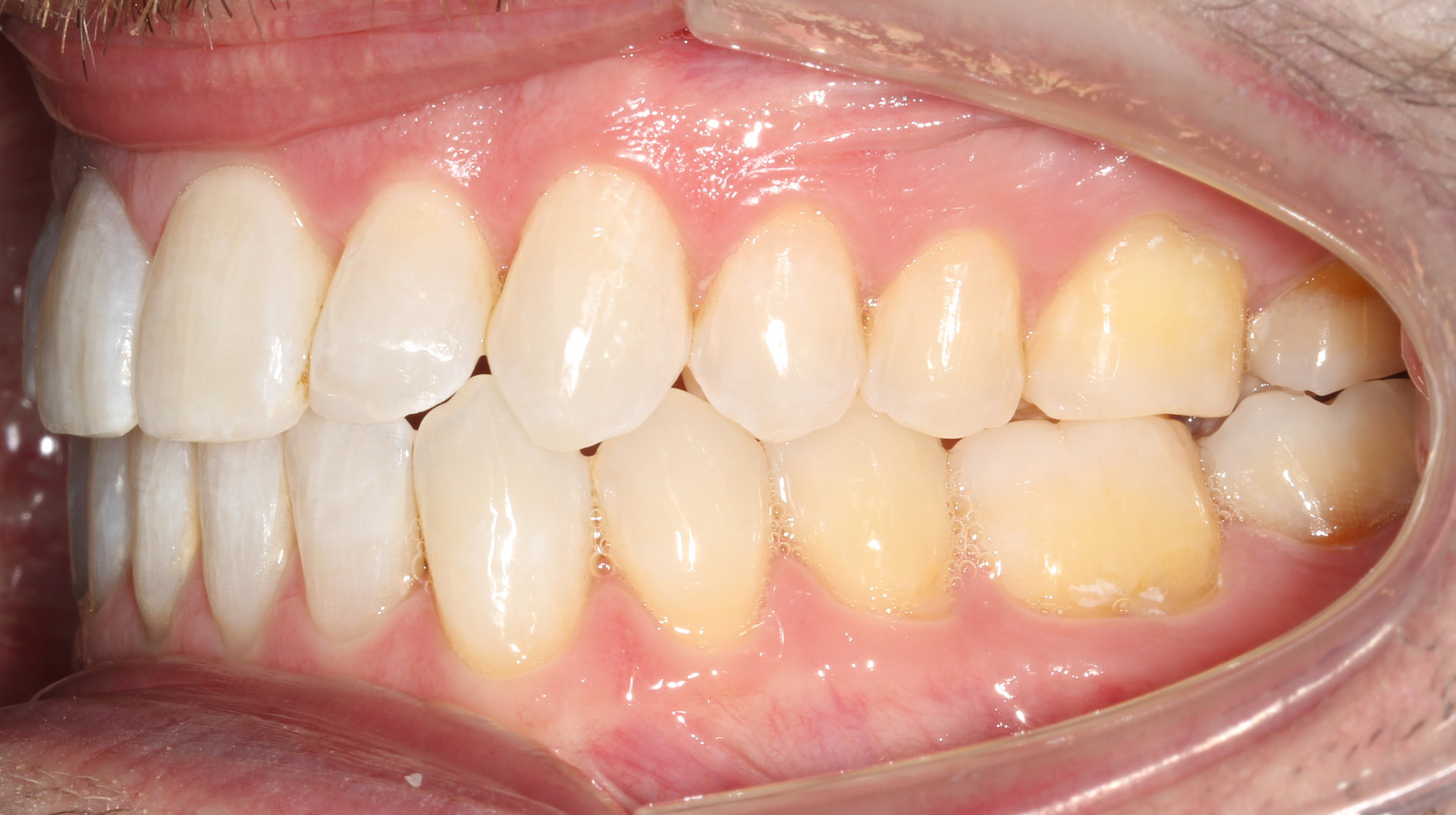
BeforeAfterThis is what an open bite is, and what closing it looks like. Before, the front teeth do not touch at all when the back teeth are together, which makes biting into food a daily struggle. After, they meet the way they should. The braces in the before photo are the pre-surgical phase that sets the teeth up for the surgery.
 Before
 After
AfterFrom the side, you can see the teeth fitting together back to front. A bite that meets evenly along the whole arch is what keeps the new jaw position stable, so the result holds rather than drifting back.
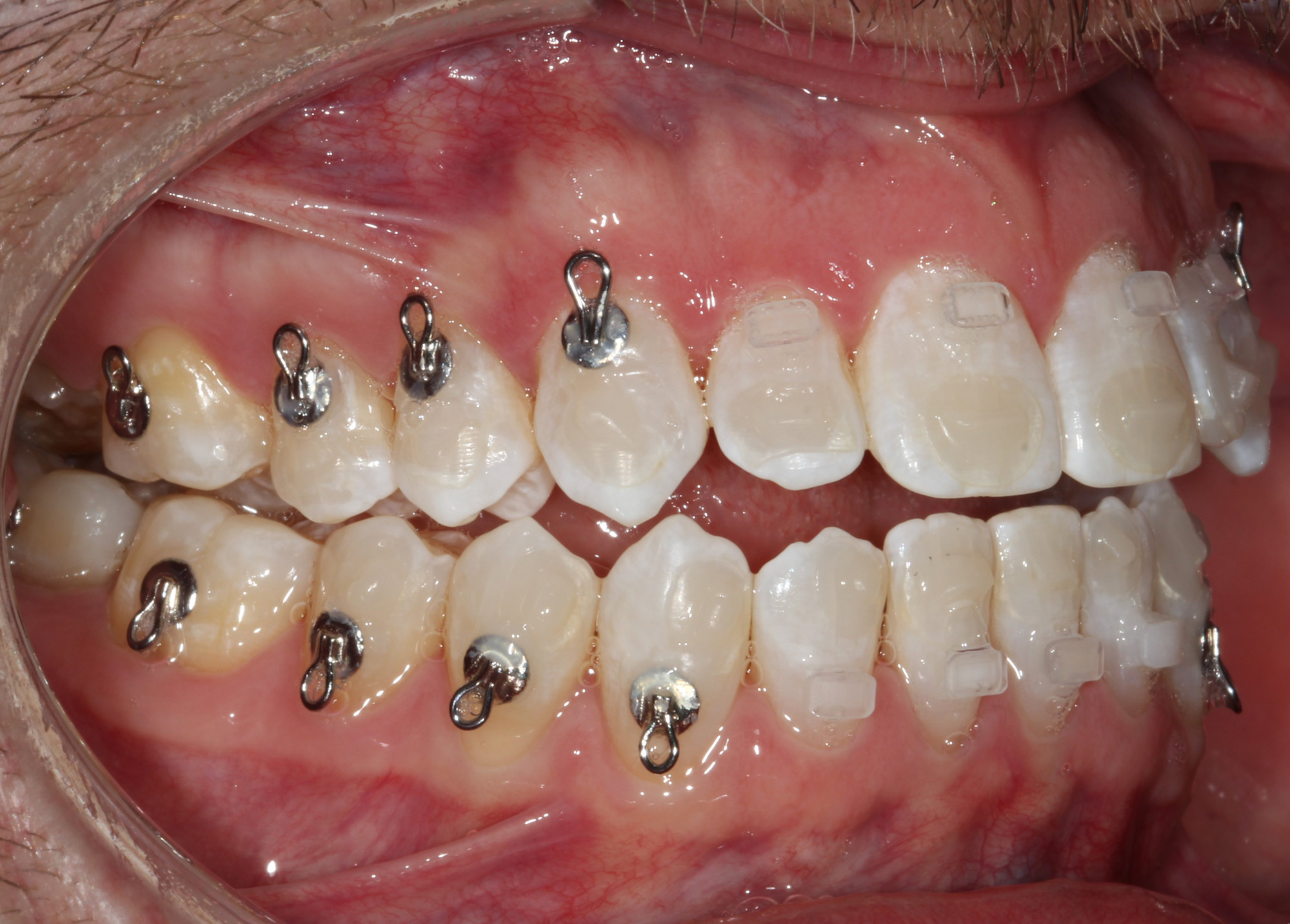 Before
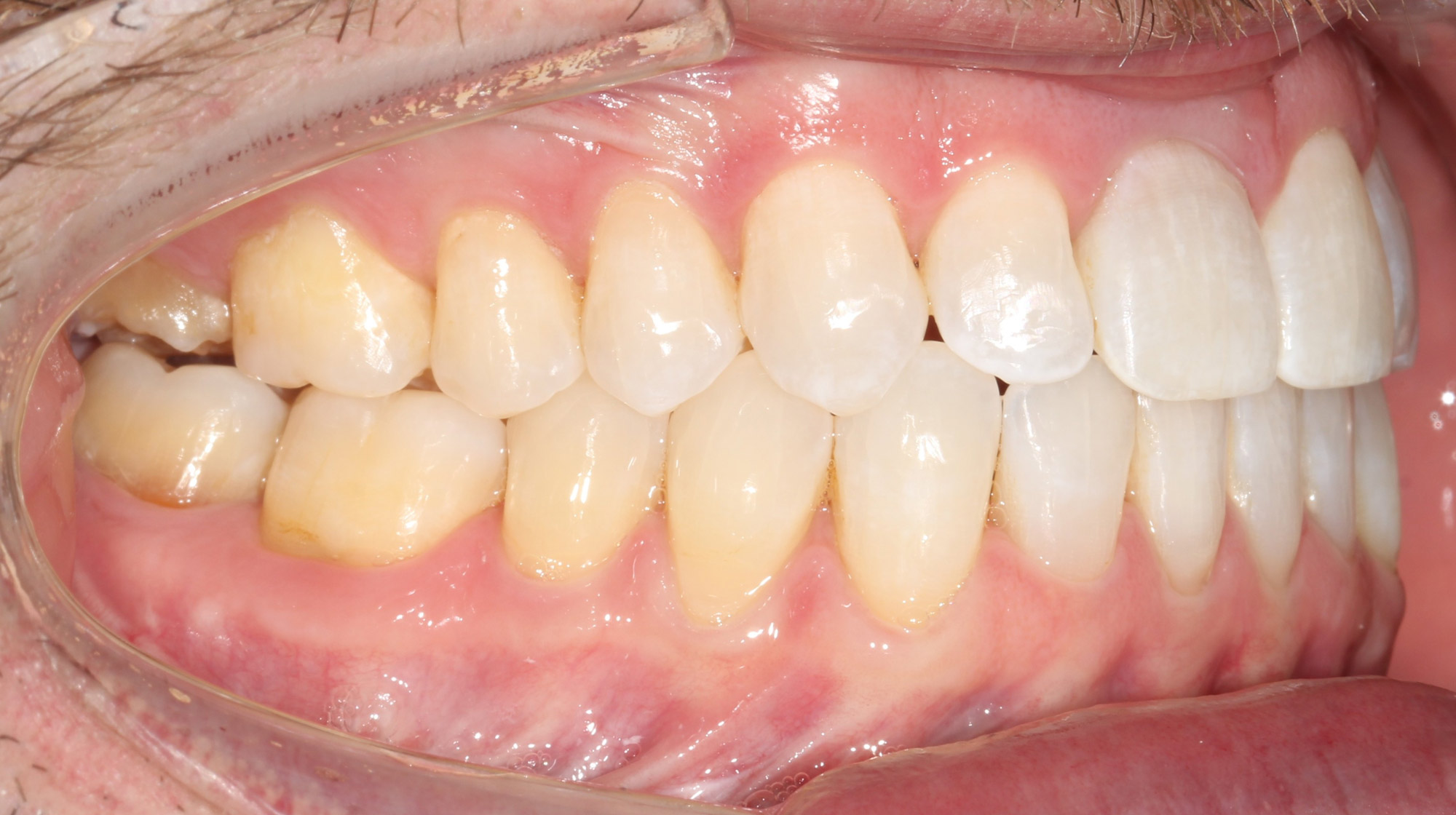 After
AfterThe other side tells the same story. Both sides have to meet correctly for the bite to work, which is why we document the case from every angle rather than just the front.
Photos of an actual patient of aligned. Orthodontics, shared with permission. Every case is different, and results vary from person to person. Jaw surgery is performed by an oral and maxillofacial surgeon, with the orthodontics before and after handled by Dr. Vanderstelt.
Frequently asked questions
How does jaw surgery help sleep apnea?
Jaw surgery for sleep apnea moves the upper and lower jaws forward, and often widens the upper jaw and nasal passageway, which enlarges the airway and keeps it from collapsing during sleep. Because it changes the structure of the airway itself, it addresses the structural cause of the obstruction rather than managing symptoms the way a CPAP machine does. For the right candidate the improvement in breathing and sleep is built to last, though results vary from person to person.
What is double jaw surgery?
Double jaw surgery is the common name for maxillomandibular advancement, where a surgeon repositions both the upper jaw and the lower jaw at the same time. When it is performed to treat sleep apnea, the goal is to advance both jaws forward to open the airway. The same procedure is also used to correct significant bite problems and improve facial balance.
Do I really need braces or aligners before jaw surgery for sleep apnea?
In most cases, yes. Braces or aligners align your teeth and prepare your bite so that the jaws fit together correctly once the surgeon moves them. This pre-surgical phase usually runs about twelve to eighteen months, and you typically wear braces or aligners for several months after surgery as well to settle the final bite.
What is recovery from jaw surgery actually like?
Swelling peaks in the first five days and then steadily improves over the following weeks. For most people the harder parts are not sharp pain but pressure, numbness, congestion, and tiredness, and many say it was more manageable than they expected. You can speak within a few days, you will be on liquids and soft foods for several weeks while the bone heals, and most patients are back to work or school in about three to four weeks.
How long does the whole process take?
Plan on roughly two to two and a half years from start to finish for a full surgical orthodontic case. That includes the pre-surgical braces phase, the surgery and initial healing, and the post-surgical alignment and retention. I will give you a clearer timeline for your specific case once I have seen your imaging.
Does jaw surgery change your face?
It can, and usually in a way patients are happy with. Advancing the jaws often improves the profile, jawline, and lip support, so many people feel they look better afterward, not different in a way that bothers them. Moving the upper jaw can also slightly change the area around the nose, which your surgeon plans for on purpose. Your surgical plan is designed with both your airway and your appearance in mind.
Is jaw surgery for sleep apnea covered by insurance?
Because it treats a diagnosed medical condition, jaw surgery for sleep apnea may be eligible for medical insurance coverage, unlike purely cosmetic procedures. Coverage always depends on your specific plan, your diagnosis, and your documentation, so it is something to confirm carefully. The orthodontic portion is billed separately, and we offer flexible payment plans for that part of your care.
Are there alternatives to jaw surgery?
Sometimes. Depending on what is driving your sleep apnea, options like adult palate expansion with MARPE or other airway-focused orthodontic care may help, and CPAP and oral appliances remain options for many people. The only way to know what fits you is a proper airway evaluation, which is exactly where we start.
What patients say about being told the truth
5 stars across more than 270 Google reviews from Denver families and adults.
Book your consultationYou do not have to figure this out alone
If you have been losing sleep, fighting with a CPAP machine, or quietly dreading the idea of surgery, the most useful next step is simply to find out where you actually stand. I will look at your airway, walk you through every option in plain language, and give you an honest recommendation, even if that recommendation is that you do not need surgery at all. My goal is not to convince you that surgery is the answer. It is to help you understand whether it is the right answer for you.
About Dr. Vanderstelt
Dr. Amanda Vanderstelt (DMD, MSD) is a board-certified orthodontist with training in airway-focused care, practicing at Aligned Orthodontics on South Pearl Street in Denver. She evaluates the airway and bite for patients considering jaw surgery, provides the pre-surgical and post-surgical orthodontics these cases require, and coordinates care with oral and maxillofacial surgeons. She has personally undergone adult airway treatment, which informs how she counsels patients weighing surgical and non-surgical options. You can read more on her profile page.
The next step is smaller than you think
Find out whether you actually need surgery
My goal is not to convince you that surgery is the answer. It is to help you understand whether it is the right answer for you. Come in, and I will look at your airway, walk you through every option in plain language, and tell you the truth, even if the truth is that you do not need surgery at all.
Book your airway evaluation- Board-certified orthodontist
- 3D CBCT airway analysis
- 5 stars, 270+ Google reviews
- South Pearl Street, Denver
Sources
Zaghi S, Holty JE, Certal V, et al. Maxillomandibular Advancement for Treatment of Obstructive Sleep Apnea: A Meta-analysis. JAMA Otolaryngology Head and Neck Surgery. 2016;142(1):58 to 66.
Camacho M, Noller MW, Del Do M, et al. Long-term Results for Maxillomandibular Advancement to Treat Obstructive Sleep Apnea: A Meta-analysis. Otolaryngology Head and Neck Surgery. 2019.
American Academy of Sleep Medicine. Obstructive sleep apnea, Sleep Education.
American Association of Oral and Maxillofacial Surgeons. Corrective jaw surgery.
This page is for general education and is not a substitute for a clinical evaluation. Jaw surgery is performed by an oral and maxillofacial surgeon, and decisions about diagnosis and treatment should be made with your own medical and surgical team.