
Platt Park, Denver · Crooked teeth
Crooked Teeth in Denver
If your teeth are crooked and you live in Denver, you have probably wondered whether it is worth fixing as an adult, what it would actually take, and whether crooked teeth are only a cosmetic problem. At Aligned Orthodontics on South Pearl Street, Dr. Amanda Vanderstelt looks at crooked teeth a little differently.
She is a board-certified orthodontist who straightens teeth and also pays attention to how your bite, jaw, and breathing fit together. Crowded or crooked teeth can be a sign of something happening underneath the surface, and she wants to understand the whole picture before she recommends anything.

Dr. Vanderstelt is a board-certified orthodontist with airway-focused care, rated 5.0 stars across more than 270 Google reviews. 3D imaging guides treatment planning, and flexible payment plans are available at the South Pearl Street office in Platt Park.
Crooked teeth are common, and you are not behind for wanting to fix them
Most people have at least some crowding or unevenness, and a lot of adults have lived with it for years. You probably fall into one of these:
- You had braces as a teenager, but your teeth slowly shifted back.
- You never had treatment at all, and things have crowded over time.
- You have wanted to fix it for years, and you have finally decided it is your turn.
None of that means you missed your window.
We see adults in Denver every week who decided it was finally their turn. Straightening your teeth as an adult is easier and more comfortable than it used to be, and the people we treat almost always tell us they wish they had not waited so long. If you are wondering whether it is worth it later in life, our page on whether adults need orthodontic treatment is a good place to start. Here is what adult braces in Denver look like at Aligned.
Your orthodontist
Dr. Amanda Vanderstelt
DMD, MSD · Board-certified orthodontist with training in airway-focused care
Dr. Vanderstelt straightens teeth and pays attention to how the bite, jaw, and breathing fit together, because those often explain why teeth got crooked in the first place. She has personally gone through adult palate expansion, so she understands treatment from the chair, not just the textbook.
Meet Dr. Vanderstelt ⊢What actually causes crooked teeth
Teeth do not get crooked at random. Genetics play a part, but a lot of it comes down to how the jaws grew during childhood and how much room the teeth had to come in straight. Breathing patterns, tongue posture, and habits like thumb sucking can all change that. And in adults, teeth keep shifting over the years, so crowding can show up or come back long after you thought your teeth had settled. A few of the most common reasons:
- Not enough room. When the jaw is narrow or the arch is small, teeth crowd together and overlap because there is nowhere else for them to go.
- Bite and jaw position. If the upper and lower jaws do not line up well, teeth drift and tilt to compensate.
- Habits during childhood. Long-term mouth breathing, thumb sucking, or low tongue posture can change how the jaw develops and leave less space for teeth.
- Time and natural shifting. Teeth move throughout life. Even people who had braces years ago can see crowding return, especially if they stopped wearing a retainer.
Understanding the why matters, because it changes the treatment. Two people with similar looking smiles can need very different plans.
Why are our jaws getting smaller?
Crooked teeth are not just bad luck. Over generations our jaws have grown narrower, and softer modern diets are a big part of why. Narrower jaws mean less room for teeth to come in straight, and they can affect how well we breathe too. Dr. Vanderstelt breaks it down in this short video.
Crooked teeth are not always just a cosmetic problem
This is the part a lot of people do not hear until they are in the chair. Straightening your teeth often does more than improve how your smile looks.
Crowded and overlapping teeth are harder to keep clean, which raises the risk of cavities and gum problems over time. A bite that does not line up can wear teeth down unevenly and put strain on the jaw. There is also the everyday function side that people rarely think about until it improves. When your teeth do not meet the way they should, you compensate without realizing it, and patients often tell us the thing they noticed first was being able to bite cleanly through a sandwich without their teeth sliding past each other. And in some cases, crowding traces back to how the jaw and airway developed, which can connect to things like grinding, jaw tension, or how well you breathe and sleep.
That does not mean every crooked tooth points to a bigger issue. It means it is worth having someone look closely. Dr. Vanderstelt is a board-certified orthodontist with training in airway-focused care, so when she straightens teeth she is also paying attention to whether anything else deserves a closer look. If she sees signs that breathing or jaw development is part of your picture, she will tell you what she sees and can recommend a dedicated airway assessment to look deeper. That assessment is its own focused appointment rather than part of a standard consultation.
You can read more about how straightening teeth connects to your overall health in our guide on why orthodontic treatment supports your overall health.
A real patient story
Phil Sorber
Google review · Local Guide
Phil’s story is one we hear a lot. Crooked since childhood, lived with it for years, and at some point it became more than a looks issue. Coming in as an adult takes some nerve, and our whole team works to make that easier. You can read Phil’s review and our other 270+ reviews on Google. It is normal to feel self-conscious about starting treatment later in life, and it helps to see how many other adults have been right where you are.
From our patients
What people say on Google
Signs your crooked or crowded teeth might be more than a looks issue
Plenty of people have crooked teeth and never notice a problem beyond appearance. But some signs are worth paying attention to, because they can mean your bite or jaw alignment deserves a closer look:
Quick self-check: is it more than a looks issue?
Tick anything that sounds like you. None of these are a diagnosis, but they are worth mentioning if you come in.
If any of those sound familiar, it is worth having someone look. An orthodontic evaluation can tell you whether your crooked or crowded teeth are part of what is going on, and what your options are if they are.
How do you fix crooked teeth?
It starts with figuring out why they got crooked and how much movement your case needs. Milder crowding can often be moved with clear aligners. More complex crowding or bite problems usually call for braces, which give more control over each tooth.
The right tool depends on the cause, not just the look, so Dr. Vanderstelt checks the position of your teeth, how your bite fits together, and any jaw or airway concerns before she builds a plan.
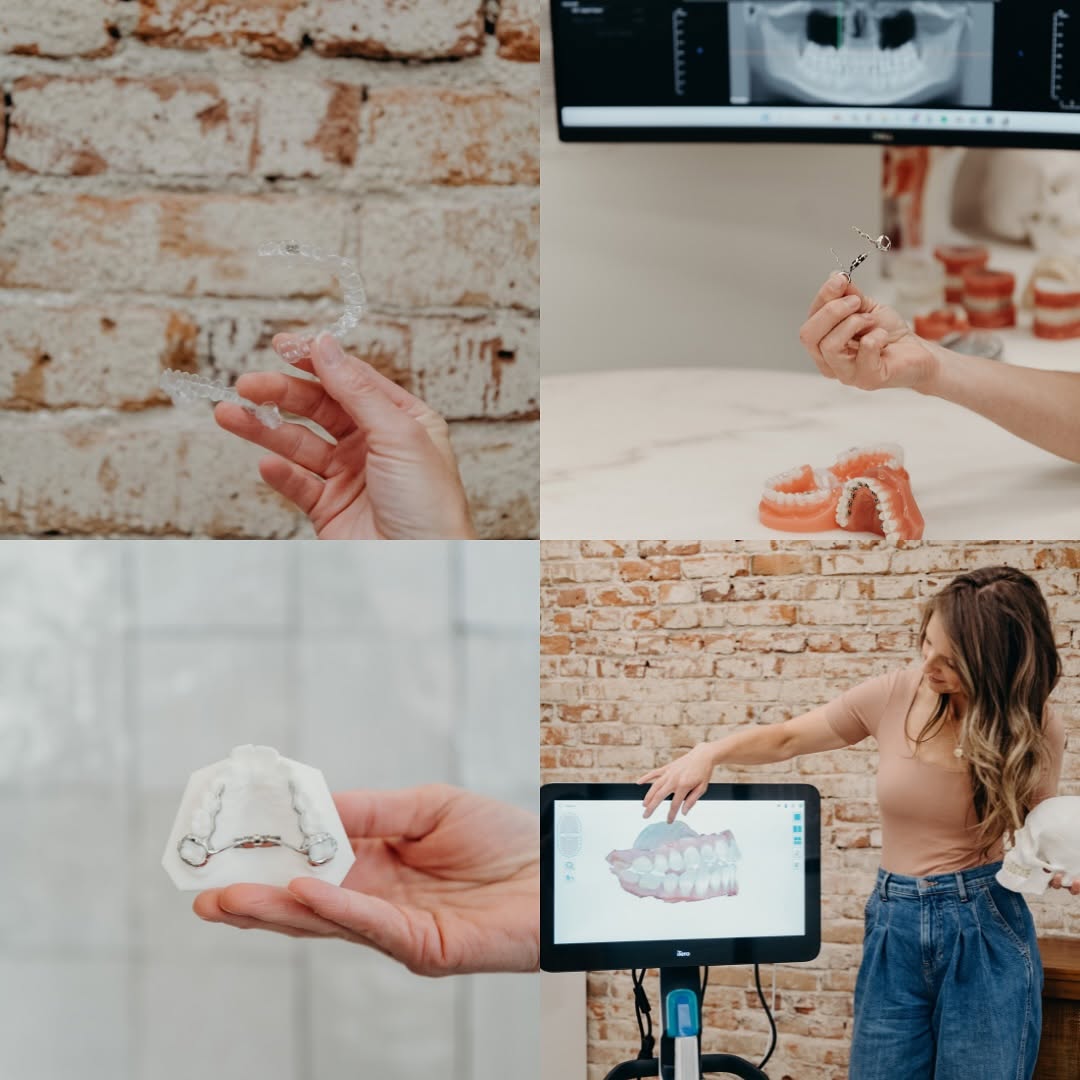
Invisalign and braces, side by side
Your options for crooked teeth treatment in Denver
The two most common paths are clear aligners and braces. Here is how they compare.
Invisalign and clear aligners
Clear aligners are a popular choice for adults who want a more discreet option. They are removable, easy to clean around, and there are no brackets or wires. They work well for a wide range of crowding and spacing cases. Invisalign treatment at our practice generally runs between $4,000 and $10,000 depending on how much movement your case needs. You can learn more on our Invisalign in South Denver page.
Braces
Braces are still one of the most reliable ways to correct crooked teeth, especially for more complex crowding or bite issues. Today’s options are smaller and more comfortable than the braces you may remember, and we offer custom digital braces for a more precise fit. Braces at our practice generally run between $5,500 and $8,000 depending on your case. See our braces in Denver page for the full rundown.
Both options come with flexible payment plans, and we will go over the exact numbers for your situation at your consultation so there are no surprises.
The honest answer about which one is right for you comes from having Dr. Vanderstelt actually look at your teeth, your bite, and what you are hoping for. At your consultation you will get a recommendation made for your case, a realistic timeline, and a clear cost breakdown before you decide anything.
Not sure which one fits you?
The honest answer comes from having Dr. Vanderstelt look at your teeth, your bite, and what you are hoping for. You will get a recommendation built for your case, a realistic timeline, and a clear cost breakdown before you decide anything.
See which option fits youWhy patients across Denver choose Dr. Vanderstelt
Dr. Vanderstelt is a board-certified orthodontist who treats adults, teens, and kids. After dental school she completed advanced specialty training in tooth movement, bite development, and facial growth, which is what separates an orthodontist from a general dentist. Her recommendations come from how the teeth, jaws, and airway work together, not just how a smile looks. A few things set our practice apart:
- She looks at the whole picture. Straightening teeth is the goal, but she also pays attention to your bite, jaw, and breathing, because those often explain why teeth got crooked in the first place.
- She has been a patient herself. Dr. Vanderstelt has personally gone through adult palate expansion, so she understands treatment from the chair, not just the textbook.
- 3D imaging. We use advanced 3D scanning to plan treatment precisely and show you what we are seeing.
- A boutique practice that feels human. We are a small, personal office on South Pearl Street, and yes, our office goldendoodle Benito is usually around to say hello.
You can learn more about her background on the meet Dr. Vanderstelt page.
Visiting our South Pearl Street office
Visit us
Aligned Orthodontics on South Pearl
1215 S Pearl StDenver, CO 80210
In the Platt Park neighborhood, just south of Washington Park and walkable from the South Pearl Street shops and cafes.
Frequently asked questions
Can crooked teeth be fixed as an adult?
Yes. Adults make up a large share of orthodontic patients today, and treatment works just as well later in life. Whether you choose clear aligners or braces, crooked teeth can be straightened at almost any age. The main difference for adults is that we pay extra attention to gum health and bite before we start.
Are crooked teeth just a cosmetic problem?
Not always. Crowded teeth are harder to clean and can raise your risk of cavities and gum disease, and a misaligned bite can wear teeth unevenly or strain the jaw. In some cases crowding connects to how the jaw and airway developed. Straightening often improves both how your smile looks and how it functions.
Written by Dr. Vanderstelt
The link between how you breathe and how your teeth came in
This is a connection Dr. Vanderstelt cares enough about to write about for her community. In a piece for Urban Life Wash Park, she walks through how the way our jaws develop in childhood shapes both how teeth come in and how well we breathe, and why straightening teeth sometimes means looking at the airway too.
Read “Breathing & Crooked Teeth” ⊢How much does it cost to fix crooked teeth in Denver?
It depends on which treatment you need and how much your case involves. At Aligned Orthodontics, braces generally run between $5,500 and $8,000, and Invisalign generally runs between $4,000 and $10,000. We review the exact cost for your case at your consultation and offer flexible payment plans.
Should I get braces or Invisalign for crooked teeth?
Both work well. Clear aligners are removable and discreet, which many adults prefer, while braces can be a better fit for more complex crowding or bite problems. The right choice depends on your teeth, your bite, and your lifestyle. Dr. Vanderstelt will help you decide at your consultation.
Can I just straighten my top teeth or just my bottom teeth?
It is a common request, and sometimes single-arch treatment works for very minor cosmetic spacing. More often, moving only the top or bottom can throw your bite off, because the two arches have to meet correctly. Dr. Vanderstelt looks at how your upper and lower teeth come together before recommending anything, so you do not trade a straighter look for jaw strain or uneven wear later.
How long does it take to straighten crooked teeth?
Most cases take somewhere between several months and a couple of years, depending on how much movement is needed. Mild crowding can move quickly, while more involved cases take longer. We will give you a realistic timeline for your specific case once we have looked at your teeth.
Does treatment hurt as much as it did when I was a kid?
It is more comfortable than it used to be. Modern wires apply gentler, steadier pressure than the older approach, so most adults feel some soreness for a few days after an adjustment rather than sharp pain. It is real but manageable, and it settles quickly. We go into more detail on whether orthodontic treatment is painful.
Do you look at more than just straightening my teeth?
Yes. Because crooked teeth often trace back to the jaw and airway, Dr. Vanderstelt is a board-certified orthodontist who makes sure your breathing and bite are taken into account, not just the look of your teeth. If she sees signs worth exploring, she can recommend a dedicated airway assessment, which is a separate paid service. Airway assessments are complimentary for children 13 and under, with a fee that applies at 14 and up. You can learn more on our airway orthodontist in Denver page.
I had braces as a kid and my teeth shifted. Is that normal?
Very normal. Teeth keep moving throughout life, and crowding often comes back when retainers are not worn consistently. The good news is that a second round of treatment is usually shorter and simpler than the first. Many of the adults we treat are in exactly this situation.
Can crooked teeth get worse with age?
Yes. Teeth naturally shift over the years, so crowding tends to become more noticeable as you get older. It shows up most often in the lower front teeth, and it is especially common in people who had orthodontic treatment earlier in life but stopped wearing their retainers.
Do I really have to wear a retainer forever?
The honest answer is yes, at night. Teeth have memory and keep trying to drift back, so a retainer is what holds your results in place for the long run. We will talk through your retainer options before treatment even starts so it is not a surprise at the end. You can read more about the role of retainers after braces.
Ready to do something about your crooked teeth?
Come in, let Dr. Vanderstelt look at the whole picture, and find out what is actually going on and what your options are. No pressure, just a clear honest answer.
Book your consultation Prefer to talk first? Call us at 303-521-3333.