
Medically reviewed by Amanda Vanderstelt, DMD, MSD, Board-Certified Orthodontist
If you’re searching for thumb sucking treatment in Denver, you’ve probably already tried the bitter nail polish, the thumb shields, the sticker charts, and the gentle reminders that stopped working weeks ago. You’re worried about what the habit is doing to your child’s teeth, and you’re just as worried about taking away the thing that comforts them most. Dr. Vanderstelt understands both sides of that worry as an orthodontist and as a mom who faced the same habit at home.
At aligned. Orthodontics on South Pearl Street in Platt Park, she’ll evaluate how the habit is affecting your child’s bite and help you understand whether it’s time to treat, reasonable to monitor, or safe to keep trying at home.
Board-certified orthodontist
Digital scans, no old-school impressions
Complimentary evaluation
Platt Park, Denver
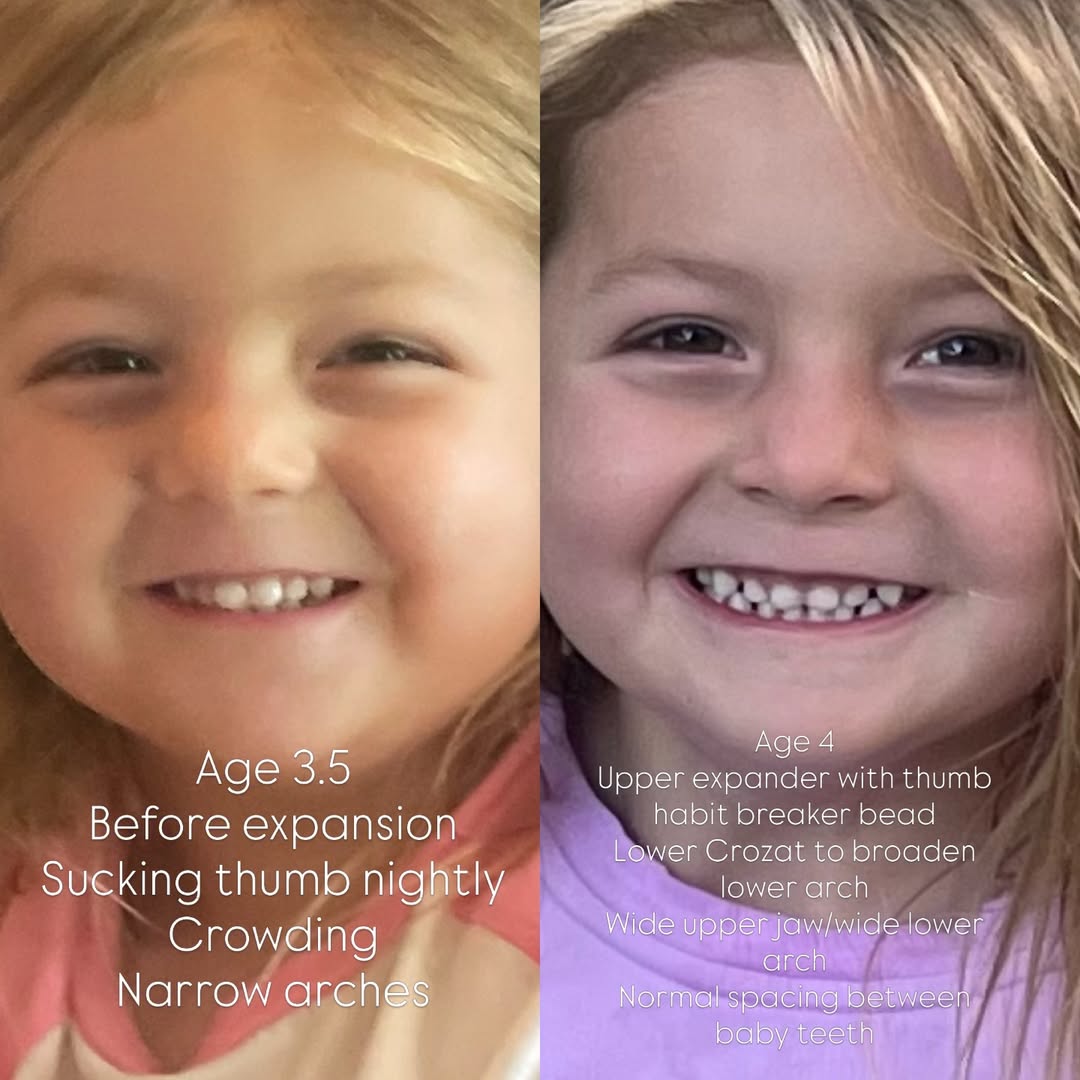
An orthodontist, a stubborn habit, and her own daughter
Dr. Vanderstelt is a board-certified orthodontist. She has helped many Denver-area families through thumb habits, mouth breathing, and early jaw development concerns. And when her own youngest daughter kept sucking her thumb as she approached her fourth birthday, none of that made the habit any easier to break.
She tried what you’ve probably tried. Organic bitter nail polish. Thumb shields. Nothing worked for long, because thumb sucking isn’t a discipline problem. It’s tied to comfort and self-soothing, and repeated reminders alone are not always enough.
So she did what she does for her patients. She made her daughter a small custom appliance that does two jobs at once. A smooth blue bead sits gently at the roof of the mouth and breaks the suction seal, so sucking stops feeling satisfying. And because her daughter also had a narrow upper jaw, Dr. Vanderstelt built in an expander to gently guide its width as she grows. No punishment, no shame, no nightly battles. The appliance interrupts the suction and makes the habit less satisfying, giving a child the chance to let it go.
That’s the same care she brings to every family who walks into our Denver office wondering if they’ve run out of options. You haven’t.
Watch Dr. Vanderstelt tell the story
The appliance, the blue bead, and how she helped her own daughter let the habit go.
How thumb sucking treatment works
Evaluation.
Dr. Vanderstelt examines your child’s teeth, bite, palate, tongue, and breathing, and talks with you about the habit’s history and everything you’ve already tried.
A plan that fits the habit.
That might mean monitoring, home strategies with a follow-up, or a custom thumb-sucking appliance, with an expander included only if your child’s jaw width genuinely needs it.
Short, easy follow-ups.
We track progress, support your child through the transition, and remove the appliance once the habit is fully gone.
What prolonged thumb sucking can do to a growing mouth
Thumb sucking is completely normal in babies and toddlers. Most kids give it up on their own between ages 2 and 4. The trouble starts when a frequent or forceful habit hangs on, because a young child’s teeth and jaws are still developing and remarkably responsive to repeated pressure.
A thumb resting against the palate for hours a day acts like a slow, steady orthodontic force pointed in exactly the wrong directions. Over time it can:
- Narrow the maxilla, the upper jaw, leaving less room for adult teeth and the tongue
- Push the upper front teeth forward and out
- Tip the lower front teeth back and inward
- Create an open bite, where the front teeth no longer meet when your child bites down
- Contribute to a crossbite, where the upper teeth sit inside the lower teeth
Sound familiar?
- The thumb habit is still going strong past age 3
- The front teeth are starting to flare forward, or there’s a gap when your child bites down
- The roof of the mouth looks narrow or high
- You’ve tried polish, shields, or charts and the habit keeps winning
- Your child snores, mouth breathes, or sleeps restlessly
If two or more of these sound like your kid, keep reading. The next section covers exactly when an evaluation makes sense.
The good news is that early changes may improve on their own after the habit stops, and remaining bite or jaw-width concerns can often be treated while a child is still growing. That’s the entire principle behind phase one orthodontic treatment.
When should you bring your child in?
The American Association of Orthodontists recommends a first orthodontic visit no later than age 7, and earlier when a problem is recognized. A persistent thumb habit is exactly that kind of problem. If your child is 3 or older and the habit shows no signs of stopping, or if you can already see changes like protruding front teeth, a gap when they bite down, or a narrow, high palate, it’s worth having Dr. Vanderstelt take a look. When symptoms are present, she evaluates children as young as 3 and 4.
An early visit doesn’t commit you to treatment. Often the honest answer is “let’s watch it,” and you’ll leave with a plan and a clear idea of what would trigger the next step. What early evaluation prevents is the harder version of this conversation at age 8, when the adult teeth are coming in crooked and the correction is bigger. Our post on when a child should see an orthodontist goes deeper on timing.
Is it time for an evaluation?
Three quick questions. Honest answer at the end.
1. How old is your child?
2. Have you noticed changes like flared front teeth, a gap when biting down, or a narrow, high palate?
3. Does your child snore, mouth breathe, or sleep restlessly?
Watching and waiting is reasonable.
At this age, with no visible changes and no sleep signs, gentle home strategies and patience are a fair plan. Most kids give up the habit on their own between ages 2 and 4. If it’s still going strong in a few months, or you start noticing changes, that’s the moment to come in.
Worth a look.
A habit that persists past age 3, or one that’s already changing the teeth or bite, is exactly when an early evaluation helps most. The visit is complimentary, low-pressure, and often ends with a plan to monitor rather than treat.
Worth a look, and mention the sleep signs.
A persistent thumb habit combined with snoring, mouth breathing, or restless sleep is worth evaluating together. Dr. Vanderstelt looks at breathing, tongue posture, and jaw development as a system, and airway evaluations are complimentary for children 13 and under.
This is a starting point, not a diagnosis. Every child is different.
What you can try at home first
For children with a mild habit and no visible bite changes, gentle home strategies are a reasonable first step. A few that Dr. Vanderstelt genuinely recommends:
Positive reinforcement, not punishment. Sticker charts, praise, and letting your child feel ownership of quitting all outperform scolding. Shame tends to drive kids deeper into comfort habits, not out of them.
A gentle nighttime reminder. Many kids suck their thumb only as they fall asleep. Some families have success loosely wrapping a soft bandage around the elbow so bending the arm to reach the mouth takes a little effort. Ask your child’s dentist or orthodontist before trying it, and never wrap anything tightly or in a way that could affect circulation.
Myofunctional therapy. Guided exercises that may help some children improve tongue posture, swallowing patterns, and oral function. It isn’t a substitute for expansion when a true jaw-width problem is present, but it can be a useful part of a coordinated plan.
If the habit is persistent, vigorous, or already affecting the bite, an evaluation is more useful than cycling through increasingly frustrating home remedies. Trying them first doesn’t put you behind. Some habits are simply too strong for reminders, and that’s exactly when a thumb-sucking appliance earns its keep.
How a thumb-sucking appliance works
When home strategies aren’t enough, Dr. Vanderstelt custom-designs a habit appliance for your child, the same kind she made for her own daughter. Depending on what your child needs, it may be a simple habit appliance or one combined with a gentle expander.
The habit appliance sits at the roof of the mouth and breaks the suction seal the thumb depends on. Some designs use a smooth bead the tongue can roll, which gives your child something soothing to do instead of sucking. Nothing about it is sharp or punishing. It simply makes the habit stop paying off. Many children begin losing interest during the first several weeks, although timing varies with the strength of the habit.
The expander component, when clinically appropriate, gently and gradually guides a narrowed upper jaw toward a healthier width, creating more room for developing teeth and the tongue. If you want the deeper explanation of how expansion works, our guide to jaw expanders covers it in plain English.
The appliance is custom-made from a quick digital scan, no goopy impressions.
Living with the appliance
Speech, saliva, and eating may feel a little different for the first few days, and most children adapt quickly as the appliance becomes familiar. We’ll walk you through cleaning and food guidelines before treatment begins, and short check-in visits let us track progress. The appliance usually stays in place longer than it takes the active habit to fade, which helps reduce the chance of relapse. Once Dr. Vanderstelt is confident the habit is gone for good, it comes out.
See if a habit appliance is right for your child
Meet directly with Dr. Vanderstelt. You’ll leave knowing whether it’s time to treat, reasonable to monitor, or safe to keep trying at home.
No pressure to begin treatment.
The airway question worth asking
One more thing Dr. Vanderstelt checks that you won’t find at every orthodontic office in Denver. The roof of your child’s mouth also forms the floor of the nasal cavity. In some children, a narrow upper jaw appears alongside mouth breathing, snoring, or restless sleep. That doesn’t mean thumb sucking is the sole cause of those symptoms, but it is one reason she looks at breathing, tongue posture, and jaw development together rather than treating teeth in isolation.
As part of her evaluation, she may also recommend a closer functional look at the tongue. If your child has difficulty lifting the tongue, swallowing, or resting it comfortably against the palate, that’s worth assessing. Not every visible tongue tie needs treatment, and any recommendation should be based on function rather than appearance alone.
If your child snores, breathes through an open mouth, or sleeps restlessly, mention it at your visit. Our pages on mouth breathing in children and airway-focused orthodontics explain what we look for, and airway evaluations are complimentary for children 13 and under.
What your first visit looks like
We know that for a 3 or 4 year old, a new office with a chair that moves is a lot. Our Platt Park office is small and boutique on purpose. Your child meets directly with Dr. Vanderstelt and receives a recommendation based on their specific habit, bite, and stage of development. Benito, our office goldendoodle, has a well-earned reputation for winning over nervous kids before the doctor even says hello.
You’ll leave knowing whether it’s time to treat, reasonable to monitor, or safe to keep trying at home. The evaluation is complimentary, and if treatment makes sense, we’ll walk you through timing, what the appliance involves, and flexible payment plans before you decide anything.
Families come to us from Platt Park, Wash Park, University Park, Cherry Creek, and across south Denver. Our office sits on South Pearl Street, an easy stop with the farmers market down the block on summer Sundays.
1215 S Pearl St, Denver, CO 80210 · Platt Park, on South Pearl Street
What Denver families say
Real Google reviews from parents and patients across Denver.
Thumb sucking questions Denver parents ask us
Thumb sucking is common and generally not concerning in babies and young toddlers. The likelihood of bite changes increases when a frequent or forceful habit continues as the teeth and jaws develop, because constant pressure can narrow the upper jaw, push front teeth forward, and change how the bite comes together.
Most children stop on their own between ages 2 and 4. If the habit is still going strong past age 3, or your child sucks vigorously rather than just resting the thumb, it’s reasonable to start working on it. Once permanent teeth begin erupting around age 6, an ongoing habit is more likely to create changes that need orthodontic correction.
Almost certainly not. Young jaws are remarkably adaptable, and changes caused by thumb sucking often improve on their own once the habit stops, especially before the adult teeth erupt. Even changes that don’t self-correct respond well to gentle early treatment. The best time to address it is simply now.
No. Your child may feel some pressure or find the appliance strange for the first day or two, similar to any new dental work, and then they stop noticing it. The designs Dr. Vanderstelt uses are smooth and gentle. The appliance works by removing the satisfaction of sucking, not by causing discomfort.
Some kids need a few extra cuddles the first week, and that’s normal. What surprises most parents is how quickly children adjust once the habit stops being rewarding. Because the appliance does the work quietly, you get to remain the comforter instead of becoming the bedtime enforcer.
Many children begin losing interest in the habit during the first several weeks, although timing varies. The appliance usually remains in place longer than the active habit lasts, which helps prevent relapse. If an expander is part of the plan, the timeline also depends on how much gentle widening your child’s upper jaw needs. Dr. Vanderstelt will give you a specific estimate at your evaluation.
Cost depends mainly on whether your child needs habit interruption alone or also treatment for an existing bite or jaw-width concern. After the complimentary evaluation, you’ll get a clear treatment recommendation, the exact fee, and payment plan options before deciding anything.
Not when there’s a reason, and a persistent thumb habit is a good reason. Early visits are gentle, low-pressure, and often end with monitoring rather than treatment. Dr. Vanderstelt sees young children for habit and airway concerns and will tell you honestly if waiting is the right call.
You’re not out of options. You’re one visit away from a plan.
Let Dr. Vanderstelt take it from here, the same way she did for her own daughter. A clear plan for the habit, your child’s bite, and any breathing concerns worth investigating.
aligned. Orthodontics
1215 S Pearl St, Denver, CO 80210
303-521-3333