
Platt Park, Denver · Clear braces
Clear Braces in Denver: Cost, Staining, and What to Expect
If you are looking for clear braces in Denver, you are probably trying to solve one of three problems: you do not like the look of metal braces, you are not sure you would actually wear removable aligners 22 hours a day, or you have read that ceramic braces turn yellow halfway through treatment.
At Aligned Orthodontics on South Pearl Street in Platt Park, Dr. Vanderstelt fits Damon Clear braces, translucent ceramic brackets with a self-ligating design that eliminates the elastic ties responsible for most of that yellowing. This page covers how they work, what they cost in Denver, and how to know if they fit your case.
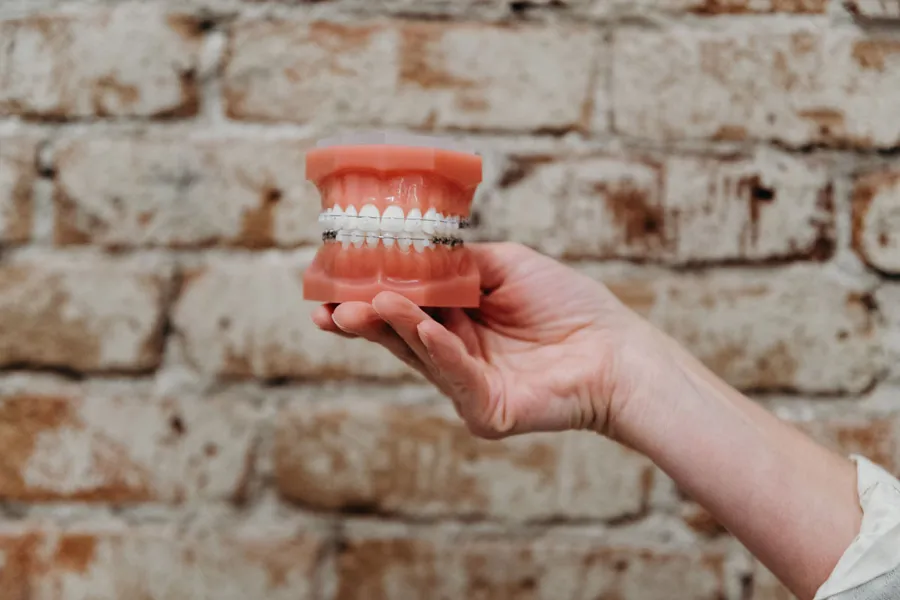
Dr. Vanderstelt is a board-certified orthodontist who uses Damon Clear self-ligating braces and 3D CBCT imaging in every workup. You see the same orthodontist at every visit, with airway-focused whole-health care.
What clear braces actually are
The terms get used loosely online, so let’s be precise. Clear braces are fixed braces with translucent or tooth-colored ceramic brackets instead of metal ones. They are bonded to the front of your teeth and connected by a wire, and they work exactly like metal braces. Because they are bonded in place, treatment never depends on you remembering to wear anything. You may also see them called ceramic braces. Same thing.
Clear braces are not the same as clear aligners. Aligners, including Invisalign and clear aligners, are removable plastic trays you swap out every week or two. Both can be great. They suit different people and different cases, and we will get to how to choose below.
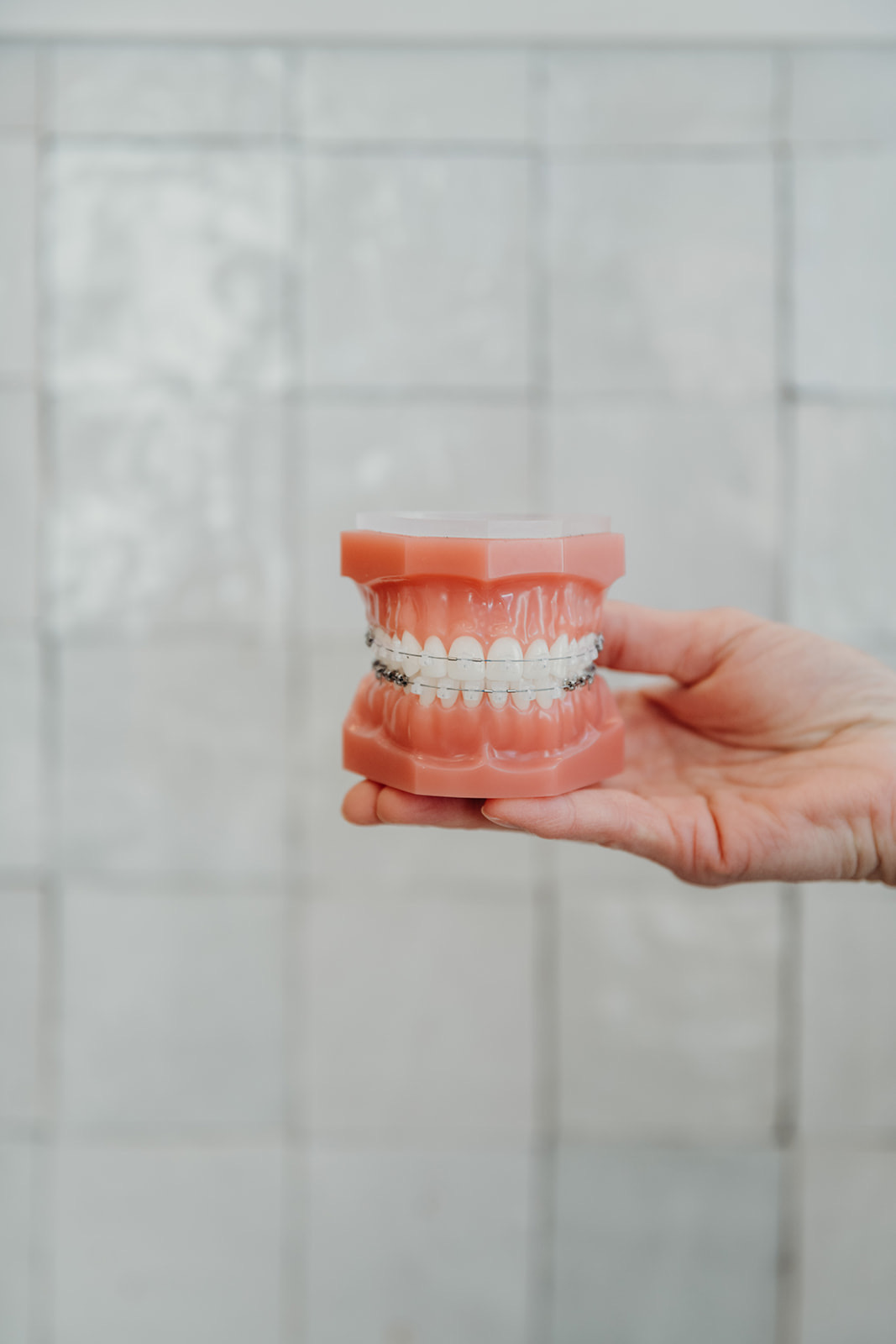
What clear braces actually look like in real life
Here is the question underneath the question: will people notice? At conversation distance, most people will not. Damon Clear brackets are translucent and low profile, and on video calls, where so much of Denver’s professional life happens now, they read as almost nothing. In photos, you will see them if you look for them, the way you would see someone’s glasses. What our adult patients consistently tell us is that they braced for comments that never came. Coworkers either do not notice or say something kind once, and then it is old news by the following week.
Why clear braces turn yellow, and why ours don’t
This is the question that brings most people to this page, so here is the honest answer.
Ceramic brackets themselves do not stain. The yellowing you see in photos comes from the small elastic ties that traditional braces use to hold the wire onto each bracket. Those ties are porous, and they soak up pigment from coffee, tea, red wine, curry, and tomato sauce the way a sponge soaks up water. If you drink coffee every morning, clear ties can look tan within a few weeks.
At Aligned, we use Damon Clear self-ligating braces. Self-ligating means the bracket has a built-in sliding door that holds the wire in place, so there are no elastic ties at all. No ties means the most common cause of yellowing is simply not there. The brackets are translucent, stain-resistant ceramic, designed to hold their color through treatment, and with normal brushing they stay clear in a way traditional tied ceramic braces often do not. You can keep drinking your coffee.
The self-ligating design has a second benefit: less friction where the wire meets the bracket. Many patients find treatment more comfortable, and adjustment visits are often spaced further apart. For our patients commuting in from across Denver, fewer trips to the office matters.
Clear braces vs Invisalign: how to choose
This is the comparison most adults are actually weighing, so here is how Dr. Vanderstelt walks patients through it at a consultation.
Choose clear braces if:
- Your case involves significant crowding, rotations, vertical tooth movements, or bite correction. Fixed braces give your orthodontist more control over complex movements.
- You know yourself, and you know a removable tray might spend more time in your pocket than on your teeth. Braces work 24 hours a day with zero willpower required. Aligners only work if you wear them 20 to 22 hours a day, every day. Plenty of adults tell us they actually prefer fixed treatment because there is nothing to remember, nothing to take out at restaurants, and nothing to lose in a napkin.
- You would rather not deal with taking trays out and brushing every time you eat or drink anything other than water.
Choose clear aligners if:
- Your case is mild to moderate and a good fit for tray mechanics.
- Being able to remove your appliance for a wedding, a presentation, or a photo matters to you.
- You are disciplined about wear time and want no food restrictions.
Neither option is universally better. What matters is matching the tool to your teeth and your habits, which is exactly what a consultation is for. Dr. Vanderstelt treats with both, so the recommendation you get is based on your case, not on what the practice happens to sell. If you are leaning toward trays, our guide to Invisalign in south Denver covers what aligner treatment looks like at Aligned and why seeing an orthodontist for Invisalign matters.
Clear ceramic braces vs metal braces
Mechanically, they do the same job. The honest differences:
- Appearance. Clear wins, obviously. At conversation distance, most people will not notice Damon Clear brackets.
- Cost. Ceramic brackets cost more to make and place, so clear braces typically sit toward the upper end of the braces price range.
- Durability. Ceramic is hard but more brittle than steel. Brackets can chip if you bite into very hard foods, which is one reason we sometimes recommend metal for younger kids or heavy contact sport athletes, or a mix of clear on top and metal on the bottom.
If budget is the deciding factor, our braces in Denver guide breaks down everything that goes into braces pricing, including what should be bundled into a flat fee and the questions to ask before you sign anything.
Clear braces, metal braces, and Invisalign side by side
Who clear braces work best for
Most of our clear braces patients at Aligned are adults and older teens. Working professionals across Denver who do not want braces to be the first thing a client notices. Parents who put off their own treatment for years while their kids went first. DU and CU Denver students and staff. Teens who want something subtler than metal for school photos and prom season. More on adult braces in Denver.
Clear ceramic braces work best once all the adult teeth are in, which is why we usually recommend them for older teens and adults rather than younger kids. If you are wondering whether you are a candidate for clear braces, the short answer is that most people searching for adult braces in Denver are, and the honest answer takes one consultation to confirm. If you are not sure which camp you fall into, that is a consultation conversation, not a guessing game.
There are cases where clear brackets are not the first choice. Younger children still losing baby teeth. Patients in heavy contact sports, where brittle ceramic takes more abuse than metal. Certain deep bites, because ceramic is harder than tooth enamel, so if your bite brings your teeth into contact with the brackets, the brackets can wear the opposing teeth. In those cases Dr. Vanderstelt may recommend metal on the lower arch or correcting the bite first. And cases where she would address jaw width or airway concerns before any brackets go on at all. When that is your situation, she will tell you, along with what she would do instead.
What other clear braces pages won’t tell you
Most Denver clear braces pages stop at “they’re discreet and they work.” Here is what makes treatment at Aligned different.
Dr. Vanderstelt is a board-certified orthodontist who makes sure your airway is taken care of, not just your alignment. Crowded or crooked teeth are sometimes the visible symptom of something deeper, like a narrow palate or how your jaw developed. Every new patient workup at Aligned includes 3D CBCT imaging, which lets Dr. Vanderstelt see your roots, your bone, and your airway, not just the fronts of your teeth. She evaluates every case personally, using clinical examination, digital scans, and that 3D imaging rather than relying on a software simulation alone. If there is an underlying issue worth addressing, you will know before you start treatment, not after your braces come off. You can read more about how breathing and orthodontics connect on our airway-focused orthodontics page.
And because we are a boutique practice with one location on South Pearl Street, you see the same orthodontist at every visit. Dr. Vanderstelt places your braces, plans your wire changes, and is the one checking your progress. She also knows what adult orthodontic treatment feels like from the patient’s chair, because she has personally gone through adult treatment herself for the airway issues she grew up with. When she tells you what an appliance feels like, how to get through the first week, or whether the discreet option is worth it, that is not a brochure talking. You can meet Dr. Vanderstelt here, and yes, Benito the office goldendoodle is usually around too.
Questions to ask before you choose clear braces anywhere
Six questions to ask any Denver orthodontist
Bring this list to any consultation. Here is how we answer all six.
- Is the orthodontist board-certified?Yes. Board-certified through the American Board of Orthodontics.
- Will you see the same doctor every visit?Yes. Dr. Vanderstelt places and adjusts your braces herself.
- Are the clear brackets self-ligating, or tied?Self-ligating Damon Clear. No elastic ties to yellow.
- Does the workup include 3D imaging?Yes. 3D CBCT imaging is part of every new patient workup.
- Is the quoted fee flat, or does it grow?Flat. It covers adjustments and your first set of retainers.
- Does anyone look at your airway first?Yes. Airway and jaw development are reviewed before bonding.
We are comfortable with every answer, which is why we hand you the list.
Ask those six questions at any consultation in Denver and you will have a much clearer picture of how practices differ and what your fee actually covers.
How much do clear braces cost in Denver?
Braces at Aligned Orthodontics typically run from $5,500 to $8,000, and clear braces usually sit toward the upper part of that range because ceramic brackets cost more than metal. Where your case lands depends on complexity, treatment length, and whether any additional appliances are needed.
We do not post one flat number because any practice quoting you an exact price before looking at your teeth is guessing. What we do instead: at your complimentary consultation, you get a real number that covers your full treatment, including adjustment visits and your first set of retainers, plus a clear picture of what your insurance covers and what your monthly payment would look like. Flexible payment plans are available.
What Denver patients say
Real reviews from families across Platt Park, Wash Park, and the wider Denver metro.
What treatment looks like at Aligned
Complimentary consultation
Photos, a digital scan, 3D imaging, and an honest conversation about whether clear braces, metal, or aligners fit your case best. See what to expect at your first visit.
Bonding day
Your Damon Clear brackets go on in a single visit. Expect some pressure and tenderness the first few days. Soft foods help.
Progress visits
Because self-ligating braces hold the wire without ties, visits are quick and typically spaced four to eight weeks apart.
Debonding and retainers
Brackets come off and you get retainers to lock in the result. Teeth shift for life, so we tell you on day one that retainers are forever.
Most clear braces cases run 12 to 36 months depending on complexity. You will get a realistic estimate for your case at your consultation, not a best-case number designed to get you in the door.
How to keep clear braces clean
Caring for ceramic braces is simple, and it matters more for your teeth than for the brackets. Brush after meals, angling the bristles around each bracket and along the gum line, and floss daily using a threader or water flosser to reach under the wire. Rinse with water after coffee or wine when you cannot brush. Skip whitening toothpaste during treatment, since it only whitens the exposed enamel and can leave uneven color where the brackets sat. And avoid biting directly into very hard foods like ice, whole nuts, and hard candy, which is bracket protection advice that applies to metal braces too.
Visiting us on South Pearl Street
Aligned Orthodontics is at 1215 S Pearl St in Denver’s Platt Park neighborhood, a short walk from Wash Park and an easy drive from University Park, Cherry Creek, and the DU campus. Patients come to us from across the Denver metro, including Englewood, Littleton, and Greenwood Village, because airway-aware orthodontic care is worth the drive. Make a morning of it. South Pearl Street has some of the best coffee and breakfast spots in Denver, and we have a complimentary espresso machine in the office too. With these brackets, you do not have to choose between your coffee and your braces, and we clearly do not expect you to.
Frequently asked questions about clear braces
Can adults get clear braces?
Yes, and most of our clear braces patients at Aligned are adults and older teens. Ceramic brackets move teeth with the same mechanics as metal braces while staying far less noticeable, which is exactly why working professionals choose them. There is no age cutoff for orthodontic treatment, only a consultation to confirm your case is a fit.
Do clear braces turn yellow or stain?
The ceramic brackets themselves are stain-resistant. On traditional ceramic braces, the clear elastic ties holding the wire can yellow from coffee, tea, and wine. The Damon Clear braces we use at Aligned are self-ligating, meaning there are no elastic ties, so the component that typically yellows is not there. Normal brushing keeps them looking clear through treatment.
What is the difference between clear braces and Invisalign?
Clear braces are ceramic brackets bonded to your teeth and connected by a wire, working around the clock. Invisalign uses removable plastic trays that must be worn 20 to 22 hours a day to work. Braces handle complex movements and bite corrections with more control, while aligners offer removability for mild to moderate cases.
How much do clear braces cost in Denver?
At Aligned Orthodontics, braces typically run from $5,500 to $8,000, with clear braces usually toward the upper part of that range because ceramic brackets cost more than metal. Your exact fee depends on case complexity and treatment length. We review a complete estimate, insurance coverage, and monthly payment options at your complimentary consultation.
Are clear braces slower than metal braces?
Not at Aligned. Conventional ceramic braces can create more friction through their elastic ties, which slows tooth movement slightly. Damon Clear braces are self-ligating, so the wire slides freely without ties. Treatment time is comparable to metal braces, and most cases finish in 12 to 36 months depending on complexity.
Do ceramic brackets break easily?
Ceramic is harder than tooth enamel but more brittle than steel, so brackets can chip if you bite directly into very hard foods like ice, whole nuts, or hard candy. With sensible eating habits, breakage is uncommon. For heavy contact sport athletes, Dr. Vanderstelt may recommend metal brackets or a clear-on-top, metal-on-bottom combination.
Are clear braces a good option for teens?
Yes, once all the adult teeth have come in, which usually means mid-teens. Clear braces give image-conscious teens a subtler look than metal without depending on the discipline aligners require. Dr. Vanderstelt evaluates each teen’s bite, habits, and activities before recommending clear brackets, metal, or a combination.
Can clear braces fix an overbite or more complex bite problems?
Yes. Clear braces are fixed appliances that work exactly like metal braces, so they can correct crowding, rotations, gaps, overbites, and other bite issues that removable aligners sometimes struggle with. During your 3D imaging workup, Dr. Vanderstelt will confirm whether your specific case is a good fit for Damon Clear.
Do I have to give up coffee with clear braces?
No. Because Damon Clear braces have no elastic ties to absorb pigment, coffee will not yellow your braces the way it stains the ties on traditional ceramic braces. Brush after meals when you can, rinse with water when you cannot, and the brackets stay translucent. The bigger rule with any braces is avoiding very hard and sticky foods that can damage brackets.
Ready to see if clear braces are right for you?
A complimentary consultation at our South Pearl Street office includes photos, a digital scan, 3D imaging, and a straightforward recommendation from Dr. Vanderstelt on whether clear braces, metal braces, or aligners best fit your teeth, your habits, and your budget. No pressure, no surprise fees, and a real answer about what your smile needs.