
Platt Park, Denver · Mouth breathing in teens and adults
Mouth Breathing Treatment in Denver
Reviewed by Amanda Vanderstelt, DMD, MSD on November 15, 2026
Breathing through your mouth most of the day or night? At aligned. Orthodontics in Platt Park, Denver, Colorado, Dr. Amanda Vanderstelt, DMD, MSD, a board-certified orthodontist, uses a 3D airway scan to check teens and adults for a narrow upper jaw, the cause orthodontic treatment can help with. When the cause is your nose, allergies or adenoids, she tells you, and who to see: an ENT or your doctor.
Start with an airway consult. It’s $250 for ages 14 and up and free for kids 13 and under.

Does this sound like you?
You wake up with a dry mouth most mornings. Your lips rest apart when you’re relaxed. One side of your nose always seems blocked, and a full breath through it takes effort.
Maybe a partner says you snore. Maybe you tried mouth tape and pulled it off at 2 a.m. Maybe your teeth crowded back after braces, or a dentist mentioned a high, narrow palate.
You’ve probably been told to “just close your mouth,” as if it were a choice. For a lot of people it isn’t. Breathing through your nose should happen without you thinking about it.
- You breathe through your mouth during the day, not only when you’re sick
- You wake up with a dry mouth or a sore throat
- You feel tired after a full night’s sleep
- One side of your nose is always stuffy, or both feel tight
- Your palate (the roof of your mouth) is high and narrow, or your teeth are crowded
- You’ve tried strips, sprays or tape and nothing stuck
None of these proves anything on its own. Several together are worth a real look.
Where should you start? A 3-question check
This isn’t a diagnosis. It points you to the right first appointment.
Question 1 of 3At night, do you stop breathing, gasp or choke, or do you get drowsy while driving? (Yes / No)
Question 2 of 3Is your nose blocked or stuffy most days, even when you’re not sick? (Yes / No)
Question 3 of 3Has a dentist mentioned a high or narrow palate, or have your teeth crowded up again since braces? (Yes / No)
If you answered yes to question 1: Talk to your doctor about these signs first, and soon. They’re a medical question before they’re an orthodontic one. Once your doctor has checked them, we can look at whether your jaw is part of the picture.
If you answered no to question 1 and yes to questions 2 and 3: Your nose and your jaw may both be involved. An airway consult shows the jaw side, and we’ll tell you if an ENT should see you before or alongside us.
If you answered no to question 1, yes to question 2 and no to question 3: Start with your doctor, an allergist or an ENT, since your nose is the likeliest place to begin. If it’s still hard to breathe through your nose after that, come see us.
If you answered no to questions 1 and 2 and yes to question 3: A narrow upper jaw may be part of it. An airway consult may be a good next step.
If you answered no to all three: It may be habit, or something only a scan would show. An airway consult can rule the structure in or out, and a myofunctional therapist can help with habit.
Why do I breathe through my mouth?
Usually it’s because air doesn’t move easily through your nose, and often more than one of these is involved:
- The nose itself. A deviated septum, swollen turbinates, nasal polyps or a narrow nasal valve. An ENT treats these.
- Allergies and congestion. Ongoing allergies or sinus trouble keep the lining of the nose swollen. Your doctor or an allergist treats these.
- Tonsils and adenoids. Mostly a kids’ problem, but large tonsils still matter for some teens and adults. An ENT decides.
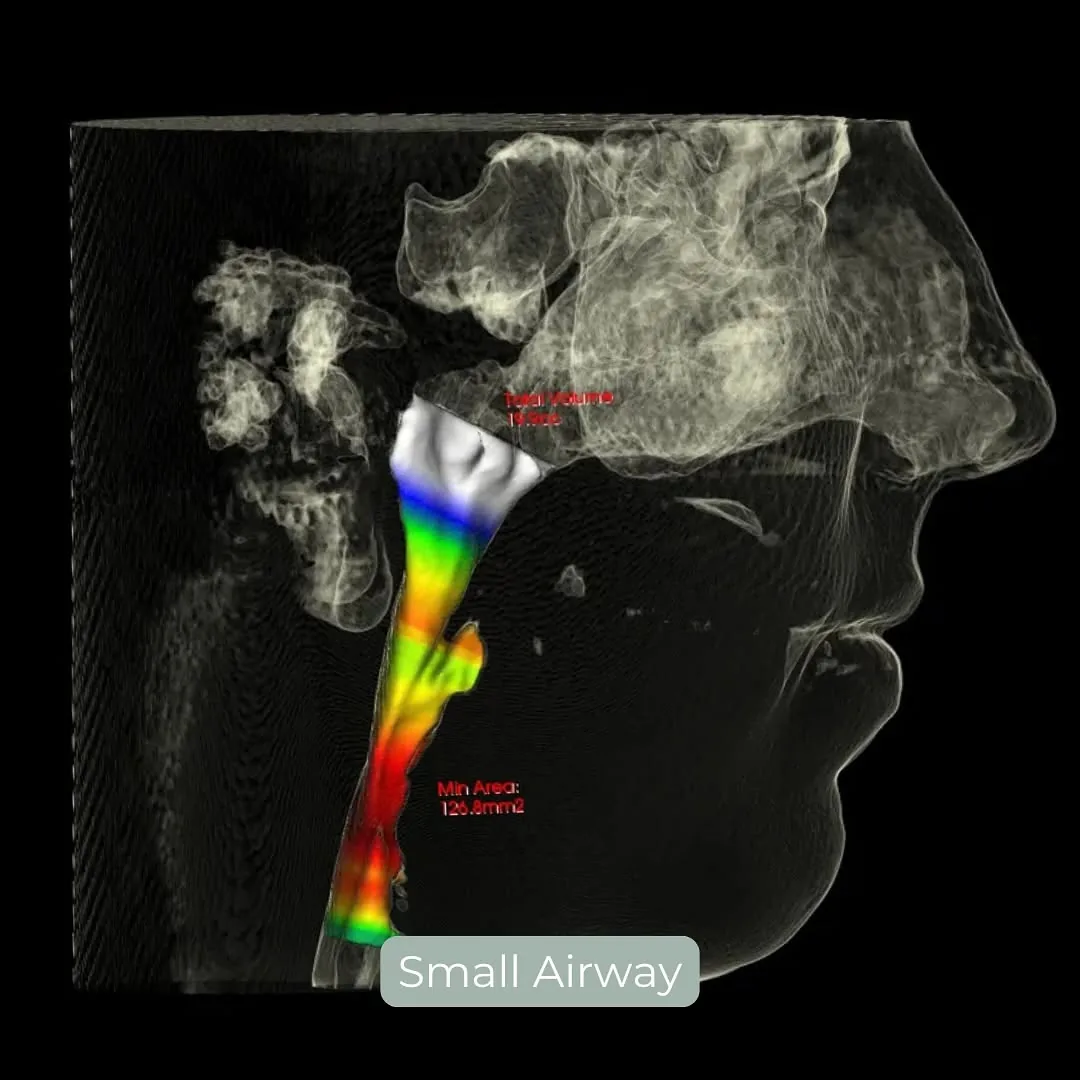
- A narrow upper jaw. The roof of your mouth is the floor of your nose. A narrow upper jaw means a narrower nasal floor and less room for your tongue to rest. This is the part orthodontic treatment may be able to change.
- Habit. After years of a blocked nose, lips can stay apart even once the nose is clear. Myofunctional therapy is designed to work on this.
- Sleep-disordered breathing. A mouth that falls open at night can be part of snoring or sleep apnea, which takes a sleep study and a doctor to diagnose.
How to stop mouth breathing for good: treat the cause
There’s no single fix, because there’s no single cause. Tape over a blocked nose doesn’t open the nose. Breathing exercises can’t widen bone. A nasal spray won’t change the shape of your jaw.
What works is matching the treatment to what’s actually narrowing your airway, and sometimes that takes two kinds of care at once.
What an orthodontist can and can’t change
Orthodontic treatment can help when mouth breathing comes from a narrow upper jaw or jaw structure. Widening the upper jaw can widen the floor of the nose and give the tongue more room.
It can’t fix a deviated septum, allergies, polyps or large adenoids. Those need an ENT or your doctor, sometimes before orthodontic work and sometimes alongside it.
The research is encouraging but early. A 2021 review in the American Journal of Rhinology & Allergy pooled 10 studies (257 adults) whose upper jaw was widened. Nasal resistance went down, and scores on a questionnaire about how blocked people’s noses felt dropped by about 40 points. The authors still called the evidence too limited to make expansion a first-line treatment for nasal breathing. Results vary from person to person.
When to see someone else first
Some problems shouldn’t start with an orthodontist. See your doctor or an ENT first if:
- You stop breathing, gasp or choke in your sleep, or you nod off while driving
- One side of your nose is newly and constantly blocked, or you have nosebleeds or lose your sense of smell
- Your allergies have never been treated
- The mouth breathing started with a recent cold or sinus infection
We’re glad to see you afterward, and we’ll work with the doctor treating you.
How does mouth breathing treatment work? Our 3-step plan
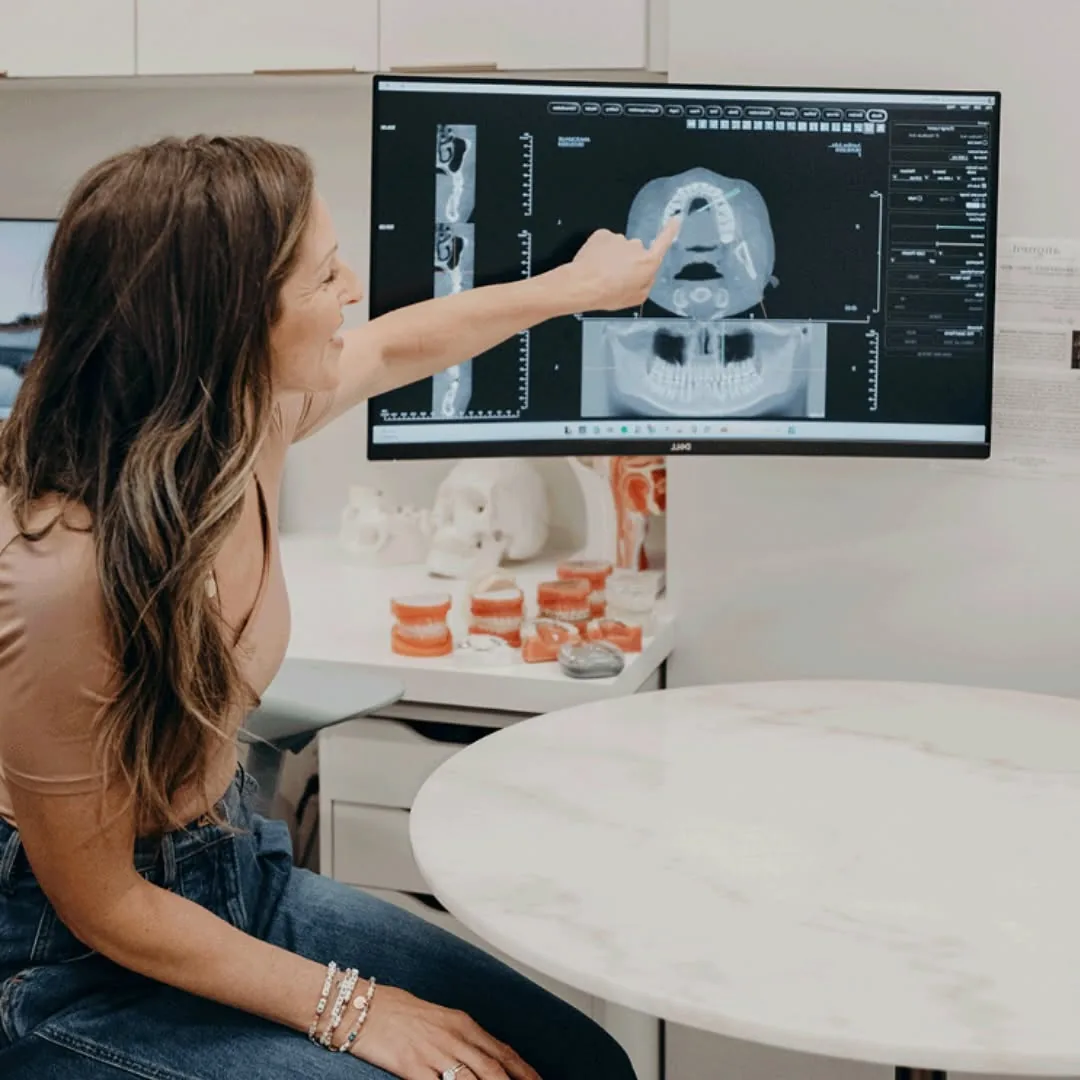
- Book an airway consult. It’s a 60-minute visit with Dr. Vanderstelt. Adults bring a recent sleep study, because it tells us what you’re dealing with and shapes the plan (details in the sleep study question below). You don’t need a referral.
- See your airway in 3D. We take a 3D CBCT scan, an intraoral scan and photos. Dr. V walks you through what she sees in your jaw, nasal floor and airway. You leave with a treatment plan, a reason to monitor, or a clear “you don’t need treatment.”
- Treat what’s actually there. If your jaw is part of it, we plan treatment with you. If your nose, allergies or sleep need care first, we’ll refer you to an ENT or a myofunctional therapist when that’s the right first step, or back to your doctor, and we coordinate with them.
Mouth breathing treatment options compared
| Option | Who provides it | What it can do | What it can’t do |
|---|---|---|---|
| Mouth tape | You, after talking to your doctor | Hold the lips closed at night for some people whose nose is clear | Fix the cause, and it’s risky if your nose is blocked |
| Nasal strips and sprays | You, or your doctor for prescription sprays | Open the nostrils or calm swelling for a while | Change your nasal structure or your jaw |
| ENT treatment | An ENT | Treat a deviated septum, turbinates, polyps or adenoids | Widen a narrow upper jaw |
| Myofunctional therapy | A myofunctional therapist | Retrain lip seal, tongue position and breathing habits | Open a nose that’s physically blocked |
| Palate expansion | An orthodontist (with a surgeon placing MARPE screws) | Widen a narrow upper jaw and the nasal floor | Move the jaws forward or fix the nose itself |
| Jaw surgery | An oral surgeon, with an orthodontist | Reposition jaws that sit too far back | Serve as a first step for most people |
Can adults widen a narrow upper jaw?
Yes, often without jaw surgery. Adults used to hear that only surgery could widen the upper jaw. MARPE (miniscrew-assisted palatal expansion) anchors a custom expander to the bone with small screws, so the jaw can widen after growth is done. Dr. Vanderstelt has her own MARPE expander, so she can tell you what it really feels like. You can watch her MARPE series.
Widening happens over weeks. After that, the expander usually stays in place for most of a year while new bone forms. If treatment moves your teeth, you’ll wear retainers for life to keep them where they belong.
Some teens’ palates still respond to a traditional expander, and some need MARPE. The 3D scan shows which. The details, including what placement and the first weeks are like, are on our MARPE page.
What life can look like after treatment
When the right cause is found and treated, people often describe small, everyday changes:
- Breathing through your nose without thinking about it
- Keeping your mouth closed on a run or a hike
- Waking up without a dry mouth
- Sleeping on either side without one nostril closing off
- Your tongue resting against the roof of your mouth, because it has room
Not everyone notices a big change, and some people need more than one type of care. Results vary.
What happens if you wait
Usually nothing dramatic. The dry mornings, the stuffy side and the tired afternoons just keep feeling normal.
A narrow upper jaw won’t widen on its own in an adult. A mouth that’s dry all night can be harder on your teeth and gums. Taping your mouth over a blocked nose can make sleep worse. And signs of sleep apnea are a medical issue to check soon, not someday.
Who will I see?
You’ll see Dr. Vanderstelt at every visit. Dr. V had large tonsils as a child and started mouth breathing in elementary school. Nobody suggested an expander or an ENT, and she still deals with the effects as an adult. Read her story.
That’s why she looks at breathing and jaw structure for every patient, and why she’ll tell you when orthodontics isn’t the answer. We have one office and one team. For the bigger picture of how she approaches airway care, see our airway orthodontist page.
How much does a mouth breathing consult cost?
Teens 14 and older and adults pay $250 for the airway consult. Kids 13 and under pay nothing. If you’re coming in for mouth breathing, book the airway consult. The visit includes the 3D CBCT scan, intraoral scan, photos and your review with Dr. Vanderstelt.
Treatment costs depend on what you need, and we go over them and payment plans at your visit. Insurance coverage for airway and MARPE treatment varies.
Here for your child?
Kids 13 and under book the same airway consult, at no charge. Our child mouth breathing page is written for parents of kids 13 and under, including snoring and when a palate expander for kids makes sense.
Where are you located?
We’re at 1215 S Pearl St, Denver, CO 80210, in Platt Park, with free parking behind the building. We see teens and adults from all over the Denver metro.

Mouth breathing questions
Can mouth breathing be corrected in adults?
Often, yes, once you know the cause. Adults whose nose is blocked usually start with ENT care. Adults with a narrow upper jaw may be candidates for MARPE. Once the nose is open, a myofunctional therapist can help retrain the habit.
How do I keep my mouth closed while I sleep?
Start by finding out why it opens. Treat a blocked nose first, and talk to your doctor before trying tape or a chin strap. Waking at 3 a.m. with a dry mouth, loud snoring or gasping is a reason to see your doctor.
Is mouth taping safe?
It isn’t proven, and it can be risky. A 2025 systematic review in PLOS One looked at 10 small studies and rated all of them poor quality. Only two found a meaningful drop in breathing pauses, both in people with mild sleep apnea, and four warned of a risk of suffocation when the nose is blocked.
Can braces fix mouth breathing?
Usually not on their own. Braces and aligners move teeth. They can broaden the arch and give the tongue a little more room, but they don’t change airway volume directly. If a narrow upper jaw is involved, expansion comes first.
Does a deviated septum cause mouth breathing?
It can. A septum that leans to one side narrows that side of the nose. An ENT can tell you whether it’s enough to matter and whether surgery would help. If breathing is still hard after septum surgery, a narrow upper jaw is one more thing worth checking.
Why do I breathe through my mouth when my nose isn’t stuffy?
It can be habit left over from years of congestion, a nasal passage that’s always been narrow, a narrow upper jaw, or where your tongue and lips rest. The 3D scan shows the structure, and a myofunctional therapist can assess the habit side.
Is it normal to breathe through my mouth when I run?
It’s common to open your mouth when you’re working hard. What matters more is how you breathe at rest and while you sleep.
Can mouth breathing change your face as an adult?
Adult facial bones have finished growing. We don’t treat mouth breathing as a way to change how your face looks, and we don’t promise looks. The goal is easier breathing and a healthy bite.
How do I train myself to breathe through my nose?
First make sure your nose can carry the air, then practice lips together and tongue up during the day. A myofunctional therapist can coach this. A 2025 scoping review in the Canadian Journal of Dental Hygiene found some studies of this therapy showed real changes, but none fully confirmed it works, so we treat it as one part of a plan.
I use CPAP and still breathe through my mouth. Can you help?
Mask fit and settings are your sleep doctor’s call, so start there. If your nose feels too narrow to breathe through even with the mask on, an ENT look and a 3D scan of your jaw can show whether structure is part of it, and we’ll share what we find with your sleep doctor.
How long does it take to fix mouth breathing?
It depends on the cause. Myofunctional therapy takes regular practice over time. With MARPE, the expander stays in for most of a year, and orthodontic treatment often follows. Your doctor or ENT can tell you what to expect for nose or allergy care.
Do I need a sleep study before my visit?
For adult airway consults, we’ll ask for a sleep study less than one year old before your visit. Your doctor can order one, or you can use GetHypnos.com.
Sources
- Rhee J, Iansavitchene A, Mannala S, Graham ME, Rotenberg B. Breaking social media fads and uncovering the safety and efficacy of mouth taping in patients with mouth breathing, sleep disordered breathing, or obstructive sleep apnea: A systematic review. PLOS One, 2025. https://doi.org/10.1371/journal.pone.0323643
- Calvo-Henriquez C, et al. The Impact of Maxillary Expansion on Adults’ Nasal Breathing: A Systematic Review and Meta-Analysis. American Journal of Rhinology & Allergy, 2021. https://pubmed.ncbi.nlm.nih.gov/33583193/
- Effectiveness of orofacial myofunctional therapy in improving orofacial function and oral habits: a scoping review. Canadian Journal of Dental Hygiene, 2025. https://pmc.ncbi.nlm.nih.gov/articles/PMC11956678/