
Platt Park, Denver · Early orthodontics for kids
Palate Expander for Kids in Denver
Dr. Amanda Vanderstelt is a board-certified orthodontist on South Pearl Street in Platt Park. She uses a palate expander only when a child’s upper jaw is truly too narrow, and she’ll tell you plainly when it isn’t.
Maybe your dentist mentioned a narrow palate or a crossbite at the last cleaning. Maybe the adult teeth are coming in crowded, or you hear your kid breathing through their mouth at night.
Now you’re wondering whether a metal appliance on the roof of their mouth is really worth it, and whether you’ve already waited too long.
Here’s the good news. While your child is still growing, the upper jaw can be widened gently, without surgery. Done at the right time, an expander makes room for the adult teeth, lets the bite fit together, and for some kids makes breathing through the nose easier.
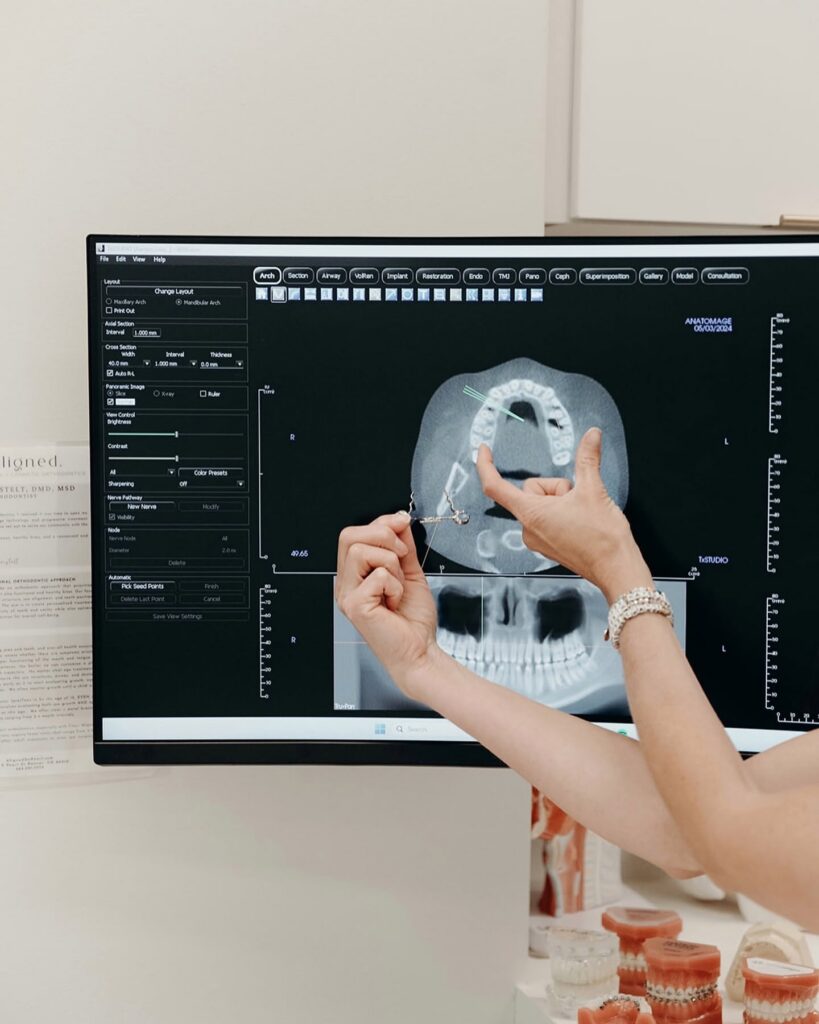
Dr. Vanderstelt, DMD, MSD, is a board-certified orthodontist at one location on South Pearl Street in Platt Park, rated 5.0 stars across more than 270 Google reviews.
Watch: why she expanded her own son
Dr. Vanderstelt on how the upper jaw affects nasal breathing, sleep and the room teeth have to come in.
What a palate expander does for a growing child
A palate expander is a custom appliance that gently widens a narrow upper jaw. In children, the upper jaw is still two halves joined by a seam down the middle of the roof of the mouth, so widening it means guiding growth rather than forcing teeth.
The traditional kids expander is a rapid palatal expander, or RPE. Metal bands fit over the back molars on each side, and a small screw in the middle widens the palate a little at a time.
That extra width does three things:
- It makes room for the adult teeth that are on the way, which can mean less crowding later.
- It helps correct a posterior crossbite, where the upper back teeth bite inside the lower ones.
- It can free up a bit more room in the nose, because the roof of the mouth is also the floor of the nasal passages.
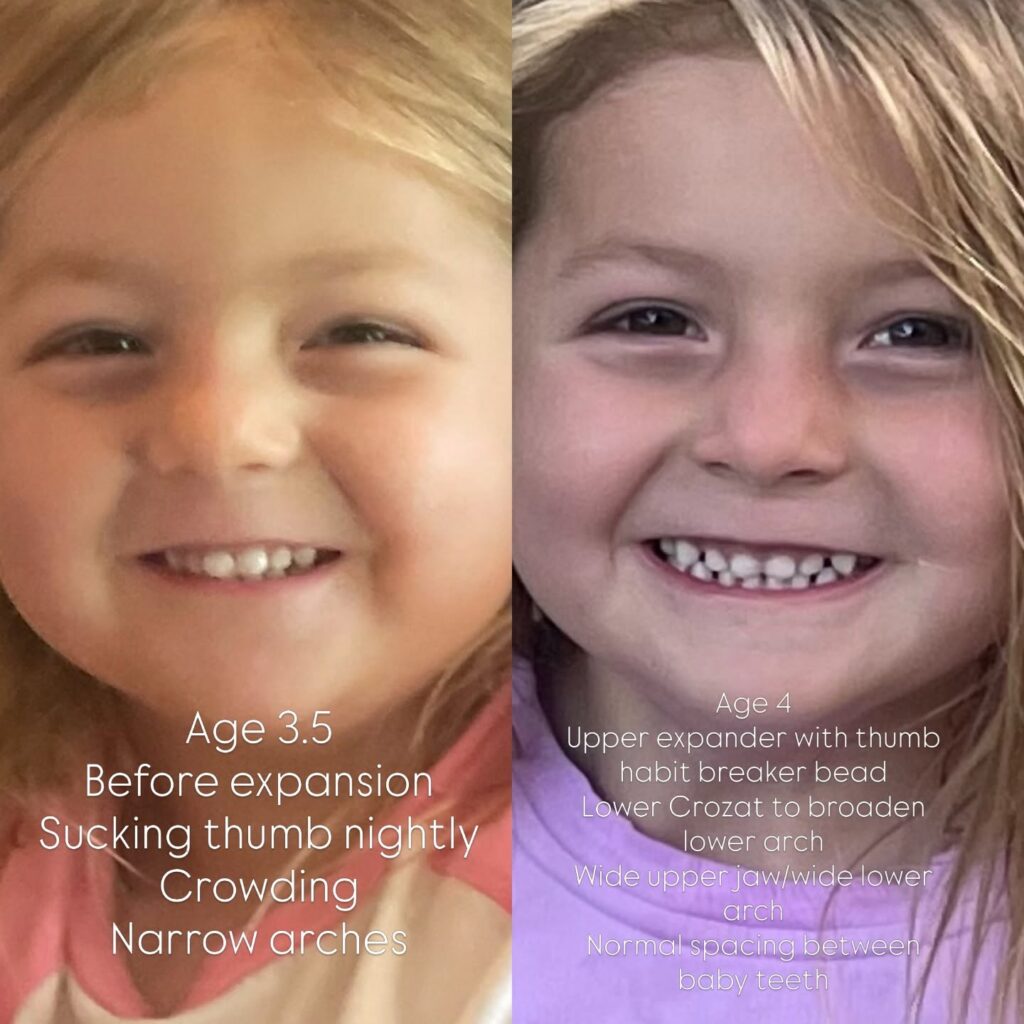
An expander is one of the most common appliances in Phase 1 orthodontics in Denver, but it isn’t for every child. Dr. Vanderstelt recommends one only for a narrow upper jaw, a crossbite, or crowding that needs more width. It can even be built into a thumb-sucking appliance when a child needs both.
Quick check: could an expander help your child?
Answer these with what you’ve noticed at home. Each yes is worth mentioning at your visit.
60-second check for parents
Could an expander help?
Five quick questions. Tap yes or no.
Question 1 of 5
When your child bites down, do any upper back teeth sit inside the lower teeth instead of outside them?
Question 2 of 5
Are the adult front teeth coming in crowded or overlapping, with no room left?
Question 3 of 5
Does the roof of your child’s mouth look high and narrow instead of wide and U-shaped?
Question 4 of 5
Does your child breathe through their mouth during the day, or snore at night?
Question 5 of 5
Has your dentist mentioned a narrow palate or a crossbite?
Tap an answer to go to the next question.
Don’t wait on this one
A crossbite is one of the few things we really don’t recommend waiting on. Book an evaluation now. Here’s more on crossbite treatment in Denver.
Your child may have a narrow upper jaw
An exam with 3D imaging will show whether widening would help, or whether watching growth for now makes more sense.
Worth a closer look at breathing
Mouth breathing and snoring are worth a closer look, and the cause isn’t always the jaw. Our free airway evaluation for kids 13 and under covers jaw width and the airway together. Read more about child mouth breathing in Denver.
Great news so far
The American Association of Orthodontists still recommends a first orthodontic check by age seven, and ours is free.
This quick check can’t diagnose anything. An exam can. If your child seems to stop breathing for moments during sleep, talk to your pediatrician soon. Trouble swallowing or breathing, severe swelling, or fever with swelling needs urgent medical care.
Only noticed grinding? If your child’s upper jaw is a normal width, there’s no orthodontic reason to expand it just because they grind. Here’s what we look for with child teeth grinding in Denver.
The best age for a palate expander
The best time for a palate expander is usually between about ages 6 and 10, while the seam in the roof of the mouth is still open. That seam stays easy to guide through most of childhood and starts to firm up in the early teen years.
Timing changes how big the job is. A narrow upper jaw caught at 6 or 7 might need a small, simple appliance for a few months. The same problem found at 14, after the bone has set, can mean a longer road.
That’s why the American Association of Orthodontists recommends a first orthodontic check by age seven. We’ll see kids younger when there’s a clear reason, like a crossbite or loud snoring.
For teens whose seam has already fused, and for adults, Dr. Vanderstelt may use a bone-anchored expander instead. Here’s how MARPE adult palate expansion works.
What the expander timeline looks like
Most early treatment at Aligned runs somewhere between a few months and about a year and a half, depending on what’s being corrected. Here’s how an expander usually fits into that.
| Step | What happens | How long |
|---|---|---|
| Free evaluation | Dr. Vanderstelt examines teeth, bite and jaw growth, with low-radiation 3D images and a digital scan. No trays of goop. | About an hour |
| Fitting | The expander is made for your child’s mouth, then the bands are cemented on the back molars. | One visit |
| Widening | You make small turns at home on the schedule Dr. Vanderstelt sets. She almost always expands slowly. | A few weeks to several months |
| Holding | The expander stays in place while new bone fills in the seam. | Several months |
| After | A resting period while Dr. Vanderstelt watches growth and the adult teeth coming in. | Until the next step, if one is needed |
Some kids are done after this. Others need braces or aligners in their early teens, and some don’t. Here’s the difference between Phase 1 and Phase 2.
Your child’s timeline starts with one visit
At the free evaluation, Dr. Vanderstelt checks jaw width with 3D imaging and tells you whether to start now or wait.
Turning the expander at home
Before you leave the fitting, we show you how to turn the expander with its small key. Each turn takes a few seconds.
Dr. Vanderstelt sets the turning schedule for your child, and it’s usually a slow one. Short check-in visits let us track progress and tell you when to stop.
How a palate expander feels
Most kids feel pressure right after each turn, and it passes in a moment. The first few days after the fitting usually bring some mild pressure or soreness.
Speech, saliva and eating feel a little different at first too. Kids tend to adjust faster than their parents expect.
As the jaw widens, a gap often opens between the two front teeth. That’s normal, and it’s a sign the expander is working.
Dr. Vanderstelt has been through adult palate expansion herself, so she can tell your child honestly what the pressure feels like.
Eating, brushing and sports with an expander
A few small habits keep the expander clean and in one piece while it does its job.
Want the longer explanation of how expansion works? Our guide to jaw expanders covers it in plain English.
- Stick to soft foods for the first few days.
- Avoid sticky foods like caramel, and skip popcorn and gum.
- Brush the expander every time your child brushes their teeth.
- Kids can keep playing sports. A mouthguard protects the teeth and the expander.
- Call us if the expander breaks, bends or feels loose.
Watch: why timing matters
Most jaw growth is done by age 12. Dr. Vanderstelt explains why that matters for the airway through the nose and throat.
Can a palate expander help my child breathe better?
For some kids, yes. Widening a narrow upper jaw can free up more room for air to move through the nose, because the roof of the mouth is also the floor of the nasal passages.
It isn’t a fix for every cause. An expander does nothing for enlarged adenoids or allergies, and it isn’t a stand-alone treatment for sleep apnea. If tonsils, adenoids or allergies are the driver, your child needs a pediatrician or ENT alongside or ahead of any orthodontic work.
We team up with pediatricians and ENT specialists around Denver, and we’ll tell you when something should be looked at outside orthodontics first.
For kids with airway concerns, Dr. Vanderstelt may recommend a bone-anchored expander over a traditional one, because it can open the nasal passage more. See how our airway orthodontist in Denver evaluates breathing.
This is personal for her. As a kid, Dr. Vanderstelt had large tonsils and early signs of airway problems. She was told to have four teeth pulled, but never offered an expander or a visit to an ENT. Read her story.
Snoring or mouth breathing at night?
Airway evaluations are free for kids 13 and under. You’ll find out whether the jaw is part of it, and who to see if it isn’t.
What a palate expander costs in Denver
The cost depends on what your child’s jaw needs and whether the expander is part of a larger early treatment plan. So instead of a vague range online, we give you a real number at the free evaluation.
You get your child’s exact fee in writing before you decide anything. Early treatment and full braces are two separate fees, and we’ll explain what your quote covers.
Insurance often helps. Many plans pay orthodontic benefits as a lifetime amount per child rather than a percentage of each bill, and some plans add a waiting period or deductible. Bring your card and we’ll check your benefits for you.
Ways to make it work:
- In-house payment plans with no interest
- HSA and FSA dollars can be used
- Family discounts when more than one child or a parent is in treatment
Get your child’s exact fee
It comes in writing at the free evaluation, before you decide anything.
Why Denver families bring their kids to Aligned
- Dr. Vanderstelt is certified by the American Board of Orthodontics and has additional training in airway-focused care.
- Orthodontics is the only thing she does, and she diagnoses and treats every case herself, at one location.
- She looks at teeth, bite and airway together, with 3D airway imaging in every new-patient workup.
- She’ll recommend treating now, watching, or nothing yet. An expander only goes in when it’s the right tool.
- She’s a mom of three, and she treats a decision about your kid like the big decision it is.
“They were quick and proactive in starting my daughter’s phase 1 orthodontics, which has significantly improved her airway health and quality of life. With my son, who requires a slower approach, they have been patient and understanding of his anxieties.”
What Denver families say on Google
Visiting us on South Pearl Street
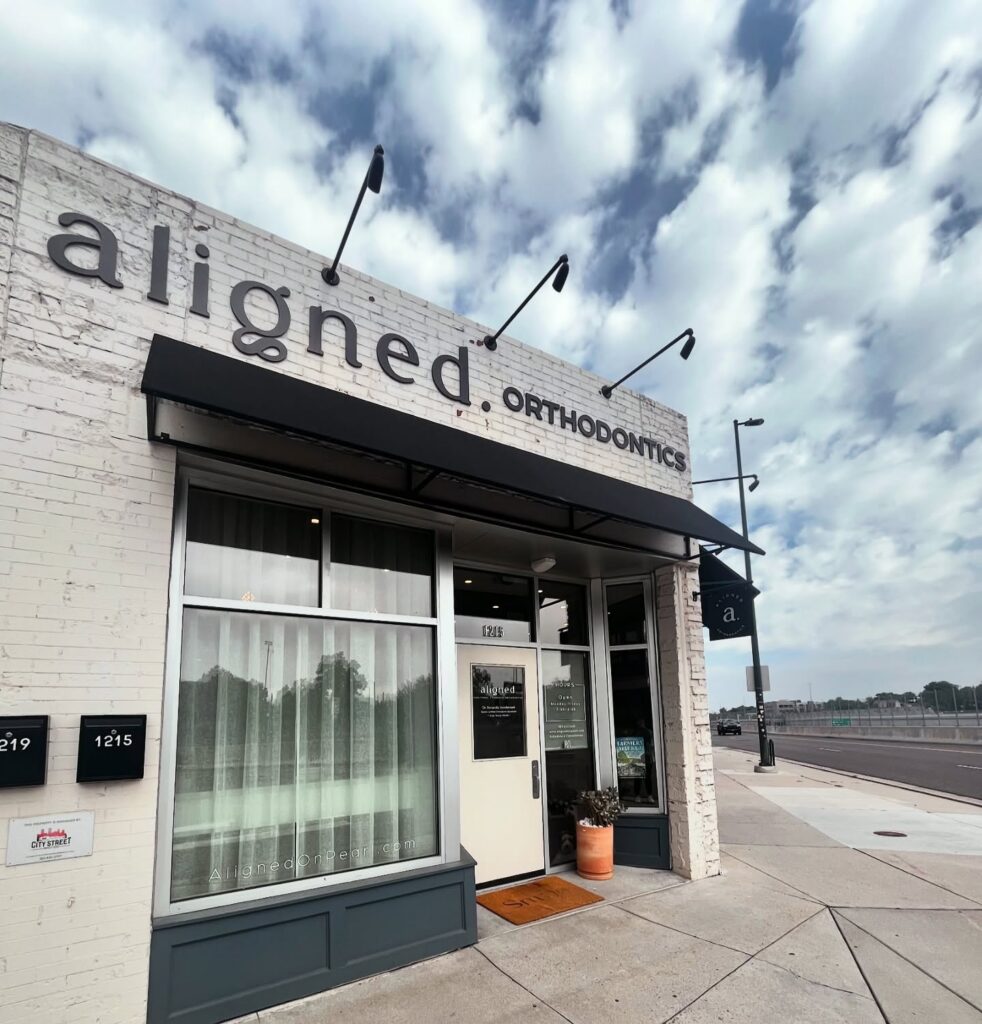
Aligned Orthodontics is at 1215 S Pearl St in Platt Park, just south of Washington Park. It’s a short walk from the Louisiana and Pearl light rail station, and there’s free parking behind the building, with alley access from E. Arizona Ave or E. Louisiana Ave.
Families come from Wash Park, University Park near DU, Cherry Creek, and Englewood.
Palate expander FAQs
Does a palate expander hurt?
Most kids describe pressure rather than pain. It lasts a moment after each turn, and the first few days after the fitting can feel sore. Kids usually get used to it faster than parents expect.
Is 10 too late for a palate expander?
Usually not. The seam in the roof of the mouth stays easy to guide through most of childhood and starts to firm up in the early teens. A 3D scan shows where your child’s seam is, so we can tell you for sure.
How long does a child wear a palate expander?
The widening takes a few weeks to several months, then the expander stays in for several more months while new bone fills in. Most early treatment at Aligned runs between a few months and about a year and a half in total.
Why is there a gap between my child’s front teeth?
A gap between the two front teeth is normal during expansion. It means the upper jaw is widening the way it should.
Will an expander affect my child’s speech?
Speech can sound a little different for the first few days while the tongue gets used to the appliance. Most kids adapt quickly.
Does insurance cover a palate expander for kids?
Often, at least in part. Coverage varies a lot from plan to plan, and many plans pay a lifetime orthodontic amount per child. We verify your benefits and give you the estimate in writing at the evaluation.
Will my child still need braces after an expander?
Some kids do and some don’t. An expander fixes the width of the jaw, and Dr. Vanderstelt watches the adult teeth come in to see whether braces or aligners are needed later.
Is a kids palate expander the same as MARPE?
No. A kids expander attaches to the back teeth and works while the seam is still open. MARPE uses small anchors in the bone to widen the jaw in teens and adults after the seam has fused.
Should my child see an ENT before getting an expander?
Sometimes. If large tonsils, adenoids or allergies seem to be part of the picture, we’ll point you to a pediatrician or ENT. For some kids that care comes first, and for others it happens alongside orthodontic treatment.
Aligned Orthodontics · Platt Park, Denver
Find out if your child needs an expander
Your first visit is free, unhurried, and takes about an hour. Your child is in the room for all of it.
You’ll leave with a clear answer, a written fee if treatment is recommended, and no pressure to decide that day.
Or call 303-521-3333.