
Platt Park, Denver · Phase one orthodontics
Phase One Orthodontics and Early Treatment in Denver
Reviewed by Dr. Amanda Vanderstelt, board-certified orthodontist. Last updated June 2026.
These days, most parents who book an early evaluation at Aligned didn’t come because a dentist sent them. They came because they saw a TikTok about mouth breathing, an Instagram reel about jaw development, or a friend on Facebook whose kid got a palate expander. They’re watching their child’s airway themselves, and they’re not waiting for a referral to start asking questions.
Good. That instinct deserves a real answer, not a sales pitch. At Aligned Orthodontics on South Pearl Street in Denver’s Platt Park neighborhood, Dr. Amanda Vanderstelt will tell you straight whether your child needs phase one orthodontics, the early treatment that helps some kids while they’re still growing, or whether the honest call is just to watch and wait. Plenty of children who come in don’t need treatment, and you deserve to hear that just as plainly as you’d hear the opposite.
Dr. Vanderstelt is a board-certified orthodontist with airway-focused care for kids, rated 5.0 stars across more than 270 Google reviews. Early evaluations are complimentary, and payment plans are flexible and interest-free.
What phase one orthodontics actually is
Phase 1 is early orthodontic care for children who still have a mix of baby teeth and adult teeth, usually somewhere around ages six to ten. You’ll also hear it called early treatment or interceptive treatment. It isn’t about getting a head start on a photo-ready smile.
Here’s where Dr. Vanderstelt’s approach differs from the traditional one. For her, early treatment is about how your child’s jaw and airway are developing, not just how the front teeth look. While the bones are still soft and easy to guide, there’s a window to make room, widen a narrow upper jaw, and support better breathing. A jaw that grows too narrow doesn’t only crowd teeth. It can leave less room in the airway, and that often shows up as mouth breathing, restless sleep, and trouble focusing during the day. Those signals matter to her as much as a crossbite does, because they affect far more than a smile.
That doesn’t mean she rushes anyone into treatment. She won’t invent a problem that isn’t there, and plenty of kids who come in don’t need an appliance. But she isn’t quick to tell a family to just wait and see when she can catch a child’s growth heading the wrong way early, while it’s still easy to steer. Getting the timing right can shorten whatever treatment comes later, head off extractions or surgery down the road, and give a child more room to breathe and grow into. Phase 1 is one part of two-phase orthodontic treatment, and not every child who has a first phase will need a second.
Why age 7 comes up so often
The American Association of Orthodontists recommends that every child have a first orthodontic check by age seven. This is the part that trips parents up, because it sounds like the AAO is recommending braces at seven. It isn’t.
By age seven, enough adult teeth have come in and enough jaw growth has happened that an orthodontist can spot developing problems early: a narrow upper jaw, a crossbite, severe crowding, a bite drifting the wrong direction. Spotting those things early is not the same as treating them early. It means Dr. Vanderstelt can tell you whether to act now, keep an eye on it, or stop worrying about it entirely.
That last outcome is more common than most parents expect. A good share of these early visits end with Dr. Vanderstelt saying some version of “everything is developing the way it should, let’s just check in now and then.” There’s no charge to hear that, and no obligation to do anything else.
Here’s the part worth underlining: age seven isn’t a gate, it’s a default. It’s the checkpoint the AAO settles on for kids when nothing has obviously come up. If you’ve already noticed something, snoring that won’t settle, a crossbite, a thumb habit, a jaw that looks a little off to you, you don’t have to wait for a birthday or a dentist’s referral. The AAO’s own advice is to see an orthodontist the moment you notice an issue, at any age. Dr. Vanderstelt is glad to take an early look at six, or sooner when something clearly needs attention. If your gut says something is off, that’s reason enough to come in.
How your child’s breathing fits into all of this
Here’s where Aligned is a little different from a standard orthodontic office. Dr. Vanderstelt doesn’t just look at how your child’s teeth line up. She looks at how your child breathes, because the two are connected.
A narrow upper jaw, a low tongue posture, or a habit of breathing through the mouth instead of the nose can shape how a child’s face and bite develop, and it can affect sleep, focus, and mood along the way. The link between how a child breathes and how the jaw and face grow is something orthodontists have studied closely, and the research we lean on lives in our airway orthodontics research library. So her early evaluations follow what she calls the three A’s: airway, alignment, and aesthetics, in that order. Some of the same early appliances that make room for adult teeth, like a palatal expander, can also open up the nasal passages and make nose breathing easier.
This matters to her personally. Dr. Vanderstelt has been through adult palate expansion herself, so she understands the link between a wider, well-supported upper jaw and easier breathing from the inside out, not just from a textbook. You can read more about that side of the practice on our airway-focused orthodontics page. For children thirteen and under, an airway evaluation is included at no cost.
Your child’s orthodontist
Dr. Amanda Vanderstelt
Board-certified orthodontist, DMD, MSD
Dr. Vanderstelt looks at more than straight teeth. She evaluates how a child’s jaw and airway are developing, because breathing, sleep, and focus all ride on that growth. It’s the same lens she brings to every early evaluation at Aligned, on South Pearl Street in Denver’s Platt Park neighborhood.
She has been through adult palate expansion herself, so she understands the link between a wider jaw and easier breathing from the inside out. As a mom of three, she also knows how a big decision about your kid actually feels, and she treats it that way.
Meet Dr. VandersteltSigns your child may benefit from an early evaluation
Most parents don’t notice orthodontic problems in clinical terms. They notice everyday things that seem a little off. None of the signs below means your child needs treatment, but each one is worth a look while the jaw is still developing and a problem is easier to guide:
- Upper and lower teeth that don’t seem to meet or line up correctly
- Trouble or discomfort chewing, or a bite that looks uneven
- Front teeth that stick out, or upper teeth that sit behind the lower ones when biting
- Thumb sucking that has carried on past age four or five
- Snoring, restless sleep, or breathing through the mouth more than the nose
- Severe crowding, or adult teeth coming in twisted or in odd spots
- Baby teeth lost much earlier or much later than expected
These are the things Dr. Vanderstelt looks at during an early visit. Sometimes they point to an issue worth addressing during this growth window. Often they turn out to be a normal part of a child still working through a mix of baby and adult teeth. Either way, you leave knowing. Families looking for a children’s orthodontist in Denver often book that first visit just to find out whether anything needs doing now or later, which is exactly what it’s for.
Is one of these your kid?
None of these means your child needs treatment. Each one is just worth a look while the jaw is still easy to guide. Check the ones that sound familiar.
“Is early treatment just a way to sell braces?” Let’s talk about that
You’re protective of your child and protective of your wallet, and the internet is full of stories about families who felt pushed into expensive treatment by high-volume clinics that treat patients like line items. Those stories are real, and the skepticism they create is fair.
Here’s how Aligned works instead. Dr. Vanderstelt is a board-certified orthodontist, which is a credential not every orthodontist pursues. She examines your child herself at the visit. Not an assistant, not a coordinator with a sales script. She looks at the teeth, the bite, and the airway, explains what she sees in plain language, and gives you an honest recommendation.
If your child needs early treatment, she’ll tell you exactly why, what it will accomplish, and what it costs before you commit to anything. If your child doesn’t need it, she’ll say so, and you can go home and let your kid be a kid. And if you’ve had a recommendation somewhere else and want a second set of eyes, that’s a completely reasonable thing to want. A practice that stands behind its recommendations has no reason to mind one.
“They were quick and proactive in starting my daughter’s phase 1 orthodontics, which has significantly improved her airway health and quality of life. With my son, who requires a slower approach, they have been patient and understanding of his anxieties. I appreciate Dr. V’s passion for airway health and her ability to educate parents. If you’re looking for a holistic and collaborative approach to your child’s oral health that goes beyond just cosmetics, this is the place.”
Aligned Orthodontics parent
What phase one treatment looks like at Aligned
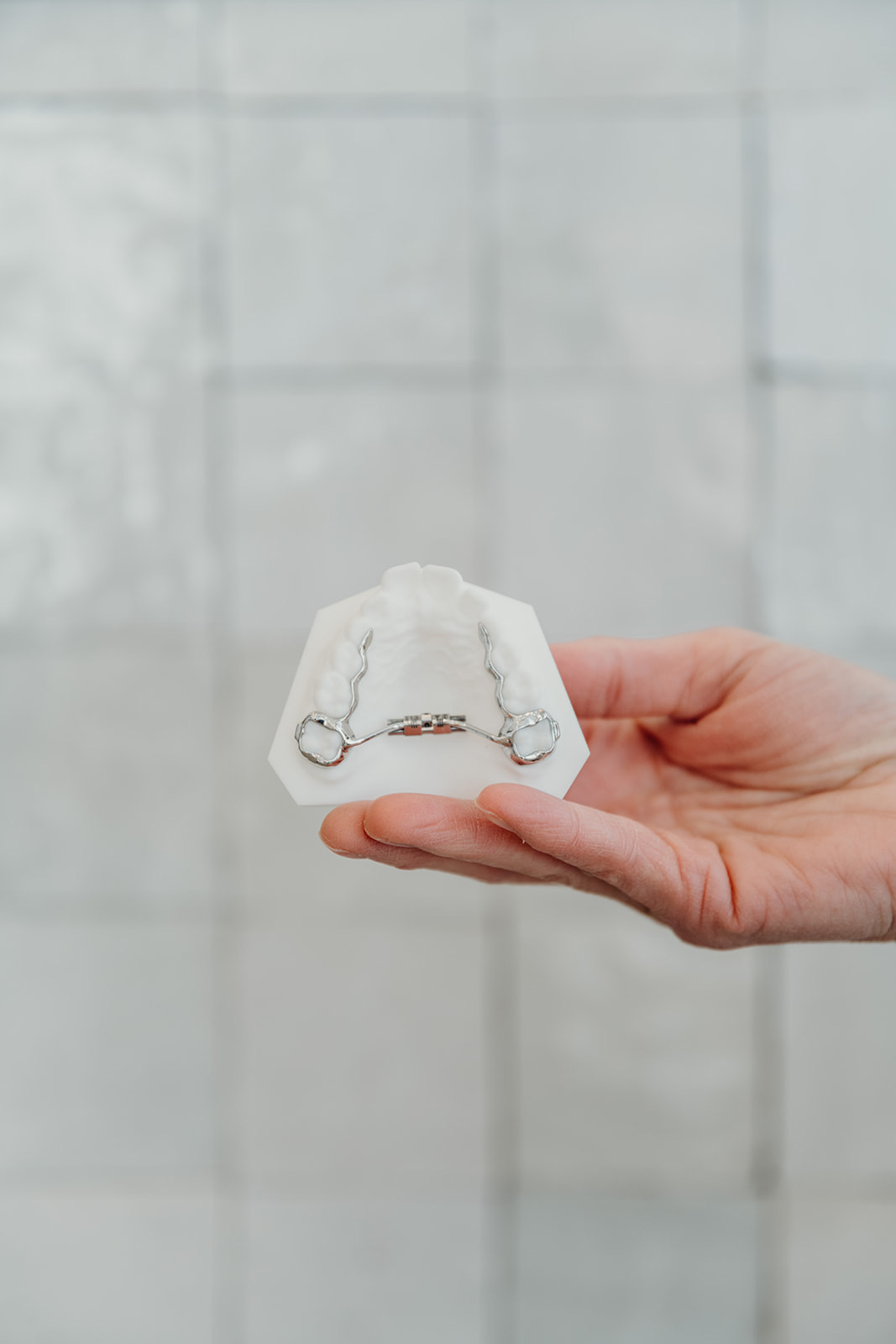
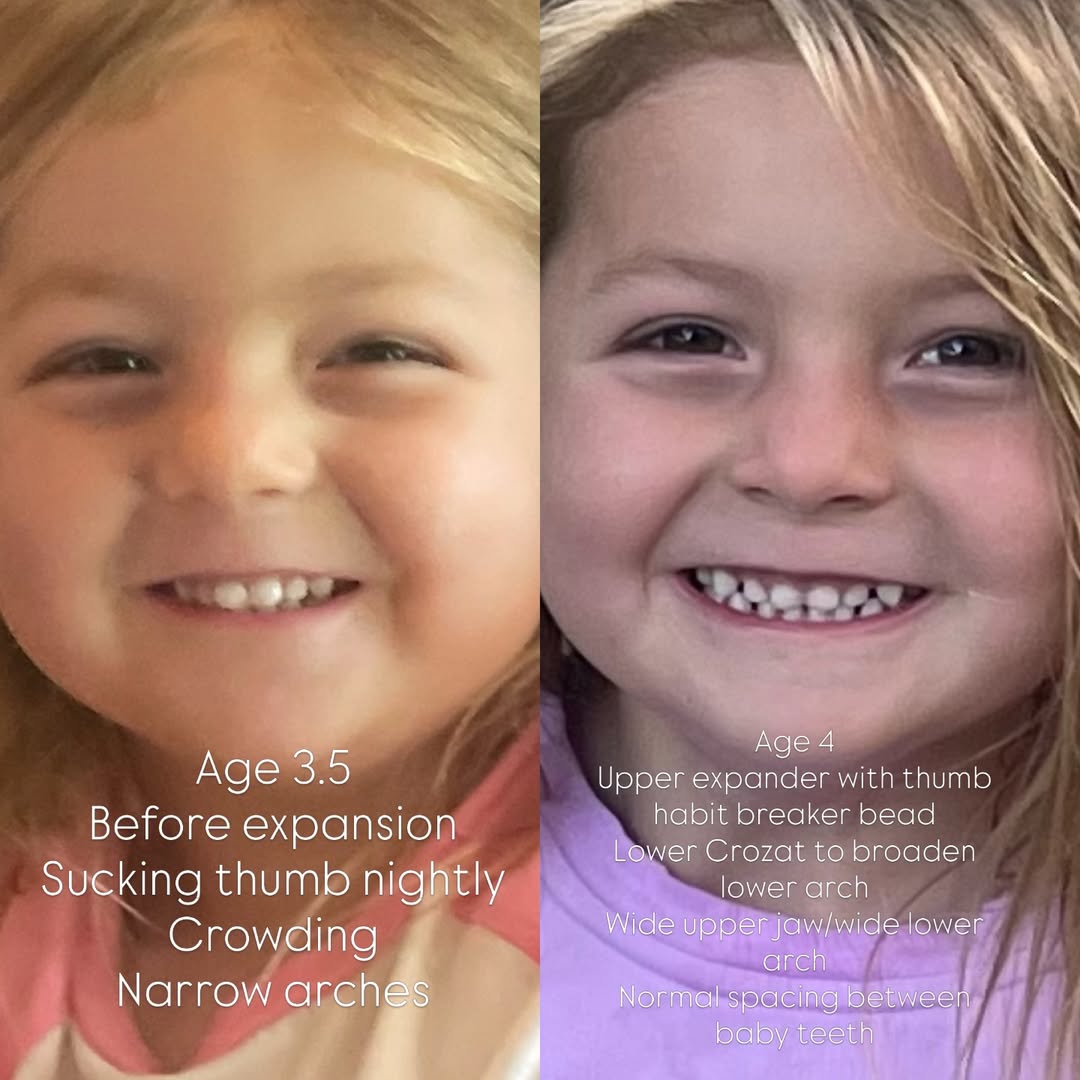
Phase 1 is targeted, not all-encompassing. A lot of parents call it “Phase 1 braces,” and sometimes it does involve braces. Just as often, though, it’s a palate expander, a space maintainer, or a small appliance to ease a habit, depending on what your child actually needs. When Dr. Vanderstelt recommends treatment, one of the most common appliances is a palatal expander, sometimes paired with a short course of partial braces to handle a specific issue. The expander is a custom appliance that gently widens a narrow upper jaw over a few weeks, making room for adult teeth, correcting crossbites, and often easing nose breathing in the process. Kids tend to adjust to one faster than their parents expect, and the brief pressure after each adjustment passes quickly.
The situations Phase 1 is most useful for include:
- A narrow upper jaw or crossbite, where the top and bottom teeth don’t meet correctly
- Significant crowding, where there’s clearly not enough room for the adult teeth on the way in
- An open bite, often tied to thumb sucking or a tongue-thrust habit
- A protruding or deep bite with a skeletal component, where guiding jaw growth early makes a real difference
- Early loss of baby teeth, where holding the space open keeps the other teeth from drifting
Every child is different, which is why none of this gets decided from a webpage. It gets decided after Dr. Vanderstelt actually looks in your child’s mouth.
From Dr. Vanderstelt’s own family
What guiding a small jaw early can look like
Why timing matters, for the kids who need it
For the children who do need early treatment, the reason timing matters comes down to one thing: some problems are far easier to correct while the jaw is still growing. Here’s what the growth window changes.
Why timing changes the fix
For the problems that depend on growth, waiting past the window can turn a simple fix into a major one. Here’s what changes.
Handled early, while growing
An expander can widen the jaw gently while the bones are still separated, which can also help with nose breathing.
After growth finishes
Once those bones fuse in the mid teens, widening often takes a surgical step.
Handled early, while growing
Guiding growth and making room can reduce or avoid pulling permanent teeth.
After growth finishes
Making room later more often means removing permanent teeth.
Handled early, while growing
Growth can be steered while it’s actively happening.
After growth finishes
A finished jaw may need a bigger correction, sometimes surgery.
Handled early, while growing
The later round of braces or aligners is usually shorter and simpler.
After growth finishes
The full correction can take longer and get more complicated.
None of this means every child should start now. It means that for the specific problems that depend on growth, waiting past the window can turn a simple fix into a major one. An exam is what tells us which kind of problem your child has, if any.
When waiting is the right call for your child
Just as important as knowing when to act is knowing when to hold off, because for some children, holding off is exactly right. When the only issue is mild crowding that can be handled later, a minor bite problem with no skeletal or airway component, or teeth that look a little crooked while everything else is developing the way it should, there’s usually no reason to start. Crooked baby teeth on their own rarely are.
When that’s the case, Dr. Vanderstelt will tell you plainly, and the plan is simply to keep an eye on things with periodic growth checks. If something does start to develop, you catch it at the right moment. If it never does, you haven’t put your child through treatment they didn’t need. Recommending less when less is right comes from the same place as recommending more when more is right: it’s whatever genuinely serves your child, explained so you understand the why behind it.
Watch from Dr. Vanderstelt
Why crowded teeth usually mean a jaw that’s too small
Treating now versus waiting: a quick way to think about it
The real decision parents face usually isn’t “braces or no braces.” It’s “treat now, or wait and watch.” Here’s the honest version of how that call gets made.
Treat now, or wait and watch?
Early treatment may be worth it when
- There’s a crossbite or narrow upper jaw affecting how the bite works
- A jaw or skeletal issue can be guided while your child is still growing
- Crowding is severe enough that the adult teeth have no room to come in
- A habit like thumb sucking is actively shaping the bite
- Front teeth stick out far enough to be at real risk in a fall
Waiting and watching is the right call when
- Crowding is mild and can be handled later with full braces
- The concern is cosmetic, with no functional or skeletal piece to it
- Baby teeth look crooked but the adult teeth aren’t in yet
- There’s no sign the problem will get harder to fix over time
- Growth is on track and nothing needs intervention right now
Only an exam tells you which column your child is in, and that’s the whole reason to come in. Dr. Vanderstelt will put your child in the honest column, not the profitable one.
What happens after phase one: the resting period
This is the part a lot of practices skip past, so let’s be upfront. Phase 1 doesn’t usually replace later treatment. After the early appliance does its job, your child enters a resting period while the rest of the permanent teeth come in. Many children will still need a Phase 2 round of braces or clear aligners in their teen years to finish the alignment.
So why do Phase 1 at all? Because the early work handles the hard, growth-dependent problems while the window is open, which usually makes that later phase shorter and simpler than it would have been. A skeletal issue that’s straightforward to guide at age eight can become a much bigger project, sometimes a surgical one, if it waits until growth is finished.
During the resting period, Dr. Vanderstelt keeps an eye on your child’s bite at regular intervals, so Phase 2 starts at exactly the right moment. Not too early, not too late. You aren’t paying for a holding pattern, and you aren’t left guessing about timing.
What early treatment costs in Denver
Because Phase 1 is focused and time-limited rather than a full course of treatment, it usually costs less than a complete set of braces. The exact figure depends on which appliance your child needs and how involved the correction is, which is why we give you a real number at the consultation instead of a vague range online.
Insurance often covers a portion of orthodontic treatment for children, though coverage varies a lot from plan to plan, so we go over your specific benefits with you at the complimentary visit. You’ll see a clear breakdown: what treatment will run, what your plan covers, and what flexible, interest-free payment options are available. You’ll have the full picture before you decide anything.
Not sure if it’s something or nothing?
That’s exactly what an early evaluation answers. Dr. Vanderstelt will tell you straight what she sees and why, whether the right move is to treat, to watch, or to do nothing at all.
Book a complimentary evaluationWhat to expect at your child’s evaluation
The first visit is free, unhurried, and built to answer your questions rather than push you toward anything. Here’s how it goes:
What your child’s first visit looks like
-
A warm welcome
Greeted by name, and most kids head straight for Benito, our office goldendoodle.
-
A gentle look
Low-radiation 3D images and a quick digital scan of the teeth, bite, jaw, and airway.
-
Dr. V examines
The orthodontist herself, not an assistant, looking at how everything is developing.
-
A plain-language plan
She explains what she sees and recommends treating now, watching, or nothing yet.
-
Clear numbers
If treatment makes sense, you get the full cost before you commit to anything.
You can read more about what to expect at your first visit, but the short version is that you’ll leave understanding exactly where your child stands.
What you can expect from us
This is a big decision, and we don’t treat it like a small one. When you bring your child in, you’re handing us someone who matters to you more than anything, and we hold that carefully. As a mom of three, Dr. Vanderstelt reads a worried kid fast and knows how to put one at ease. We explain things to your child in words they actually understand, we keep the visit unhurried, and we look after your child the way we’d want someone looking after our own.
We make the parent’s part easier too. You don’t have to become an expert in growth windows or lie awake wondering whether you’re missing the right moment to act. That’s our job, not yours. We watch the timing for you, we walk you through insurance and costs at the free visit so you’re not decoding it alone, and we tell you plainly what to do next and what to skip. You get to leave knowing the plan, knowing the cost, and knowing your child is in steady hands.
“Dr. V really took the time to explain things to me at the beginning, and at the end, of my son’s phase 1 braces treatment, which I really appreciated. Her staff are nice, and are also prompt communicators. I would recommend Aligned Orthodontics to our friends and family.”
Aligned Orthodontics parent
Why Denver families choose Aligned
Choosing who guides your child’s care is a bigger decision than choosing where to get teeth straightened. You want someone you trust, and an experience that doesn’t feel like a factory.
Aligned is a boutique practice, which means smaller, calmer, and more personal by design. Dr. Vanderstelt sees your child herself at every step, and her airway-focused approach means she’s looking at the whole picture of how your child grows and breathes, not just whether the front teeth are straight. Families tell us what they remember is the feel of the place: a kind, welcoming team, an office that makes a first visit comfortable instead of scary, and clear answers instead of a sales pitch. That’s a big part of how we’ve earned a 5.0-star rating across more than 270 Google reviews.
Our office sits on South Pearl Street in Platt Park, a walkable stretch near Washington Park, with free parking behind the building. Families make the short drive for their kids’ care from Wash Park, University Park, Cherry Creek, Englewood, Littleton, and across the south Denver metro.
Common questions about phase one orthodontics
Does my child really need Phase 1, or can we wait?
It depends entirely on your child, which is the honest answer and the reason an evaluation matters. Dr. Vanderstelt will look at the teeth, the bite, and the airway, then tell you plainly what she sees and why, whether that’s starting treatment now, keeping a close eye on things, or doing nothing at all. She’ll make the same call she’d make for her own kids.
Is my seven-year-old too young for braces?
A check at seven doesn’t mean braces at seven. The age-seven recommendation from the American Association of Orthodontists exists so an orthodontist can spot developing problems early, not so every child starts treatment that young. Most seven-year-olds who come in are simply watched over time.
What age is too late for Phase 1 orthodontics?
Phase 1 works because the jaw is still growing, so the window is roughly the mixed-dentition years, around ages six to ten. Once the upper jaw’s growth plate starts to fuse in the early teens, a few corrections that were simple early on need a different approach. That doesn’t mean your child has missed out on orthodontics. Treatment is still very doable later, it just may look different. If you’re not sure where your child falls, an early visit will tell you.
How long does Phase 1 treatment take?
Phase 1 is a short, focused course of treatment, not a multi-year process. Most early treatment runs somewhere between a few months and about a year and a half, depending on what’s being corrected, and it usually wraps up well before a child would otherwise start full braces. Dr. Vanderstelt will give you a clear timeline at your consultation before anything begins.
Does my child need a palate expander?
Only an exam can answer that for sure. An expander is one of the most common Phase 1 appliances, but Dr. Vanderstelt recommends one only when a child has a narrow upper jaw, a crossbite, or crowding that calls for widening the arch. Plenty of kids who need early treatment never get an expander, and plenty who come in don’t need any appliance at all.
Can a palate expander help my child breathe better?
For some kids, yes. Widening a narrow upper jaw can open up the nasal passages and make breathing through the nose easier, which is part of why Dr. Vanderstelt looks at the airway alongside the bite. It isn’t a guaranteed fix for every breathing problem, and it isn’t the right move for every child, which is what the evaluation sorts out. The studies behind this are collected in our airway orthodontics research library if you want to read more.
How does the airway piece fit into early treatment?
Breathing and jaw growth are closely linked, so Dr. Vanderstelt looks at how your child breathes as part of every early evaluation. A narrow upper jaw or persistent mouth breathing can affect sleep, focus, and the way the face develops. When one of those shows up, treating it during the growth window is often easier and more effective. For children thirteen and under, this airway evaluation is included at no cost.
Can early treatment prevent tooth extractions or surgery?
Sometimes, for certain problems. When a bite issue has a skeletal component, guiding the jaw while your child is still growing can lower the odds of needing extractions or, less often, surgery later on. It isn’t a guarantee, and it only applies to specific cases, which is exactly what Dr. Vanderstelt weighs at the visit. For many kids, the honest answer is that no major intervention was ever going to be needed.
What does Phase 1 cost, and will insurance help?
Because Phase 1 is focused and time-limited, it usually costs less than a full course of braces. The exact figure depends on which appliance your child needs, so we give you a real number at the complimentary consultation rather than a vague range online. Coverage varies a lot from plan to plan, though many plans cover a portion of children’s orthodontics. We’ll check your specific benefits with you and walk through interest-free payment options before you decide anything.
How often will my child have appointments during Phase 1?
Visits are usually short and spaced a few weeks apart, often around every four to eight weeks, so Dr. Vanderstelt can check progress and make small adjustments. During any resting period afterward, check-ins are less frequent, just enough to keep an eye on how the permanent teeth come in. You’ll get the schedule up front so it’s easy to plan around.
Will my child still need braces after Phase 1?
Often, yes. Phase 1 handles specific growth-related problems early, and a second round of braces or aligners usually follows once all the permanent teeth are in. The upside is that the early work tends to make that second phase shorter and simpler.
Does Phase 1 treatment hurt?
Children usually feel mild pressure or soreness for a few days after an appliance is placed or adjusted, easily managed with over-the-counter children’s pain relief. With an expander, the pressure right after each adjustment lasts only a moment. Kids adapt to all of it faster than parents expect.
Should I get a second opinion?
Absolutely, if you want one. If a recommendation anywhere feels rushed, oversized, or unclear, a second opinion is a smart step, and Dr. Vanderstelt welcomes families coming in for a fresh look.
Visit Aligned Orthodontics
Early evaluations for children happen at our South Pearl Street office in Platt Park. Families come to us from Wash Park, University Park, Cherry Creek, Englewood, Littleton, and across the south Denver metro. Families in Central Park and Park Hill make the drive too, and you can see every neighborhood we serve on our areas we serve page.
Visit us
Aligned Orthodontics
1215 S Pearl St, Denver, CO 80210Platt Park, on South Pearl Street near Washington Park
Free parking behind the building
The first step is simple and free: a thorough look from Dr. Vanderstelt, a clear explanation of what she finds, and an honest recommendation about whether early treatment makes sense for your child. No sales pitch, no obligation.
Start with a straight answer
An early evaluation with Dr. Vanderstelt is free, unhurried, and built to tell you exactly where your child stands. Treat now, watch and wait, or nothing needed yet. You’ll leave knowing the plan.
Book your child’s complimentary evaluationServing Platt Park, Wash Park, University Park, and the south Denver metro.